“I cannot make liberty my aim unless I make that of others equally my aim.”
—Jean Paul Sartre

Click the image above to view it in a separate window, at full size; feel free to download and share.

“I cannot make liberty my aim unless I make that of others equally my aim.”
—Jean Paul Sartre
Click the image above to view it in a separate window, at full size; feel free to download and share.
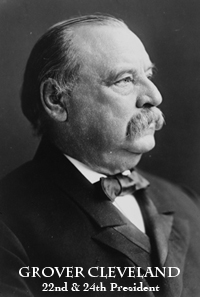 Values supposed to be fixed are fast becoming conjectural, and loss and failure have invaded every branch of business.
President Barack Obama takes full credit for the job growth in 2014. Democrats on the Internet relentlessly push these growth rates with typically goofy superlatives like “highest ever” or “highest growth rate in decades.”
So, what did Obama and the Democrats do in 2013 and 2014 that led to the growth we saw last year?
Well, Obama refused to renegotiate with Republicans on any unemployment or budget reforms.
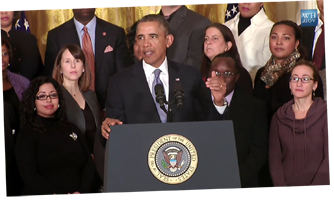 As 2013 ended, we heard Democrats complaining that stingy Republicans were letting federal government extensions of unemployment compensation (which had been re-extended many times) lapse altogether. Obama predicted disaster. The Keynesian economists who circle the Democratic Party like moths to a candle held to a simple prophecy: because of a hit to “aggregate demand,” unemployment would increase.
Instead, in 2014 employment bounced back.
In a droll quasi-opinion piece, “President Costanza’s Jobs Boom,” the Wall Street Journal reports that “job growth in 2014 was roughly 25 percent higher than any post-2009 year. Joblessness plunged to 5.6 percent from 6.7 percent. Net job creation averaged 246,000 a month.”
Citing a National Bureau of Economic Research study by economists Marcus Hagedorn, Iourii Manovskii and Kurt Mitman, which treated the abrupt policy change as a “natural experiment,” the Journal reveled in the knowledge that the increase in incentives from lapsed benefits led unemployed workers to (gasp!) seek jobs.
And they found them. Granted, many of the new jobs are not as good as their pre-bust jobs. But they are jobs, which is better than nothing.
So when your big-government promoting friends attribute 2014’s job growth to Democratic policies, ask which policies, precisely. And ask why Obama’s predictions of 2013 for disaster in 2014 didn’t pan out.
This is Common Sense. I’m Paul Jacob.
On Feb. 16, 1878, the Bland-Allison Act, which provided for a return to the minting of silver coins, became U.S. law. Today, the value of American money is secured only by public faith in the stability of the government, but during the 19th Century, money was backed by actual deposits of silver and gold.
Five years earlier, when Congress had stopped buying silver and minting silver coins — following the lead of European nations — a financial panic ensued. Reasons for the suspension, and at the heart of the panic, lay in the fact that the exchange value of silver and gold was fixed at a rate that favored silver producers. Had the United States Treasury let the two standards free float, making a distinction between silver dollars and gold dollars, none of the political strife over bimetallism would have occurred.
In 1893, in the midst of another financial panic, this time as a result of depletion of gold reserves in the U.S. Treasury, President Grover Cleveland called a special session of Congress to repeal the bimetallic standard. He was successful, though agrarian inflationists took over the Democratic Party and offered up, for the next election, William Jennings “Cross of Gold” Bryan as a counter to Cleveland’s old-fashioned fiscal conservative/social liberalism.
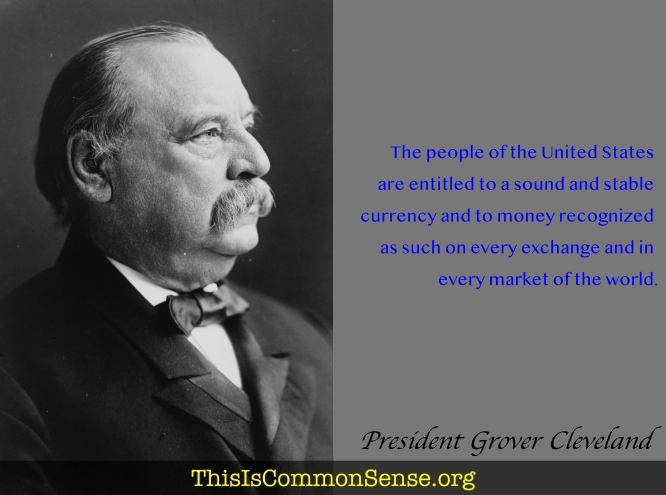
The people of the United States are entitled to a sound and stable currency and to money recognized as such on every exchange and in every market of the world.
On Feb. 15, 1898, the USS Maine, a battleship, exploded in the Cuba’s Havana harbor, killing 260 American sailors. An official U.S. Naval Court of Inquiry ruled in March 1898 that the ship was blown up by a mine, without directly blaming Spain. Nonetheless, Congress declared war and, within three months, the U.S. had decisively defeated Spanish forces. On December 12, 1898, the Treaty of Paris was signed between the U.S. and Spain, granting the United States its first overseas empire with the ceding of such former Spanish possessions as Puerto Rico, Guam, and the Philippines. In 1976, a team of American naval investigators concluded that the Maine explosion was likely caused by a fire that ignited its ammunition stocks, not by a Spanish mine or act of sabotage.
For our Townhall readers, an expansion on a theme from last week: the nature of interventionism.
Click on over, then come back here for more reading. Or, perhaps, discussion. And caution: concentration and “too big to fail” are not the only problems that are emerging in the wake of Dodd-Frank. As suggested in the Whac-A-Mole game, problems keep on coming.
One has to repeat the oft-repeated line from Santayana, here: “Those who cannot remember the past are condemned to repeat it.”
On Feb. 14, 278 A.D., Valentine, a priest in Rome during the reign of Emperor Claudius II, was executed. In order to facilitate the raising of an army for his unpopular military campaigns, the emperor outlawed all marriages and engagements. Valentine defied Claudius’s order and continued to perform marriages for young lovers in secret. Once discovered, Valentine was arrested and condemned by the Prefect of Rome to be beaten to death with clubs and to have his head cut off. The sentence was carried out on February 14. Valentine was named a saint by the Roman Catholic Church after his death.
Feb 14, 1989, at a meeting of the presidents of Nicaragua, Honduras, Guatemala, Costa Rica, and El Salvador, the Sandinista government of Nicaragua agreed to free a number of political prisoners and hold free elections within a year. In return, Honduras promised to close bases used by anti-Sandinista rebels. Within a year, the Sandinistas were defeated in Nicaragua elections.
The other day, when discussing Dodd-Frank’s ill effects on the financial system, I detected a pattern.
Politicians had identified the crash of 2007-2009 and “did something.” They rushed to reform the financial regulatory system in accord with their preconceived notions. Since then the financial system has become more concentrated, with community banks dropping off like flies.
The pols say they are defenders of the downtrodden, but they simply played into the hands of the “fat cats.”
It’s the way of ham-handed interventionism. Every fix puts us in a bigger fix, so to speak, as “unintended consequences” multiply in the negative.
 It’s like Whac-A-Mole, the arcade game: a mole pokes its head out of a hole. You hit it with a mallet. And then another mole pops up out of another hole. And you hit it. And you keep doing this, faster and faster, gaining points.
It’s sort of like economic policy. The voters see you hit something. Ding!
But more moles pop up.
In real life, it’s more like Hydra Whac-A-Mole. Bop one mole, out come two; bop another, up pop three. And it’s not just five holes on the board. It’s an infinity.
Interventionists cause more problems than they solve. Try to “solve” poverty by taking from the rich and giving to the poor? Soon, there’s not as much money in rich pockets to invest, and there are less jobs: the poor become trapped; they cease to improve themselves for work; their children lack role models; &tc., &tc., &tc.
Whac-A-Mole!
Or, as they might as well say in the halls of Capitol Hill: Hail, Hydra.
This is Common Sense. I’m Paul Jacob.