Word politics. Interesting argument. Does it all come down to “ah” instead of “er”?
Ah, no.
Word politics. Interesting argument. Does it all come down to “ah” instead of “er”?
Ah, no.
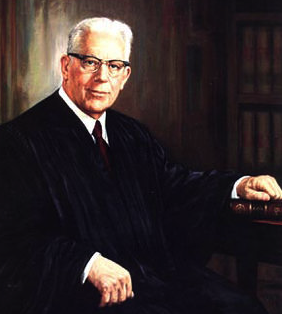
I believe the preservation of our civil liberties to be the most fundamental and important of all our governmental problems, because it always has been with us and always will be with us and if we ever permit those liberties to be destroyed, there will be nothing left in our system worthy of preservation.
Earl Warren, as quoted in Lawyers Guild Review, Vol. 13-14 (1953), p. 47.
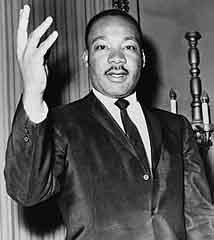
On March 21, 1965, Dr. Martin Luther King, Jr. led 3,200 people on the start of the third and finally successful civil rights march from Selma to Montgomery, Alabama.
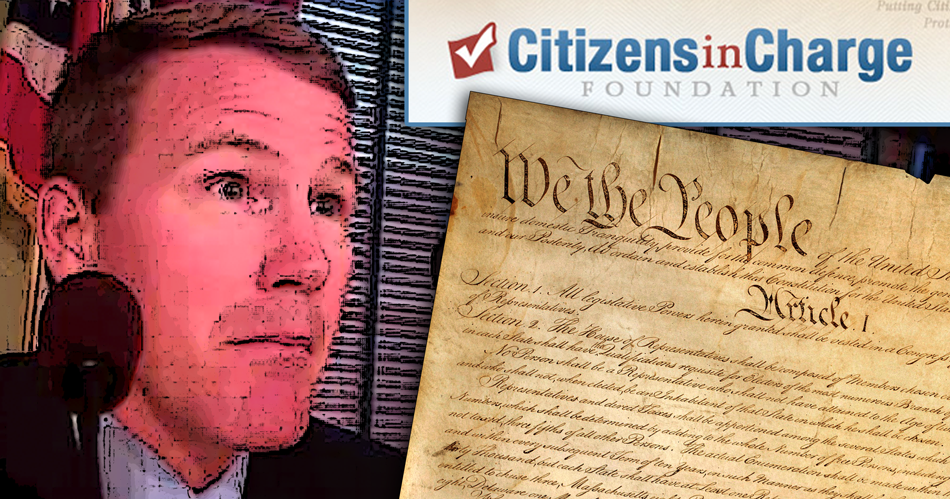
Incentives matter. Which is why Ohioans have much to celebratethis week.
Federal District Judge Michael Watson turned his previous temporary injunction against enforcement of Senate Bill 47 into a permanent injunction. That statue outlawed non-residents from helping Buckeye State residents by gathering petition signatures for an initiative or referendum.
But Judge Watson went further, declaring Sec. Husted’s office liable for damages to one of our co-plaintiffs, Cincinnati for Pension Reform. The judge found that “a reasonable official would have understood that enforcement of the residency requirement would violate plaintiffs’ First Amendment right to engage in political speech.”
Public officials have what’s known as “qualified immunity,” which protects them from liability when acting in good faith. A spokesman for Husted offered a defense: they were acting “on the assumption that the law is constitutional.”
“Some qualified-immunity cases are difficult,” countered election-law expert Daniel Tokaji. “Not this one.”
Ohio’s residency law was ruled unconstitutional in 2008, after Ralph Nader’s presidential campaign sued. In 2009, the previous secretary of state officially acknowledged the law unenforceable regarding all petitions. Yet, seeking to block citizen petitions, legislators passed it again, and Husted was quick to enforce.
Maurice Thompson of the 1851 Center for Constitutional Law, our attorney, cheered the “deterrence” this decision provides.
This is Common Sense. I’m Paul Jacob.
“Liberty, not communism, is the most contagious force in the world.”
Earl Warren, as speech at Columbia University, January 14, 1954

On March 20, 1852, Harriet Beecher Stowe’s novel Uncle Tom’s Cabin was published.

The president’s latest tune is a variation on a very old theme: whatever government breaks “requires” a new government program.
See a problem; propose and enact a government solution; the problem gets worse, some new ones pop up; blame everything on the voluntary, “freedom” side; demand more and newer government programs.
It’s a trap. Literally, since it involves more coercion by government at every step.
Here’s the story: President Obama was largely repudiated at the polls last November. The performance of his administration and congressional allies proved so lackluster that his party couldn’t muster much of a vote in their favor.
So now Obama promotes the idea of compulsory voting.
“It would be transformative if everybody voted,” Obama said. He mentions Australia, which has had mandatory voting for a while. He doesn’t mention North Korea, which also forces its citizens to vote, or that totalitarian and authoritarian regimes have often used compulsory voting to give their dictators a patina of “democratic legitimacy.”
I’d be embarrassed to bring it up.
Obama brought it up in the context of fighting the influence of big money.
So, to fix particular problems, government gets involved in the economy generally, everywhere — and not by playing umpire to establish a “level playing field,” but by siding first with one group, then with another, with mandates, prohibitions, regulations, etc. (He calls all this “fair,” incredibly.) Naturally enough, affected businesses and individuals petition for insulation from each and every proposed “fix.” Many go on for special favors. This leads to increased money in campaigns, as well as increased lobbying.
So now? Direct coercion of citizens — simply to “get out the vote.”
It’s always force with these folks.
This is Common Sense. I’m Paul Jacob.
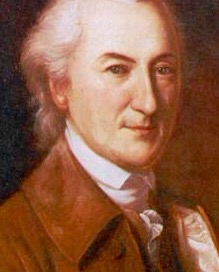
“Then join in hand, brave Americans all!
By uniting we stand, by dividing we fall.”
John Dickinson, The Liberty Song (1768).
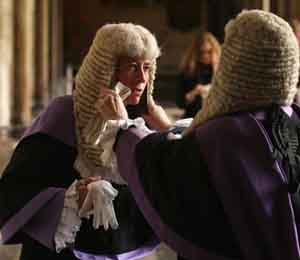
On March 19, 1649, England’s House of Commons passed an act abolishing the House of Lords, declaring it “useless and dangerous to the people of England.”
This was during Oliver Cromwell’s rule as Lord Protector, after the execution of Charles I. The House of Lords did not again meet until the Convention Parliament of 1660, under the Restoration of the monarchy.
One favorite “statesman” trick is to bury unflattering information by “releasing” it on a Friday, right before the weekend.
This gives politicians a respite. Surely world events will have spewed up some worse (that is, more interesting!) story over the weekend, so on Monday, when journalism and its followers are back into the work week, coverage will be distracted and lessened.
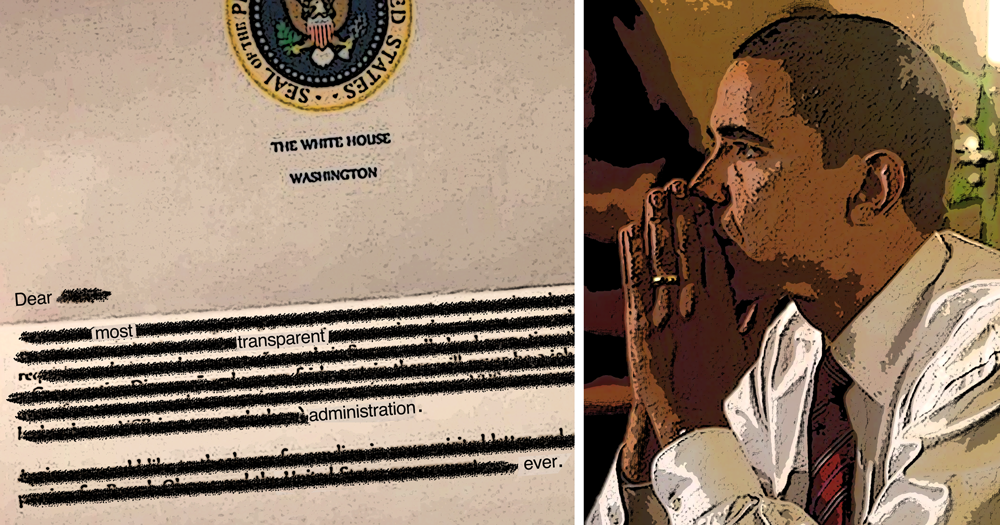
I guess that’s why the White House waited till last Friday to explain it was officially removing Freedom of Information Act (FOIA) requests from the burdens on its Office of Administration.
Barack Obama, when he was running for office, proclaimed that his administration would be “the most transparent in history.” But he’s been following President Bush in keeping the administrative side of the White House as opaque as possible.
White House flunkies say this “cleanup” of FOIA regulations is “consistent with court rulings that hold that the office is not subject to the transparency law.”
Accept that, arguendo, and it still looks bad for the “most transparent” prez of all. He didn’t have to do this. He just wanted to.
Adding insult to injury, as noted by Gregory Korte in USA Today, “the timing of the move raised eyebrows among transparency advocates, coming on National Freedom of Information Day.”
This all relates to the current Hillary email scandal, too. It just so happens that the White House office now unencumbered by FOIA requirements is in charge of filing . . . old emails.
Coincidence?
Perhaps that’s why they risked announcing this on Freedom of Information Day. The irony was lost over the weekend.
This is Common Sense. I’m Paul Jacob.