I would unite with anybody to do right; and with nobody to do wrong.
December 29, Mongolian independence
On December 29, 1911, Mongolia gained independence from the Qing Dynasty.
Common-Sense Canine
If at first you don’t succeed . . .
Persistence. That’s the lesson of an animal rescue shown in a video of unknown provenance, most likely recorded in Southeast Asia, that appeared on the Internet toward the end of 2014.
As the video opens, we see that a small tawny-haired, yelping dog had somehow fallen into a well. Rescuers are lowering a rope into the water. The pooch has only one way to escape — by grabbing the rope with her teeth. Which she does.
Nine out of ten times, though, she can’t hold on long enough for a rescuer to grab her and pull her out. She keeps dropping back into the water.
Discouraging.
But the tenth time proves the charm. Some combination of dog-learning and human-learning results at last in a successful retrieval. The dog has done the only thing it could do to save itself, and kept doing it until it worked.
The advice to “keep trying” is regularly balanced with the advice to know when to “cut your losses.” But, often, it’s neither possible nor advisable to cut our losses no matter how tough things get. Switch strategies, maybe. But not give up.
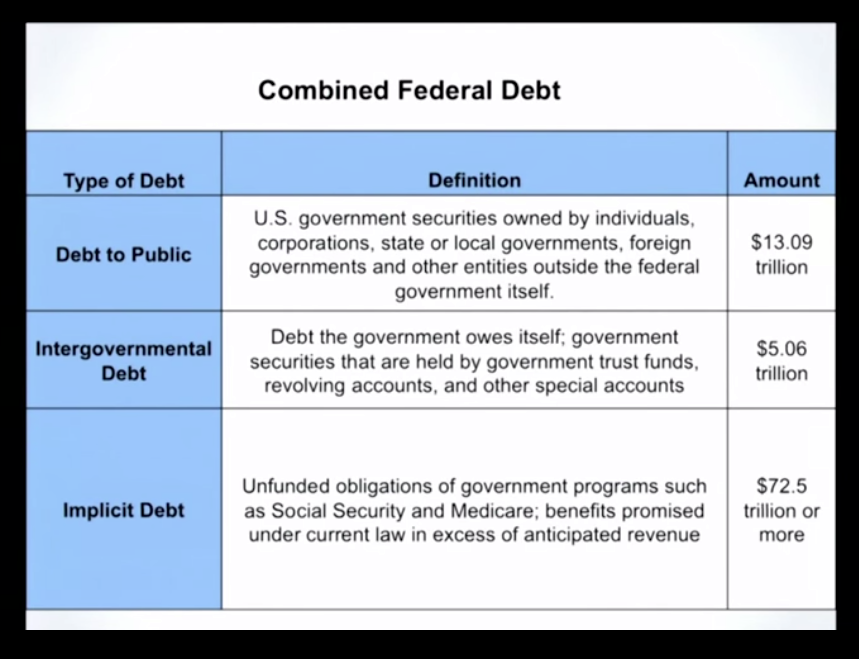
We can’t conclude, for example, that “this U.S. government thing is not working out, let’s cut our losses.” We just have to keep working to reform its institutions and policies no matter how often we get flung back into the well. It’s the only way we win.
This is Common Sense. I’m Paul Jacob.
Stendhal, Jan 23
On January 23, 1783, novelist Marie-Henri Beyle, known by his pen name Stendhal, was born. Stendahl was an avid student of the French liberal philosophical tradition, a follower of Destutt de Tracy and an attendant at the count’s salons. His most famous works include the novel “The Red and the Black” and a treatise on romantic love.
On January 23, 1860, the Cobden–Chevalier Treaty was signed between France and Great Britain. The treaty was named after the two main proponents of the agreement, Richard Cobden (in England) and economist Michel Chevalier (in France). The treaty had been suggested the year earlier, in British Parliament, by Cobden’s colleague John Bright, who saw the measure as a peace measure, and an alternate to a military build-up.
December 28, Calhoun resigns
On December 28, 1832, John C. Calhoun resigned as Vice President of the United States, the first to do so.
It is one thing to get dunning letters for a debt that you did not take on yourself. It is another thing to have the collectors come and just take.
Yes, over at Townhall.com, it is time to take on the takers . . . in the SSA. Click on over, then come back here. You know, for good company, and some hints on further reading.
- Washington Post: “Social Security, Treasury target taxpayers for their parents’ decades-old debts”
- Washington Post: “Social Security stops trying to collect on old debts by seizing tax refunds”
- Washington Post: “Social Security continuing to pursue claims against family members for old debts”
- Social Security Administration (SSA.gov)
Video: Christmas Day, 1914
Stefan Molyneux talks about a startling moment in the history of warfare:
December 27, Flushing Remonstrance
On December 27, 1657, a group of English citizens in Flushing, New York, who were not themselves Quakers, signed a petition protesting the persecution of Quakers, a document that has become known as the Flushing Remonstrance. An eloquent statement of the principle of religious liberty, it is widely regarded as a forerunner to the U.S. Constitution’s First Amendment.
The petition was delivered to Director-General of New Netherlands, Peter Stuyvesant.
Last weekend, 60 Minutes offered up a fascinating profile of outgoing Senator Tom Coburn (R-Oklahoma). Coburn has prostate cancer, and is leaving Washington for his home state before his term is up.
My trouble with the segment? It didn’t mention Coburn’s views on term limits, or make any point about him leaving early, other than, well, cancer. But it is worth mentioning that many, many politicians die in office. Coburn retains enough of his views to exit the political stage at an appropriate time.
He’s not clinging on to power as if he were Gollum at the Crack of Doom.
Thankfully, not all of Coburn’s projects will languish. Sen. Rand Paul (R-Kentucky) is planning to re-introduce a piece of legislation that Coburn had developed, a plan to halt the federal practice of sending “military-grade equipment to local police departments.”
It’s a typically Coburn-esque notion.
Though Occupier folks may have some trouble understanding where Coburn is coming from, or in what direction he wishes the country to go, Coburn’s Tea Party constituencies get the idea. And, if they had misunderstandings, Rand Paul made the limited-government perspective clear in August with his Time op-ed arguing against the militarization of America’s police forces.
The revived bill will still allow (too much) federal taxpayer money go to local departments. But it will (fortunately) stop the distribution of “vehicles and weapons used by the U.S. armed forces” to police.
No better tribute to Tom Coburn could be found than Rand Paul’s taking up his banner on this important issue.
This is Common Sense. I’m Paul Jacob.
December 26, death of George Washington
On December 26, 1799, four thousand people attended George Washington’s funeral where Henry Lee III honored him as “first in war, first in peace and first in the hearts of his countrymen.”
The Decembrist revolt againt Tsar Nicholas I occurred on the 26th of December in 1825. It was, alas, put down. Later revolts would prove less liberty-minded, more communist, and far bloodier.