“Our liberty depends on the freedom of the press, and that cannot be limited without being lost.”
Thomas Jefferson, Letter to Dr. James Currie (28 January 1786).

“Our liberty depends on the freedom of the press, and that cannot be limited without being lost.”
Thomas Jefferson, Letter to Dr. James Currie (28 January 1786).

“We’re the only state in the nation,” wails Wade Buchanan of the liberal Bell Policy Center, “where you can only raise revenues, taxes, by a vote of the people.”
Buchanan is talking about his state of Colorado and defending his side in the Kerr v. Hickenlooper case, which features 34 card-carrying members of Colorado’s political elite — sitting legislators, former legislators, former U.S. congressmen, local politicians and other assorted bigwigs — suing the voters of Colorado for having the gall to pass the state’s Taxpayer Bill of Rights (TABOR) initiative back in 1992.
Lovers of big government call TABOR a disaster; most Colorado voters like TABOR and will vote to keep it.
The crux of the case? The ridiculous notion that legislators have some cockamamie constitutional right to levy taxes and spend money without the people empowered with any veto. “When the power to tax is denied,” the suit alleges, “the legislature cannot function effectively to fulfill its obligations in a representative democracy and a Republican Form of Government.”
Immediately, however, the legal issue is whether the politically powerful Kerr plaintiffs even have standing to bring the lawsuit.
Last week, the U.S. Supreme Court vacated a 10th Circuit Court of Appeals decision that had granted standing, returning the case to the appeals court “for further consideration in light of Arizona State Legislature v. Arizona Independent Redistricting Commission.”
That’s good news.
“Most tellingly,” constitutional scholar Rob Natelson points out in a Denver Post column, in that Arizona case “the court praised direct democracy and held that it was ‘in full harmony with the Constitution’s conception of the people as the font of governmental power.’”
Font? We’re the boss.
This is Common Sense. I’m Paul Jacob.

“It is an axiom in my mind, that our liberty can never be safe but in the hands of the people themselves. . . .”
Thomas Jefferson, Letter to George Washington (January 4, 1786).

Most folks think minimum wage laws are there to help the poor in particular and everybody in general. But economist Scott Sumner, exploring “Britain’s new minimum wage: Is there a hidden agenda?” finds Britain’s new Tory double whammy of decreasing welfare payments while hiking mandatory minimum wage something of a mystery:
Why would a Conservative government sharply increase the minimum wage, in a budget that in many other respects favored small government? The minimum wage is currently 6.50 pounds/hour, and 9 pounds/hour is almost $14/hour in US terms. Also recall that average incomes in the UK are lower than in the US.
He finds a possible reason: to dissuade immigration. Migrants usually have low skills, in part because of language difficulties, so they cannot command high wages — market wages, of course, being defined by worker productivity.
Could the new minimum wage be there to influence migration without doing so directly?
Sumner goes on to discuss the racist origins of the minimum wage in America, Australia, and South Africa. The purpose was pretty clearly to hurt poor workers. Minimum wage laws were established to protect white workers from cheap competition by darker skinned folk.
Sumner’s postscript is interesting: “The [American] Democratic surge of interest in the minimum wage occurred soon after the GOP surge of interest in immigration restriction. Let’s see if the GOP jumps on the minimum wage bandwagon.”
Of course, for every advocate of a class-based, favoritist policy who argues deceptively, there are dozens who are merely mistaken.
This is Common Sense. I’m Paul Jacob.

“Fanatics think that their single-minded principles qualify them to do battle with the powers of evil; but like a bull they rush at the red cloak instead of the person who is holding it; they exhaust themselves and are beaten. They get entangled in non-essentials and fall into the trap set by cleverer people.”
Dietrich Bonhoeffer, Letters and Papers from Prison (1967; 1997), p. 4.
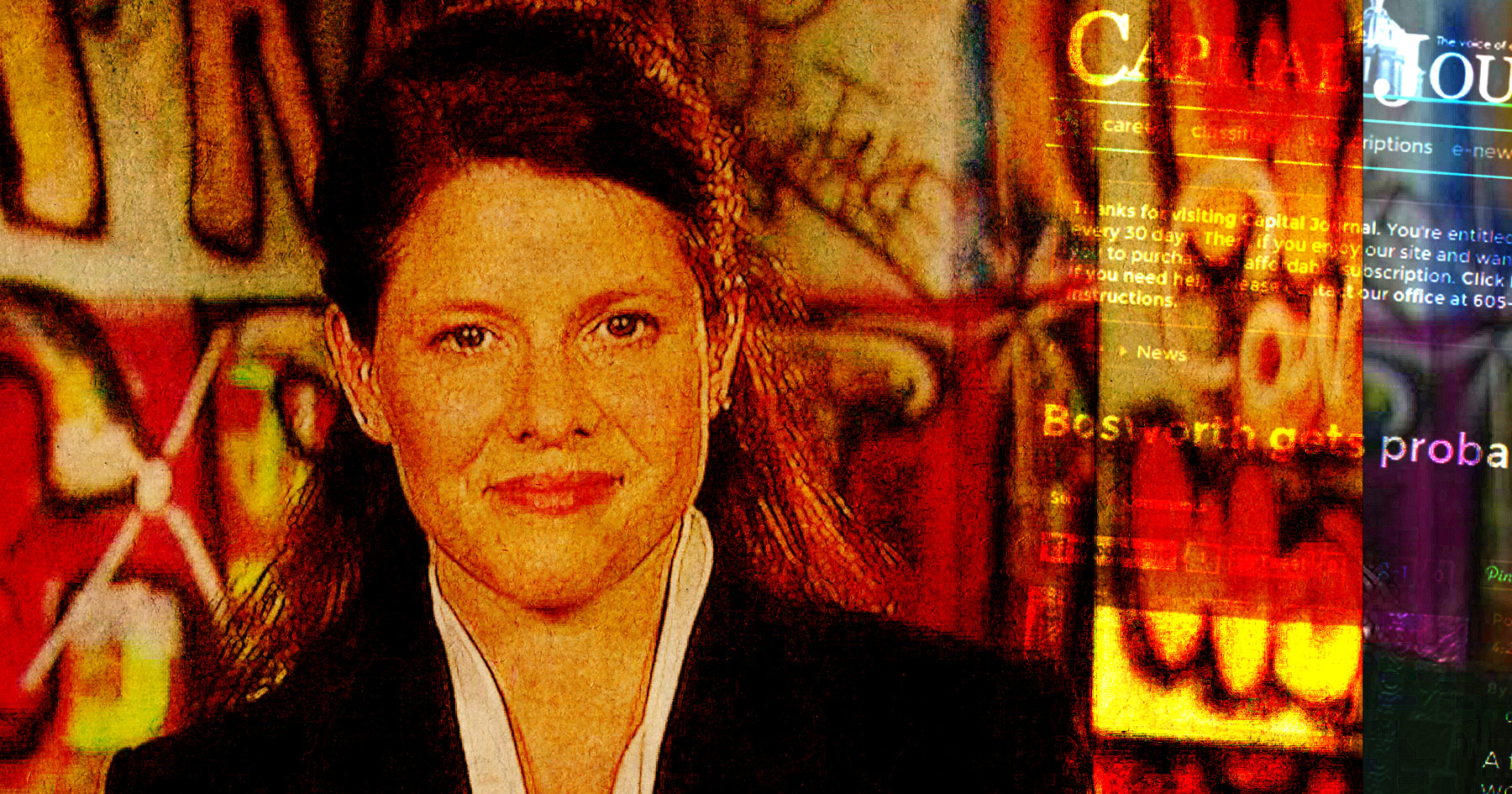
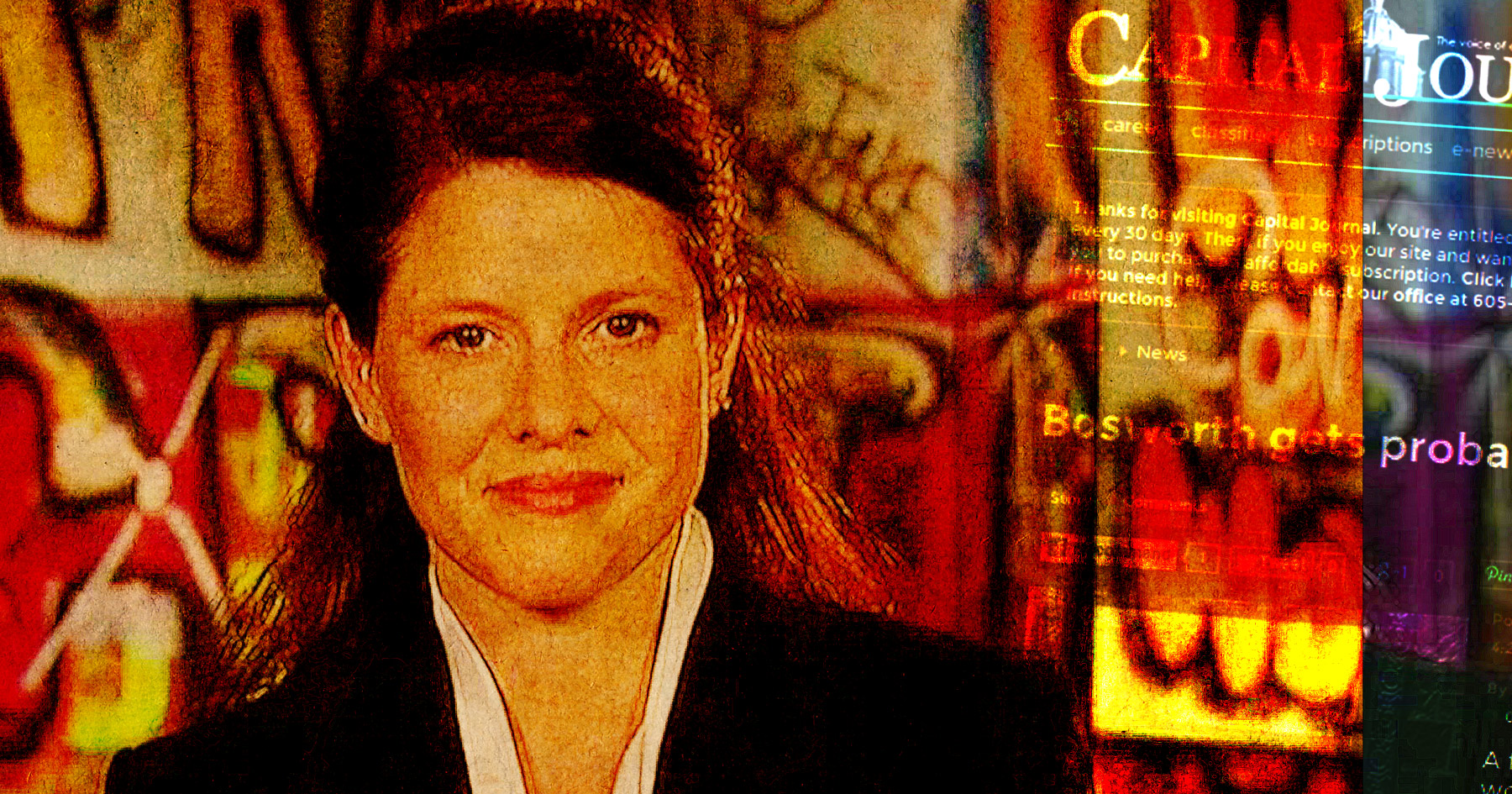
Last week, Judge John Brown sentenced Dr. Annette Bosworth, a neophyte candidate for U.S. Senate from South Dakota, to twelve concurrent two-year prison terms . . . to be suspended provided she successfully completes three years of probation, pays the cost of her prosecution, and performs 500 hours of community service providing medical care to the poor.
Note: that final punishment is what she has been doing on her own for years, and is sort of why she is in this mess in the first place.
The case isn’t an innocent person being unjustly accused. I’ve met Annette Bosworth; I’m proud to call her a friend. But she wasn’t exactly innocent. She got bad advice and made a faulty decision to sign as the circulator of petitions when not every signature was affixed in her presence.
That’s a mistake. It shouldn’t be a felony.
The bigger issue? The over-the-top prosecution. Attorney General Marty Jackley’s heavy-handed, multi-felony approach sends a chilling message to anyone in South Dakota considering political participation.
More ominous is the apparent long-running personal feud between Jackley and Bosworth. In a statement after her sentencing, Jackley declared that Bosworth had “crossed the line of exasperation.”
But it is South Dakotans who should be exasperated with the AG: “Jackley had said before her sentencing,” the Capitol Journal reported, “that he might recommend prison time depending on Bosworth’s attitude after conviction.”
Meanwhile, State Rep. Steve Hickey, a chief Bosworth accuser, appears to have committed her same sin: signing a petition as circulator and not witnessing each signature. Jackley hasn’t bothered to investigate, but defensively told reporters, “I’ve never said that I won’t look into it.”
Tellingly, Mr. Hickey just resigned his seat in the legislature.
This is Common Sense. I’m Paul Jacob.
Previous commentary:
“When the representative body have lost the confidence of their constituents, when they have notoriously made sale of their most valuable rights, when they have assumed to themselves powers which the people never put into their hands, then indeed their continuing in office becomes dangerous to the state, and calls for an exercise of the power of dissolution.”
Thomas Jefferson “A Summary View of the Rights of British America” (1774).

Last week National Review reported that Republicans in the U.S. House have long been pondering impeachment of IRS Commissioner John Koskinen for stonewalling about whether Lois Lerner’s emails were lost and irretrievable.
Lerner is the former IRS official who oversaw the obstructing of applications for non-profit status by right-leaning and Tea Party organizations. The timeline that has the GOP considering impeachment of the IRS boss goes like this:
However, investigators have recovered data, including 30,000 Lerner emails, that probably do contain many scandal-related epistles. Which anybody who knows anything about the Internet and servers and backups knows had never been lost to begin with — not prior to specific attempts to lose them.
How many weeks must drag on before Congress does what is necessary? Koskinen strung Congress along for his benefit, not ours — giving him more time only plays into his hands.
Stop procrastinating, Congress. Do it. Now.
This is Common Sense. I’m Paul Jacob.

“The great masquerade of evil has played havoc with all our ethical concepts. For evil to appear disguised as light, charity, historical necessity or social justice is quite bewildering to anyone brought up on our traditional ethical concepts, while for the Christian who bases his life on the Bible, it merely confirms the fundamental wickedness of evil. The ‘reasonable’ people’s failure is obvious. With the best intentions and a naive lack of realism, they think that with a little reason they can bend back into position the framework that has got out of joint.”
Dietrich Bonhoeffer, Letters and Papers from Prison (1967; 1997), p. 4.
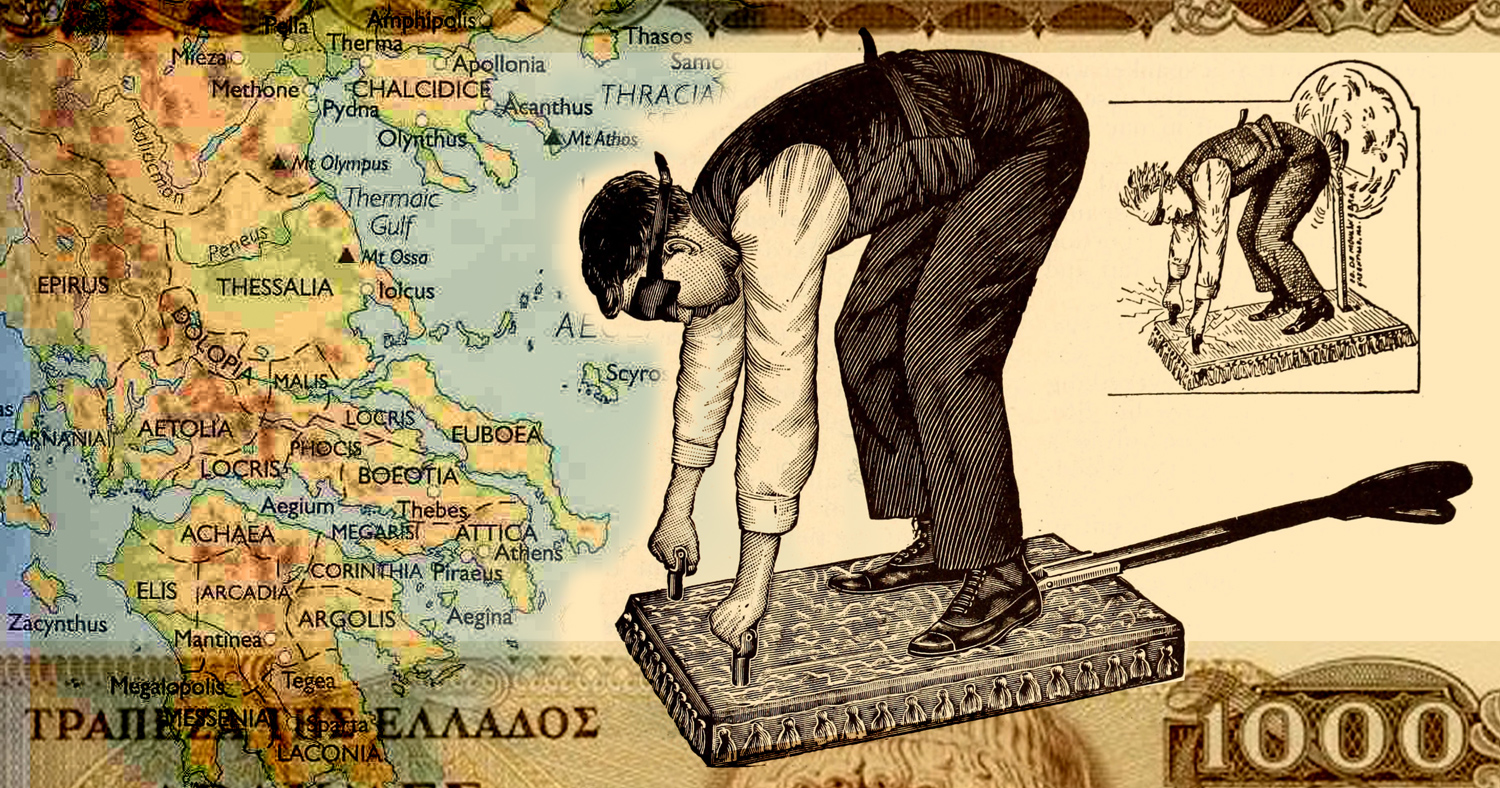
Five years into (the latest phase of) the Greek debt crisis, a former bureaucrat who was unable to withdraw her money from an ATM when the government declared a bank holiday had this to say: “How can something like this happen without prior warning?”
It’s always a surprise — to some people — when blatant causes lead to blatant effects.
In the case of Greece, or any socialistic welfare state, it’s a surprise when the money finally runs out. So accustomed to binge behavior, enthusiasts for “what’s thine’s mine” and “spend now/pay later” politics are nonplused when there’s nobody left to temporarily rescue them from the worst wealth-destroying effects of all the productivity-destroying causes.
The woman’s question has a short-term answer and a long-term answer.
The first is: what did you expect? The point of suspending access to bank accounts without warning is to stop holders draining banks of the last of the euro cash, supply of which the Greek government cannot expand unilaterally. Warning would have made the suspension pointless.
The second answer is: what did you expect? That is, haven’t you been paying attention for the last several decades?
By the time you read these words, Greece and the European governments may have come up with another patchwork deal for a loan with another series of deadlines. Or maybe Greece will have left the EU or at least the euro and returned to a (now massively inflated) drachma. Greek account-holders may or may not get another rickety, temporary reprieve.
But what can’t go on forever, won’t.
So it won’t.
Count on it, ma’am.
This is Common Sense. I’m Paul Jacob.