Categories
Today

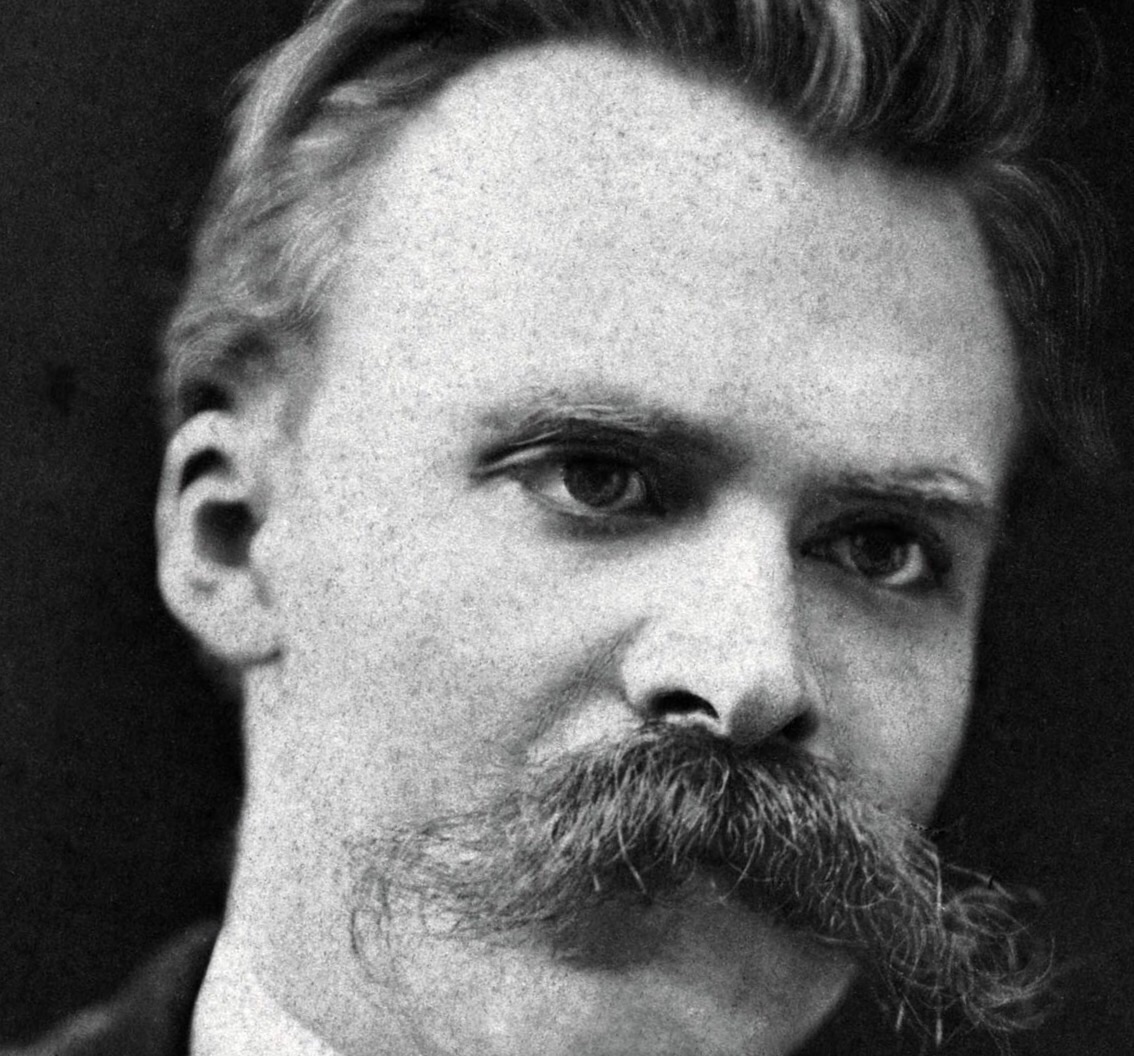
Auberon Herbert

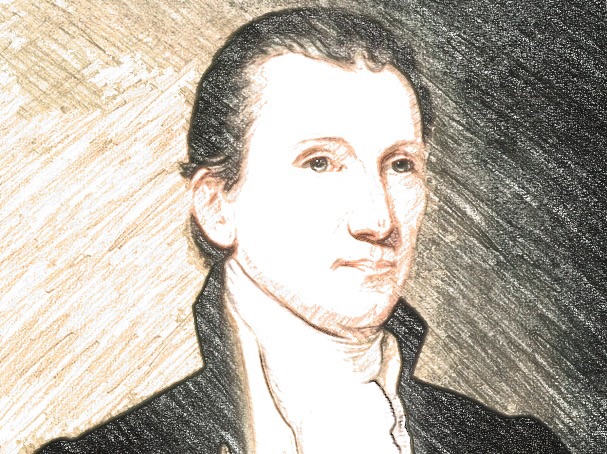
On June 18, 1838, Auberon Edward William Molyneux Herbert was born.

Auberon Herbert was a Liberal Member of Parliament who, after reading the writings of Herbert Spencer, became a radical individualist and author of essays such as “The Ethics of Dynamite,” “A Politician in Trouble About His Soul,” and “The Right and Wrong of Compulsion by the State.”

Categories
folly general freedom too much government

Under the Law, Not Beneath It

Celebrating the 800th anniversary of the Magna Carta Libertatum this week, I noted how a document intended to serve the very upper classes, by limiting each others’ powers, led to liberty for all.

The Nation, on the other hand, used it to excoriate the Citizens United ruling.

“Magna Carta reminds us that no man is above the law,” wrote John Nichols on Monday. “But it should not be imagined that Magna Carta established democracy, or anything akin to it.”

Of course the Magna Carta did not establish democracy. No one said it did. And neither Britain nor America has pure democracy, if you define it . . . in Nichols fashion. What is he driving at?

If we respect the notion that the rule of law must apply to all . . . then surely it must apply to corporations.

And, surely, the best celebration of those premises in the United States must be the extension of the movement to amend the US Constitution to declare that corporations are not people, money is not speech, and citizens and their elected representatives have the authority to organize elections — and systems of governance — where our votes matter more than their dollars.

Sure, Mr. Nichols, corporations shouldn’t be above the law. But they shouldn’t be below it, either. And in America we have rights to free speech and press. Those rights “surely . . . must apply to corporations.”

Let’s increase the liberating powers of democracy: open up ballot access, de-privilege incumbents, count votes in a non-mere-plurality-wins fashion.

But let’s not throw out equal rights under the law, even in the name of democracy.

This is Common Sense. I’m Paul Jacob.


Printable PDF

Magna Carta Nation


Categories
Today

Statue of Liberty

The Statue of Liberty arrived in New York Harbor on June 17, 1885. On the same day in 1930, progressive Republican President Herbert Hoover — eager to please agricultural states, and confident that protectionism would yield greater wealth — signed the Smoot-Hawley Tariff. The Great Depression deepened, especially as provisions of the bill took effect.

Three years later, investment author and two-time Libertarian Party presidential candidate Harry Browne was born.

On June 17, 1944, Iceland declared independence from Denmark.

On this day in 1971, President Richard Nixon declared a “War on Drugs,” which steadily decreased civil liberty and the rule of law in America.

Exactly one year later, five men were arrested for attempted burglary on the offices of the Democratic National Committee in the Watergate complex in Washington, D.C., igniting the Watergate scandal that ultimately led to the resignation of U.S. President Richard Nixon more than two years later.

Categories
general freedom U.S. Constitution

An 800th “Birthday”

Something happened 800 years ago yesterday, something of note.

The much-loathed and legendary — but real-life — King John signed a document with his barons that limited his power. It was later called the “Magna Carta,” the great charter.

Strange history. It was signed, made a big deal of, and then quickly repudiated. But it was never completely dead, possessing a zombie afterlife, and eventually helping give birth to the Enlightenment idea of limited government, as well as to the United States Constitution.

Most of the document is concerned with the king’s relationship with his subordinate (and insubordinate) barons. There’s a lot of power-wrangling in it, it’s all about divvying up prerogatives and responsibilities and taxes and fees. But it does contain a few passages of note (I’ve listed them on my “Today in Freedom” feature, in the past, and revive one for today’s).

My friend Sheldon Richman quotes scholar John Millar (1735-1801), one of Adam Smith’s most illustrious students, to put the document in its best perspective: “A great tyrant on the one side, and a set of petty tyrants on the other, seem to have divided the kingdom . . . who, by limiting the authority of each other over their dependents, produced a reciprocal diminution of their power.”

They were selfish men, Millar notes, not much concerned with ordinary folk, “But though the freedom of the common people was not intended in those charters, it was eventually secured to them. . . .”

Britain and then America stumbled onto liberty — a general and shared freedom — by the jealousy of competing powers.

We, the people, win when our “rulers” are divided, not united.

This is Common Sense. I’m Paul Jacob.


Printable PDF

Magna Carta


Categories
Thought

Magna Carta

“For a trivial offence, a free man shall be fined only in proportion to the degree of his offence, and for a serious offence correspondingly, but not so heavily as to deprive him of his livelihood.”


Magna Carta Libertatum, Clause 20.

Categories
Today

Nureyev & Adam Smith

On June 16, 1961, dancer Rudolf Nureyev defected from the Soviet Union.

The great Scottish moral philosopher, political economy pioneer, and Enlightenment intelectual Adam Smith (1723-1790), best known for authoring the 1776 masterwork The Wealth of Nations, was born on June 16.

Categories
folly general freedom nannyism

A Spring in Their Step?

The “Free State” — Maryland — just got a little freer.

Deborah Ramelmeier, Social Services Administration head honcho, has laid forth from her mighty public perch in Maryland’s Department of Human Resources an official directive to the state’s Child Protective Services (CPS).

She finally addressed the issues in the Meitiv case.

You’ll recall that Danielle and Alexander Meitiv allowed their 10-year old son and 6-year old daughter to walk home together, without a parent or guardian or attorney present, from a public park a mile away. Silver Spring police snatched the two children off the street last December and so began a Maryland CPS investigation for neglect.

In April, the Meitiv kids were again caught flagrantly walking home from a park. This time they were held for more than five hours by police, then CPS, before their frantic parents were informed and the family reunited.

In the midst of threats, accusations, and fears, the CPS neglected to do the one sensible thing you’d expect: articulate a policy position defining just when or how or even if ever children are allowed out in public without constant and direct adult supervision.

That smidgen of sanity came last week, in Ms. Ramelmeier’s otherwise boring, bureaucratic 23-page directive. “Children playing outside or walking unsupervised does not meet the criteria for a CPS response absent specific information supporting the conclusion that the child has been harmed or is at substantial risk of harm if they continue to be unsupervised.”

Shazam! Just like that, “playing outside” and “walking unsupervised” are once again legal.

The children won’t be arrested! And their parents won’t be investigated or threatened with losing their little ones!

This is Common Sense. I’m Paul Jacob.


Printable PDF

Free State


Categories
Today

Pig War!

The Oregon Treaty, signed June 15, 1846, established the boundary between Great Britain’s Canadian territory and the United States of America, from the Rocky Mountains to the Strait of Juan de Fuca, using the 49th Parallel as the handy marker. However, the treaty was not exactly clear on the territorial status of the San Juan Islands, so exactly 13 years later, to the day, a war erupted, over a shot pig.

Basically, an American farmer shot a pig rooting through his garden. The pig belonged to an Irishman. The two did not agree upon compensation, and “the authorities” were called in, with infantry mustering from the south and the Governor of Vancouver Island instructing marines to land on San Juan Island — though the rear admiral in charge refused to comply with the order, on the reasonable grounds that war over a pig was not worth it. Local troops from both sides lined up against each other, but under command to defend themselves only and not shoot first. All that was exchanged in this war were insults. It turned out to be a bloodless war, discounting the pig, so it might qualify as the best war in American history.

On June 15, 1992, Vice President Dan Quayle incorrectly added an “e” to the end of a Trenton, N.J., sixth grader’s correctly spelled “potato.”

Categories
Thought

Aristotle

“The basis of a democratic state is liberty.”


AristotlePolitics, Book Six.

Categories
links

Townhall: The Incredible Lightness of Freedom

The continuing saga of the Meitiv kids, at Townhall this weekend. Click on over, then back here!