The deterioration of a government begins almost always by the decay of its principles.
Montesquieu, The Spirit of the Laws, Book VIII, Chapter 1.
Categories
Montesquieu
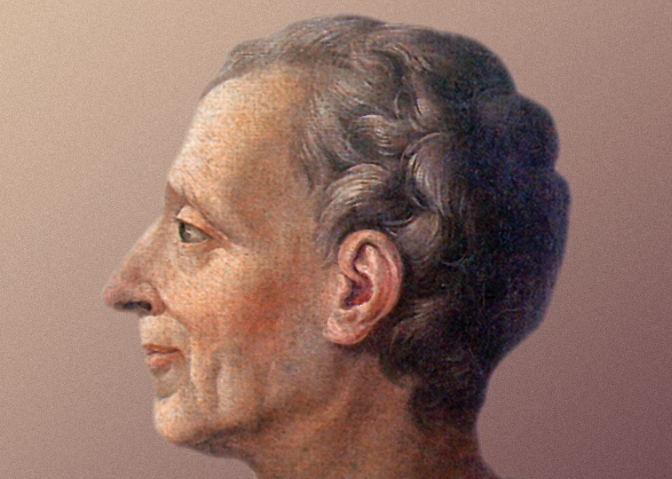
The deterioration of a government begins almost always by the decay of its principles.
Montesquieu, The Spirit of the Laws, Book VIII, Chapter 1.
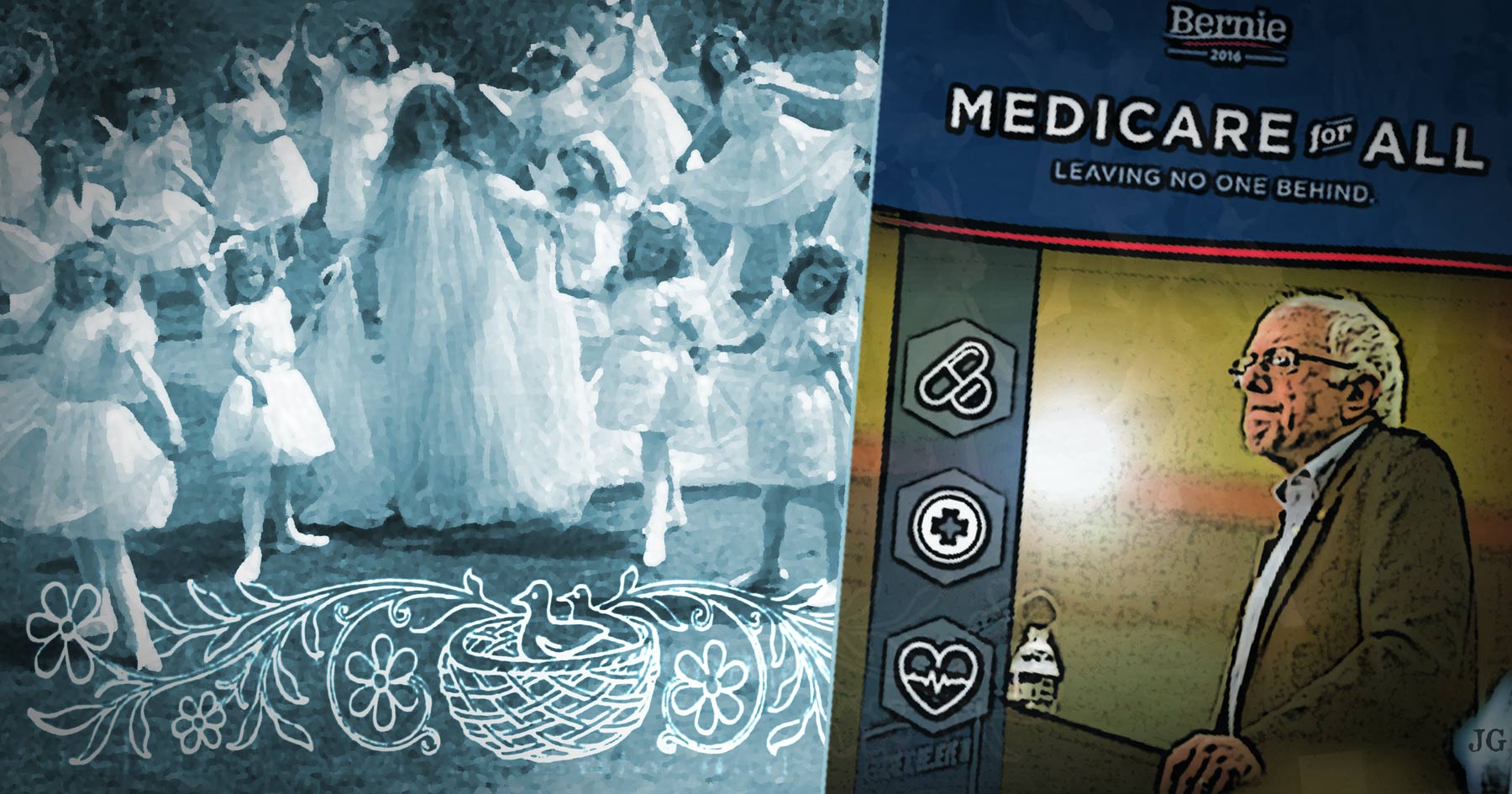
Bernie Sanders promises universal health care, but, up until the other day, just waved his hands in the air, without specifics. Now he has a plan.
Sort of.
Ezra Klein, writing at Vox, says Sanders’s “Medicare for All” is not a plan at all. It’s a “gesture towards a future plan.”
But that doesn’t mean that the thing isn’t “well sold.”
After praising the Obamacare/Affordable Health Care Act for giving “health insurance” to more than 17 million people, the preamble of Sanders’s proposal made its most predictable statement: “Twenty-nine million Americans today still do not have health insurance and millions more are underinsured and cannot afford the high copayments and deductibles charged by private health insurance companies that put profits before people.”
Forget that deductibles are integral to the very idea of insurance. Forget that profits are absolutely necessary for the success of an industry. Forget that profits come from serving people.
Remember, instead, the leftist clichés.
Sanders’s plan, such as it is, is a lie — or, in Klein’s phrasing, “has nothing to do with Medicare.” Sanders aims to get rid of deductibles and copays, on which Medicare depends. It’s what makes Medicare distinct from, say, socialized medicine.
Insurance covers individually unforeseeable but actuarially manageable risks. Socialized medicine gets rid of the idea of “payment for service” on every level — and thus the very idea of insurance — and turns the whole thing over into a tax-and-spend program, i.e., what Sanders really wants.
That won’t be cheap, as Megan McArdle demonstrated some time back during the Vermont “single payer” kerfuffle.
The only option for increasing value while lowering prices? Go the opposite direction from socialism.
This is Common Sense. I’m Paul Jacob.
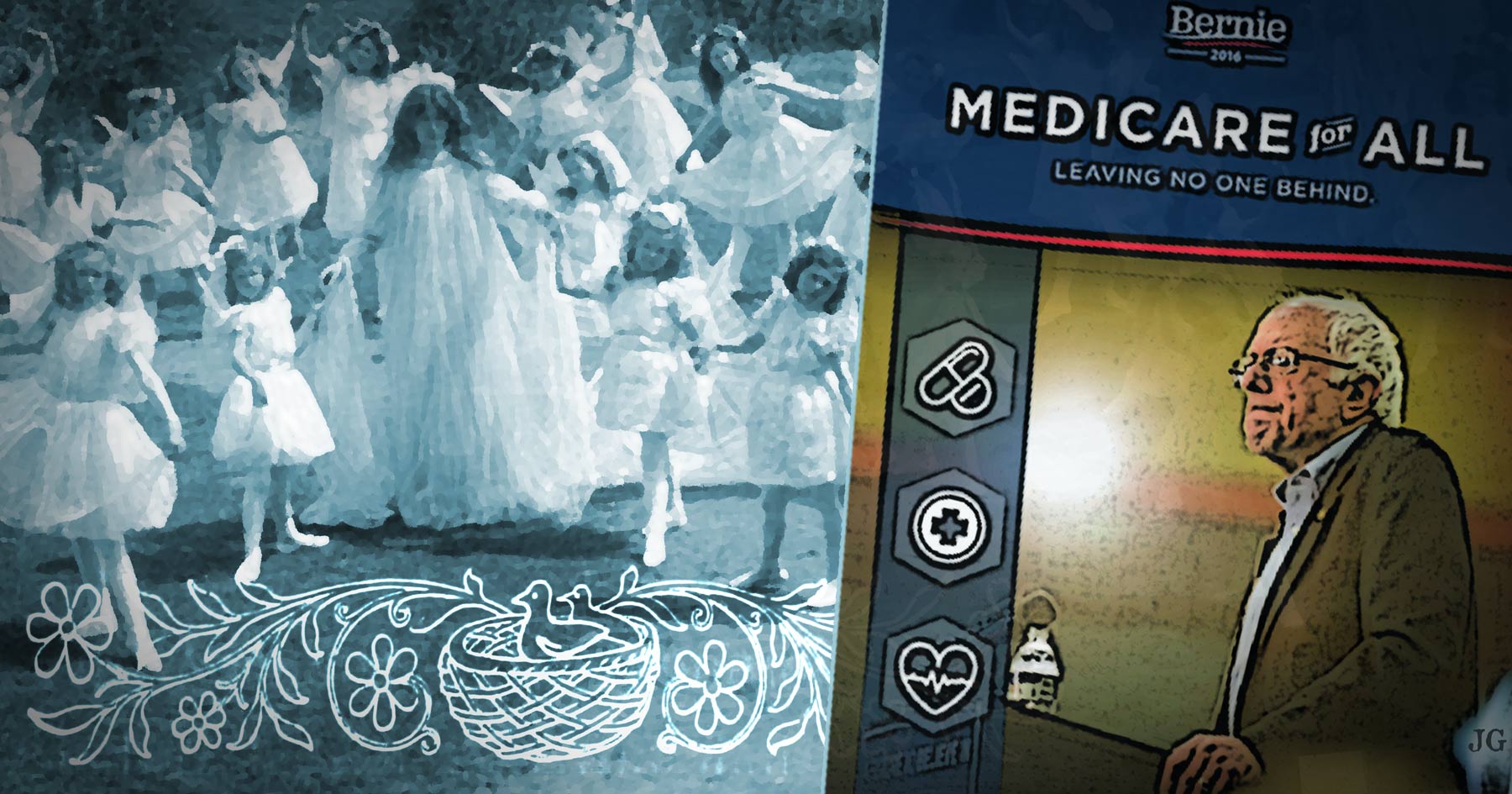
Christians are beginning to lose the spirit of intolerance which animated them: experience has shown the error of the expulsion of the Jews from Spain, and of the persecution of those Christians in France whose belief differed a little from that of the king. They have realized that zeal for the advancement of religion is different from a due attachment to it; and that in order to love it and fulfill its behests, it is not necessary to hate and persecute those who are opposed to it.
Montesquieu, Persian Letters, no. 60.
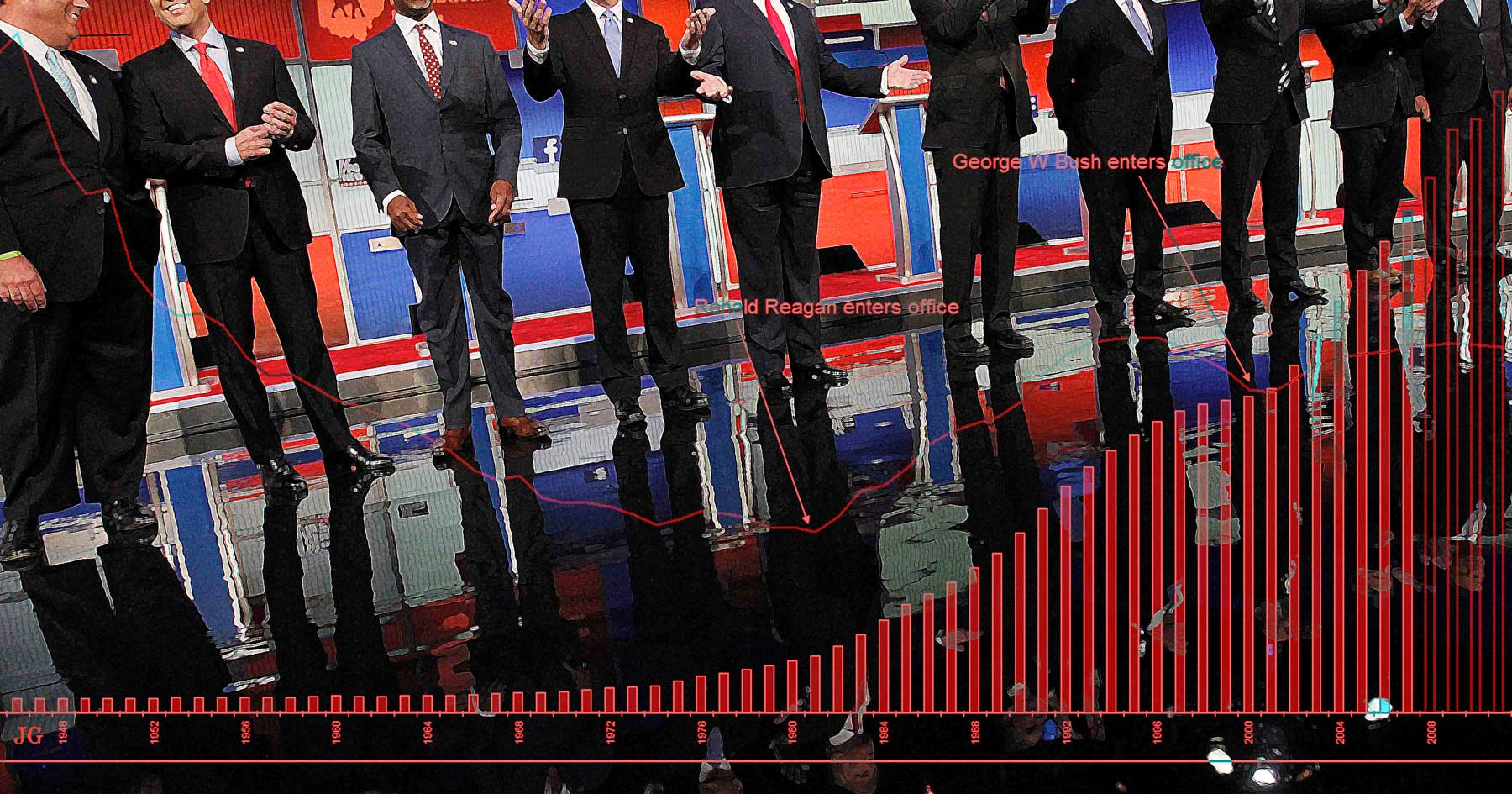
Sen. Rand Paul wasn’t the only thing absent from the GOP presidential stage last Thursday.
Also missing? Any meaningful talk about reducing federal spending and avoiding a sovereign debt crisis. The debt looms over all our heads. But you wouldn’t know it to listen to the GOP hopefuls. (And the same nearly goes without saying for the Democratic Party’s debt-denying presidential aspirants.)
Way back when the Bush Administration had lost America’s confidence, deficits and debts were a common concern. Much of the disgust that birthed the Tea Party movement was disgust at Republican over-spending, as well as at the bailouts that spurred the initial protests. And then came Obama, Obamacare, and a 70 percent increase in federal debt.
Why the silence now?
Nick Gillespie, of Reason, figures that Republicans don’t really care about deficits and debts.
Andrew Flowers, of FiveThirtyEightPolitics, wonders whether the GOP has abandoned the issue because Republicans don’t want to face the fact that Obama has, indeed, reduced deficits — though definitely not the debt, which has nearly doubled.
Alternative theory? Republicans have given up hope, because the last two Democratic presidents, Bill Clinton and Barack Obama, have successfully threatened government shutdown over even the itty bittiest spending cut, safe in the knowledge that the mainstream media’s full spin-cycle will be blaming conservatives.
This has made it easier for Big Government Republicans to embrace greater military funding and other spending programs, as Gillespie notes.
But real leadership recognizes the present danger of debt.
This is Common Sense. I’m Paul Jacob.
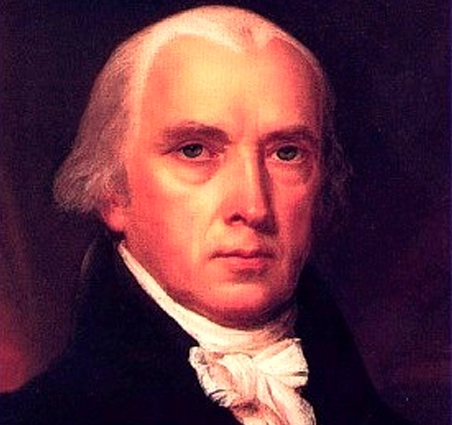
“The Constitution supposes, what the history of all governments demonstrates, that the executive is the branch of government most interested in war, and most prone to it. It has accordingly with studied care, vested the question of war in the legislature.”
On January 18, 1689, Charles-Louis de Secondat, Baron de La Brède et de Montesquieu, French satirist and philosopher, was born. His treatise The Spirit of the Laws was a major influence upon America’s founding generation. He is famous for his articulation of the theory of separation of powers, which is implemented in many constitutions throughout the world. He did more than any other author to secure the place of the word despotism in the political lexicon.
In 1811, former U.S. President Thomas Jefferson translated and published Destutt de Tracy’s Commentary and Review of Montesquieu’s ‘Spirit of Laws,’ a very popular review of republican principles — which helps demonstrate how important this writers’ were to the American form of government.

Candidacy in trouble? Add a whopper. And make your daughter say it. This weekend at Townhall, the truth about the Clintons and America. Click on over, then come back here:
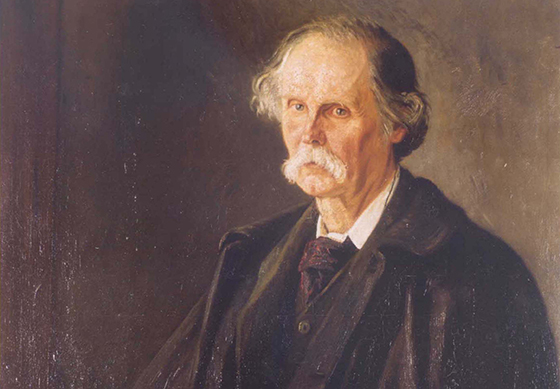
“The hope that poverty and ignorance may gradually be extinguished, derives indeed much support from the steady progress of the working classes during the nineteenth century.”
Alfred Marshall, Principles of Economics (1890), Book I.

Don’t think by hashtag:
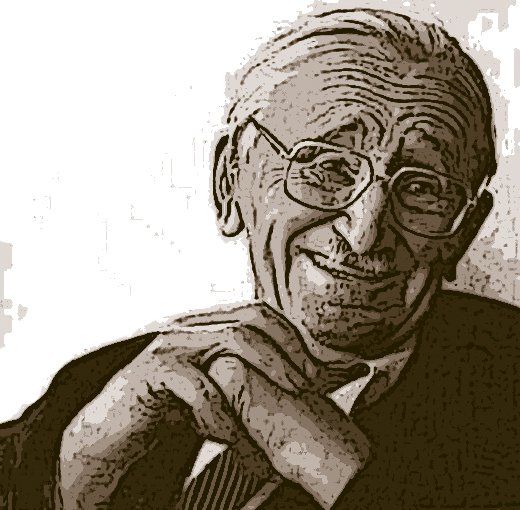
“There is no reason why a man who has made a distinctive contribution to economic science should be omnicompetent on all problems of society — as the press tends to treat him till in the end he may himself be persuaded to believe.”
F. A. Hayek, speech at the Nobel Banquet, December 10, 1974.