Categories
Thought

Thomas Sowell

“If Fannie Mae and Freddie Mac were free market institutions they could not have gotten away with their risky financial practices because no one would have bought their securities without the implicit assumption that the politicians would bail them out.

“It would be better if no such government-supported enterprises had been created in the first place and mortgages were in fact left to the free market. This bailout creates the expectation of future bailouts.

“Phasing out Fannie Mae and Freddie Mac would make much more sense than letting politicians play politics with them again, with the risk and expense being again loaded onto the taxpayers.”


Thomas Sowell, “Bailout Politics,” September 30, 2008

Categories
links

Townhall: The Democrats’ Demagogue

Over at Townhall, I expand on Friday’s analysis of Bernie Sanders. Click on over, then back here for the linked reading:

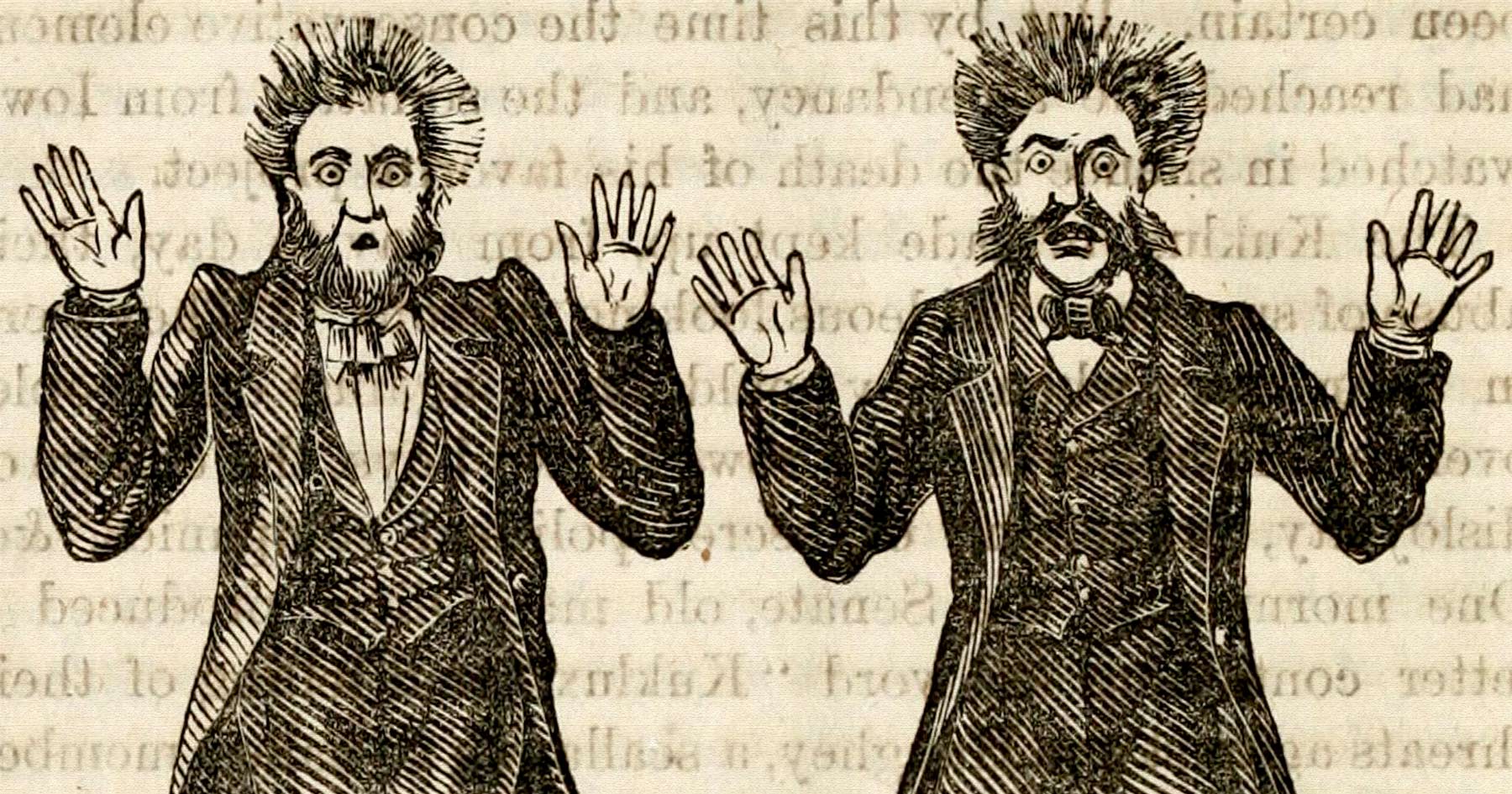
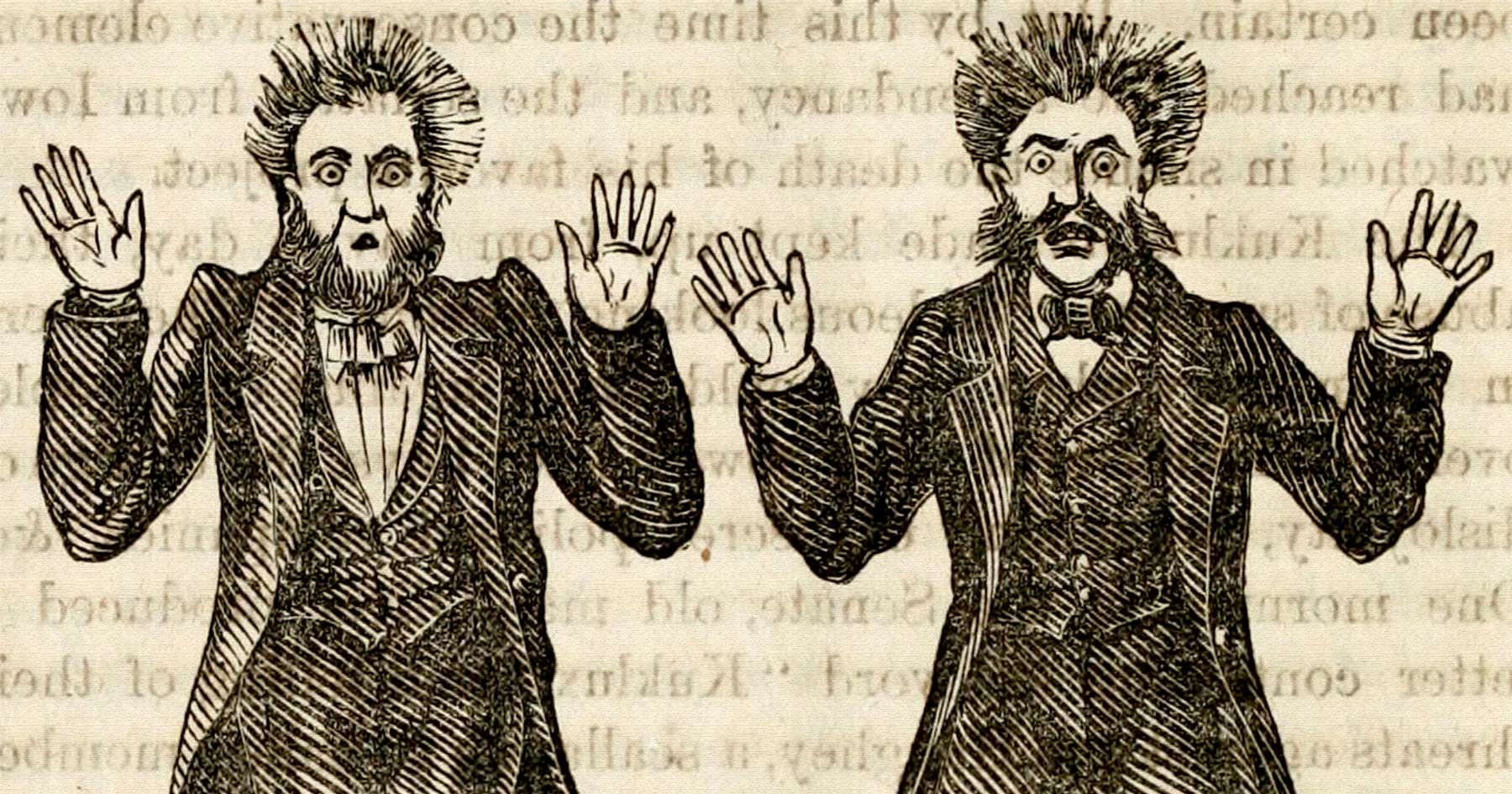
Definition according to the Century Dictionary

Categories
video

Video: Defending Free Markets

One of many terrific lectures from this summer’s Mises University sessions:

Categories
Thought

John G. Kemeny

I left Washington fully expecting to read the following story someday in one of our morning newspapers. Three scientists named Galileo, Newton, and Einstein have concluded that the earth is round. However, the New York Times has learned authoritatively that Professor John Doe of Podunk College has conclusive evidence that the earth is flat.

Professor John George Kemeny, as quoted in Dixy Lee Ray and Lou Guzzo, Trashing the Planet, 1990.
Categories
Common Sense general freedom ideological culture national politics & policies

Weekend with Bernie: Leftist Demagogue

Bernie Sanders, Hillary Clinton’s main opponent on the Democratic side of Campaign 2016, is a demagogue.

My Democratic friends balk at this, contending the term better applies to Donald Trump. But, no matter how different these men may be, their differences don’t mean that only one of them can be a demagogue.

Perhaps demagogues of very different stripes.

First, definitions.

A demagogue (from French “demagogue,” derived from the Greek “demos,” for “people”) is, my dictionary says, a political leader in a democracy who appeals to the emotions, fears, prejudices, and ignorance of the lower socioeconomic classes in order to gain power.

The charge makes sense because Sen. Sanders has made wealth and income inequality his main issue, and because he relentlessly attacks higher-income Americans as a source of America’s current woes — whose wealth Sanders targets as the cure (provided it goes through his hands, first).

True, he appeals mostly to college-educated middle-class folks and bohos. But he uses the code-phrase “everyday working Americans” as a wedge, and the poor as an innocent shield, to advance what are, in fact, elitist solutions.

Like most self-professed socialists the Senator is only faux-prole, workingman manqué. Intellectuals, collegians and government workers have long dominated the socialist movement.

Socialist Demagogue defined: Emotion, Fear, Prejudice and Ignorance - Bernie Sanders

Though Sanders rightly attacks the plutocracy, he never attacks the government half of the plutocrats’ power structure. Never admits that unions are plutocratic in nature, too.

Instead, he appeals to the emotions, fears, prejudice and ignorance of those who, against all evidence, see more government only as a solution and never as a problem.

Par for the socialist course. That, remember, is a word Sanders chose.

For its historic demagogic appeal.

This is Common Sense. I’m Paul Jacob.


Printable PDF

Weekend with Bernie Sanders


Categories
Thought

Dixy Lee Ray

“We should be very jealous of who speaks for science, particularly in our age of rapidly expanding technology. A misinformed or uninformed public can stop anything even when it is clearly in society’s benefit. How can the public be educated? I do not know the specifics, but of this I am certain: The public will remain uninformed and uneducated in science until the media professionals decide otherwise, until they stop quoting charlatans and quacks, and until respected scientists speak up.”


Dixy Lee Ray, Trashing the Planet, 1990

Categories
Common Sense initiative, referendum, and recall too much government

Rich Mischief

The SFGate.com headline was clear: “State ballot initiative fee raised to $2,000 to prevent mischief.”

It just wasn’t accurate.

Assembly Bill 1100, introduced by Assemblyman Evan Low (D-Campbell), passed by Democrats in the legislature and signed by Gov. Jerry Brown, doesn’t do anything to address “mischief.” Which, incidentally, abounds in California government — especially in the legislature.

The new law raises the cost for citizens to file a ballot initiative from $200 to $2,000. Now, if the mischief-maker has $2,000 to spend, this new law accomplishes . . . nothing.

Only five of the 26 states with initiative and/or referendum charge citizens any filing fee. California’s is now the highest by far.

“There are some lunatics out there and for $200 we encourage them to put measures on the ballot that say we should put a gun to the head of someone who is gay or lesbian, bisexual or transgender,” argued Sen. Mark Leno (D-San Francisco). AB1100 was about “clearing out what’s nonsense.”

The senator was referring to an initiative filed by an Orange County attorney, called the “Sodomite Suppression Act,” which, if passed, would establish the death penalty for homosexual conduct.

“This reform is overdue,” argued Assemblyman Low, calling it “a threshold for reasonableness.”

Reasonableness? Those with $2,000 are more reasonable than those with just $200?

The anti-gay measure was a stunt. No signatures were collected. It wasn’t going to be on any ballot. Still, the Attorney General went to court to have it declared unconstitutional. Case closed.

So, why pass AB1100?

To make it harder for voters to go around legislators via the ballot initiative. Just more mischief.

This is Common Sense. I’m Paul Jacob.


Printable PDF

Government Scold, collage, montage, Paul Jacob, Jim Gill


Categories
Common Sense folly general freedom ideological culture nannyism too much government

I Prefer Plastic

When I go to the supermarket, and get asked “paper or plastic?” — about which bag the checker should wrap my purchases in — I almost always say “plastic.” They are lighter than paper bags, are easily re-usable for a wide variety of home purposes, and resist water — thus less apt to self-destruct on the trip from store to car, car to kitchen.

Of course, anything plastic and mega-popular makes a perfect target for environmentalist critics. Hundreds of cities, particularly on the West Coast — but throughout the world — now outlaw plastic bags or restrict their use.

We are encouraged to buy and re-use cloth shopping bags — which in my experience get stinky pretty quickly.

On many issues (say, pollution) my heart is with the environmentalists. But on the bag issue, I’m skeptical. Thankfully, Katherine Mangu-Ward has a great piece at Reason, showing that the scientific case against the plastic bag is weak — weaker than a paper bag holding wet veggies, an exploded Coke, and frozen meat.

Plastic bags are not the litter problem they’ve been cracked up to be, she says, citing one study figuring that “all plastic bags, of which plastic retail bags are only a subset, are just 0.6 percent of visible litter nationwide.”

And, as for harm to wildlife, she quotes a Greenpeace biologist to good effect: “It’s very unlikely that many animals are killed by plastic bags. The evidence shows just the opposite. We are not going to solve the problem of waste by focusing on plastic bags. . . . On a global basis plastic bags aren’t an issue.”

What is at issue is their utility, reusability, and . . . our freedom.

This is Common Sense. I’m Paul Jacob.


Printable PDF

Paper or Plastic, collage, photomontage, Paul Jacob, James Gill, illustration, politics


Categories
Thought

Dixy Lee Ray

“Repeatedly over the past few years the American public has been subjected to a litany of catastrophes — to predictions of impending disaster that are claimed to be unique to modern civilization. The oceans are dying, the atmosphere is poisoned, the earth itself is losing its capacity to support life. . . . The anticipated catastrophes are our own fault, of course, blamed on the greedy and perfidious nature of modern man.

“Well, it’s all pretty heady stuff, but is it true? As with so many issues that involve technology, the answer is yes — and no — probably rather more ‘no’ than ‘yes.’”


Dixy Lee Ray, Trashing the Planet, 1990

Categories
Common Sense crime and punishment free trade & free markets general freedom judiciary nannyism national politics & policies too much government

Legalize, But Prohibit?

Last week, I warned of marijuana legalization.

Not that I’m against it. But how much will actual freedom be increased?

Note: I’m not bemoaning, as one activist friend argued, that “if you can’t toke up and celebrate in public when it passes, it’s not legalization.”

One cannot now legally smoke tobacco in most public buildings (meaning those open for business as well as government-owned structures) or drink a beer in most public parks or while navigating sidewalks. But you can smoke and drink at home or on certain types of private property.

Ending the drug war and treating newly legalized marijuana pretty much as we treat alcohol and tobacco seems like a long overdo common sense approach.

There’s also the freedom of home cultivation. I have friends who make wine at home, for private consumption. It’s legal; it’s proper. It should also be legal to grow cannabis at home. Yet, many a politician thinks otherwise.

And they are inspired, in a sense, by the popular legalization mantra, “legalize, tax and regulate.” That sends an ominous signal: in order to maximize revenues, politicians see the revenue advantage in forbidding hard-to-tax home cultivation — cultivation that is, let’s face it, a traditional freedom, a right “retained by the people.”

The excuse for this continued prohibition could be “think of the children.” But it’s probably just greed for revenue . . . and the even more hidden enticements of “crony capitalism,” which plagues almost all industry.

You should be able to grow a plant. And self-medicate. These are basic human rights, and the state should work around those.

This is Common Sense. I’m Paul Jacob.


Printable PDF

Pot Pot, legalization, collage, photo-montage, Paul Jacob, Jim Gill