On April 24, 1792, the French national anthem, “La Marseillaise,” was composed by Capt. Claude Joseph Rouget de Lisle.
Eight years later to the day, the United States Congress approved a bill establishing the Library of Congress.

On April 24, 1792, the French national anthem, “La Marseillaise,” was composed by Capt. Claude Joseph Rouget de Lisle.
Eight years later to the day, the United States Congress approved a bill establishing the Library of Congress.
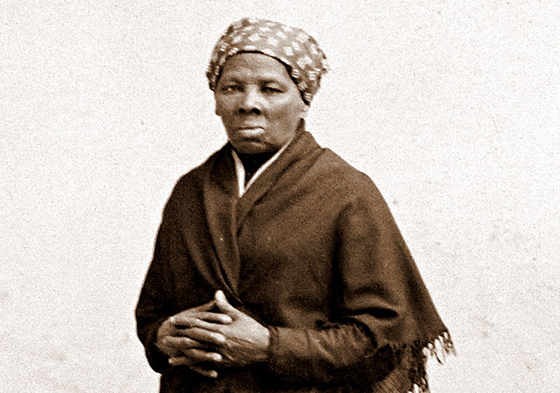
I had crossed de line of which I had so long been dreaming. I was free; but dere was no one to welcome me to de land of freedom, I was a stranger in a strange land, and my home after all was down in de old cabin quarter, wid de ole folks, and my brudders and sisters. But to dis solemn resolution I came; I was free, and dey should be free also; I would make a home for dem in de North, and de Lord helping me, I would bring dem all dere.
Harriet Tubman, as quoted in Sarah H. Bradford, The Moses of Her People (1886).
Not all talks need visual aids or a declamatory style. Here a scholar calmly looks at Somalia and sees repeated failure and cluelessness … on the part of our government, especially.
And now our foreign policy geniuses want to export from Somalia the very same policies that worked so poorly there!
CAUTION: The speaker here appeals to the facts and to reason. There is none of that excitement of the denunciatory spirit, so common on YouTube. No cheap thrills. This is for reasonable people.
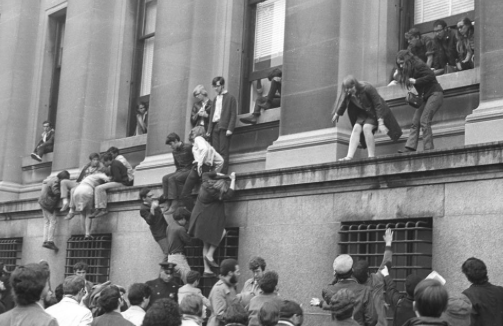
On April 23, 1968, students at New York City’s Columbia University held a demonstration to protest military research and the condemnation of part of the neighboring Morningside Heights section of Harlem to make way for a new student gymnasium. The protest escalated into a week-long occupation of five campus buildings before police moved in. Some 712 students were arrested, and over 100 injured during the forcible eviction. After the university-ordered police response, a student strike shut down the campus for the rest of the semester.

By now, most people are probably OK with Treasury’s plan to oust Andrew Jackson off the face of the $20 Federal Reserve Note and replace him with Harriet Tubman.
I certainly am. Ms. Tubman was a great hero of freedom. President Jackson has a more . . . mixed legacy.
The original plan to rotate Alexander Hamilton off the ten spot met with pushback as a result of his rising popularity from the Broadway play, Hamilton. Besides, Hamilton deserves blame—er, placement on the nation’s official paper money. Hamilton devised the first national banking system. Andrew Jackson, decades after Hamilton’s death, nixed that insider-mercantile scheme by refusing to re-authorize the central bank of the day, setting up a very different system for the Treasury and America’s banks.
Less than a century later, Hamilton’s idea was revived in the form of the Federal Reserve. Which we benefit/suffer from to this very day.
But in a bizarre twist, Jackson was not simply replaced. He was demoted. Tubman is to be placed on the note’s obverse, and Jackson moved to the back of the bus, er, note. The reverse.
I would have preferred to revive Old Hickory years from now, after the Federal Reserve dissolved, to be featured on a private bank’s note. After all, private banks did that for years between Jackson’s time and the modern period.
Bank notes don’t need the imprimatur of government.
That would allow us to place, on the flip side of the sawbuck, a more suitable image — of the Big Dipper, which served escaped slaves as a direction, to go north: “follow the Drinking Gourd.”
Additionally, the Big Dipper suggests bailouts, doesn’t it?
We’ll have plenty more before the system is changed.
This is Common Sense. I’m Paul Jacob.

Also, please consider showing your appreciation by dropping something in our tip jar (this link will take you to the Citizens in Charge donation page… and your contribution will go to the support of the Common Sense website). Maintaining this site takes time and money.
Your help in spreading the message of common sense and liberty is very much appreciated!

On April 22, 1724, philosopher Immanuel Kant was born.
Aside from being the pre-eminent modern philosopher and originator of transcendental idealism, Kant was also a major figure of Enlightenment thought, a classical liberal, and the originator of the notion of the Categorial Imperative. He was an early and important astronomical theorist in his early career, but produced his greatest works towards the end of his life, including The Critique of Pure Reason and The Groundwork for the Metaphysics of Morals. He was also author of the 1795 essay “Perpetual Peace: A Philosophical Sketch.”
Arthur Schopenhauer is widely known as an admiring and astute critic of Kant’s thought, while philosophical opponents include Friedrich Nietzsche and Ayn Rand. Kant’s approach to ethics continues to excite interest today, with some of the revival a result of the work of John Rawls.
Kant died on February 12, 1804, in Königsberg, Prussia (now Kaliningrad, Russia), where he had lived the bulk of his life.
I was the conductor of the Underground Railroad for eight years, and I can say what most conductors can’t say — I never ran my train off the track and I never lost a passenger.
Harriet Tubman, as quoted in Mary Biggs, Women’s Words: The Columbia Book of Quotations by Women (1996), p. 2.

David Brooks has a story to tell you.
His New York Times op-ed, yesterday, “The Danger of Single Story,” builds on a good premise: “each individual life contains a heterogeneous compilation of stories. If you reduce people to one, you’re taking away their humanity.”
Brooks puts a political edge on what otherwise might sound like a lesson in manners with his next sentence: “American politics has always been prone to single storyism — candidates reducing complex issues to simple fables. This year the problem is acute because Donald Trump and Bernie Sanders are the giants of Single Storyism.”
Brooks then asserts that Trump and Sanders share a similar story that they beat to death, “the alien invader story.”
You can see how it applies to Trump, a staunch opponent of illegal immigration. Aliens invade!
But Brooks recognizes that Sanders’s story is about “the evil entity called ‘the banks.’” Not exactly alien. This menace is home-grown.
Then our pundit moves on to issues not in the single-story vein of Trump and Sanders, and how what seem to be opposite stories (incarceration prevents crime; too much incarceration is a moral horror) can both be true.
Crime is low right now, but Brooks devotes most of this putative paean to multiple crime stories. The third Bernie story he takes a bite of, the $15 minimum wage, belies the Single Storyism charge. That is, the point of his essay.
Way to go, sophisticate.
He also draws a complete non sequitur: “Raising the minimum wage to $15 may make sense in rich areas.” Nothing he wrote gives any credibility to that. At best the hike would do nothing.
This is Common Sense. I’m Paul Jacob.

Also, please consider showing your appreciation by dropping something in our tip jar (this link will take you to the Citizens in Charge donation page… and your contribution will go to the support of the Common Sense website). Maintaining this site takes time and money.
Your help in spreading the message of common sense and liberty is very much appreciated!
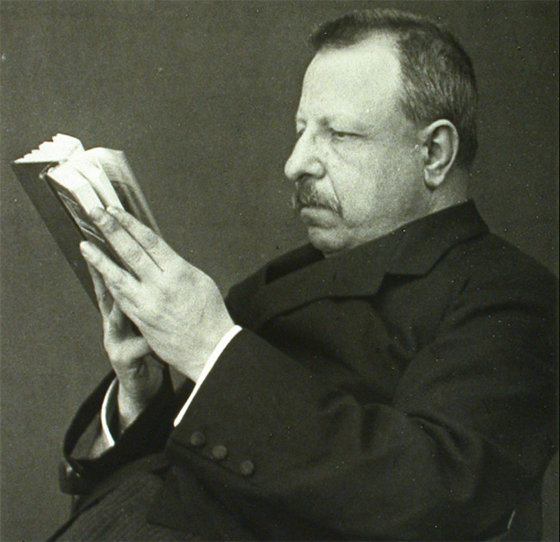
Benedetto Croce was an Italian philosopher and outspoken anti-fascist.
Morality, and the ideal of freedom which is the political expression of morality, are not the property of a given party or group, but a value that is fundamentally and universally human. . . . No people will be truly free till all are free.
The Manifesto of Fascist Intellectuals was first published in Il Mondo, then by most Italian newspapers on April 21, 1925 — the national, anniversary-day celebration of the Founding of Rome (ca. April 21, 753 BC).
Nowadays, all sorts of people call their political opponents “fascist,” often on the shakiest of rationales. It might be a good idea to look up this original document, for a good idea what politics’ “f-word” originally meant. Here is an excerpt:
Fascism was . . . a political and moral movement at its origins. It understood and championed politics as a training ground for self-denial and self-sacrifice in the name of an idea, one which would provide the individual with his reason for being, his freedom, and all his rights. The idea in question is that of the fatherland. It is an ideal that is a continuous and inexhaustible process of historical actualization. It represents a distinct and singular embodiment of a civilization’s traditions which, far from withering as a dead memory of the past, assumes the form of a personality focussed on the end towards which it strives. The fatherland is, thus, a mission.
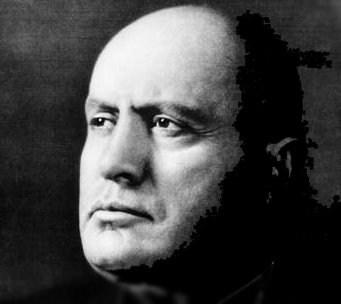
The manifesto was written by Giovanni Gentile, in support of the regime of Benito Mussolini (pictured above).