Categories
ideological culture national politics & policies political challengers

Libertarianish, Democratish?

With the two most disliked and distrusted politicians in American history snatching the two major party presidential nominations, lots of voters — free-market conservatives, libertarians, liberals concerned about civil liberties and war, moderates, decency advocates — are looking for an alternative.

The Libertarian Party, our age’s perennial “third party” on state ballots, has a golden opportunity.

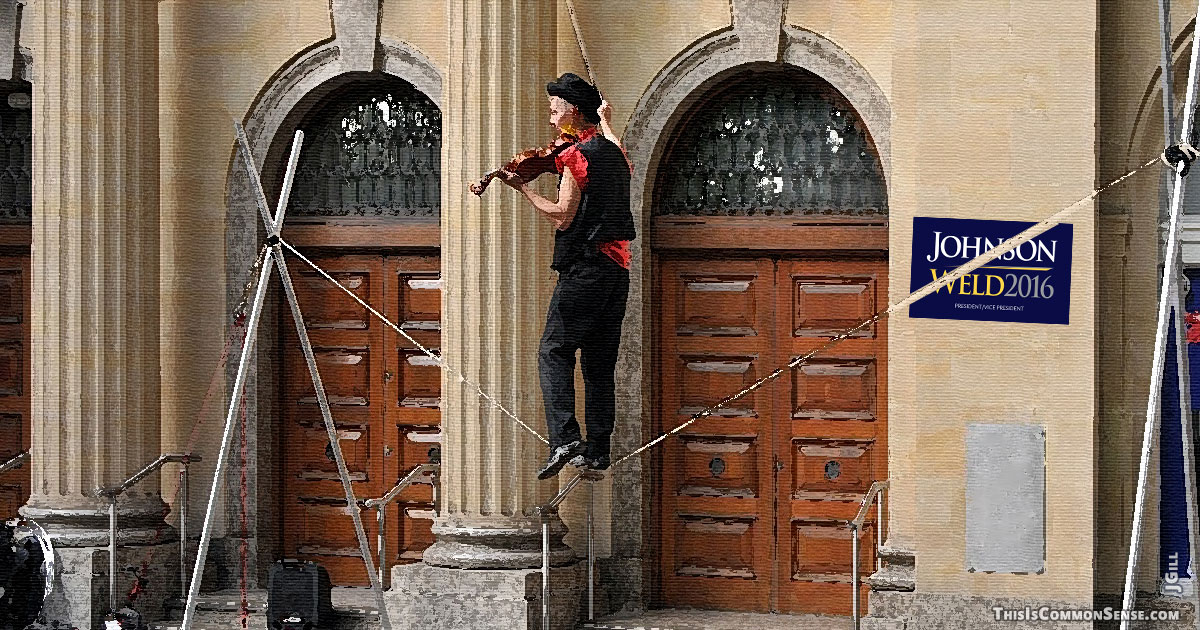
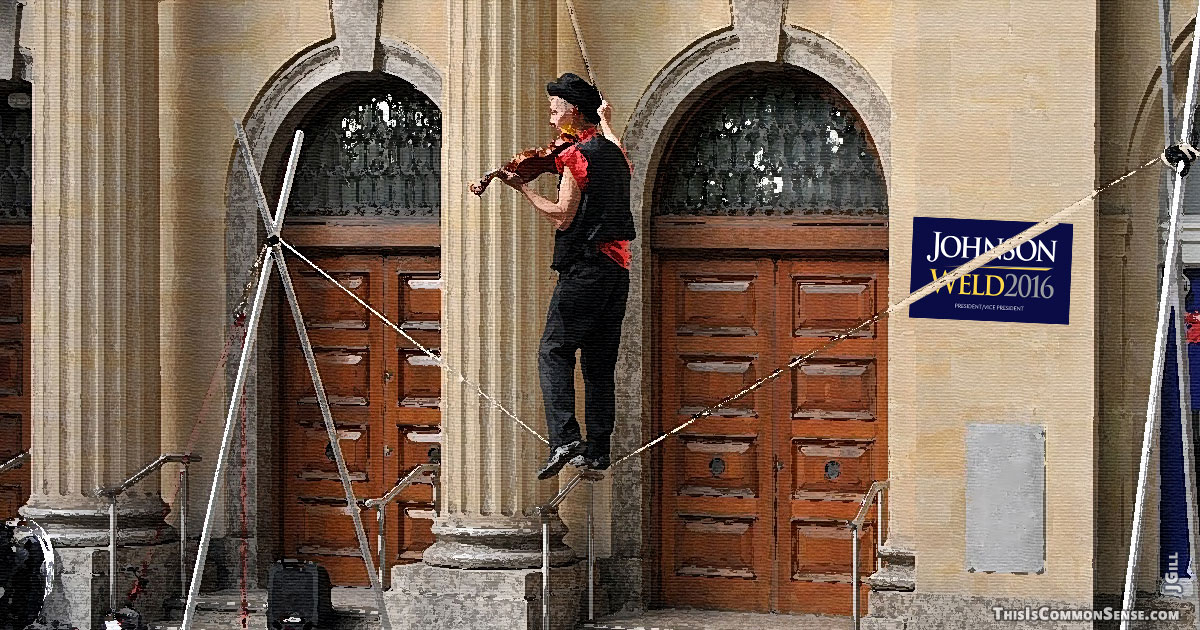
Perhaps that’s why delegates to 2016’s Libertarian Party nominating convention chose two two-termed former Republican governors to take up the freedom banner: New Mexico’s Gary Johnson and Massachusetts’s Bill Weld.

Both are nice men. They are the most accomplished and credentialed politicians in the race — more than Hillary Clinton; far more than Donald Trump. They don’t seem radical or threatening.

But that might be a problem. They are too nice. They are not threatening enough.

I’m not suggesting they threaten anyone, but in ideological terms they often appear more as moderates than as libertarians, as Ilya Shapiro noticed last week when he asked the pointed question, “Is Johnson-Weld a Libertarian Ticket?”

The Johnson-Weld take, economist Mark Thornton noted, is more libertarianish than libertarian: the pair are “fiscally conservative and socially liberal for Republicans which is great, but they fall short of Libertarian.”

This isn’t exactly a shock. Anyone who watched the bizarre CNN town hall with Johnson and Weld will remember that odd moment when Johnson called Democrat Hillary Clinton “a wonderful public servant” and Weld dubbed her a “lifelong friend.”

No need to attack Mrs. Clinton personally, of course, but when a Libertarian cannot find one discouraging word about what a President Hillary would mean, it seems they want to appear Democratish.

And not libertarian.

Well, it’s a strategy. But it won’t appeal to #NeverHillary voters, or impress many #NeverTrumpers, either.

This is Common Sense. I’m Paul Jacob.   

Printable PDF

Gary Johnson, Weld, Libertarian, moderates, presidential, election, illustration


Categories
Thought

Rose Wilder Lane

In our ignorance, we could not see that the Kaiser’s Germany and the Communist International were merely two aspects of the Old World’s reaction against the new, the American principle of individual liberty and human rights.


Rose Wilder Lane, Give Me Liberty (1936).

Categories
Today

Aleksandr Solzhenitsyn

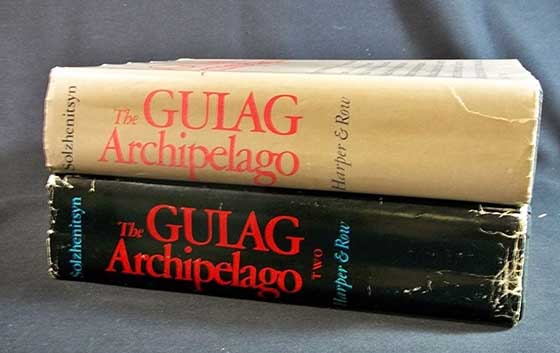
On August 3, 2008, Aleksandr Solzhenitsyn died at age 90. His novels, such as One Day in the Life of Ivan Denisovich and Cancer Ward, explored life under totalitarian Communism, and remain classics of modern literature. His huge survey of Soviet concentration camps, The Gulag Archipelago, was an important contribution to the demise of Communism as a popular ideology, showing just how horrifying the repression in the Soviet Union had become.

Categories
Accountability government transparency ideological culture media and media people moral hazard nannyism national politics & policies political challengers porkbarrel politics responsibility Second Amendment rights too much government U.S. Constitution

The Clinton Chasm

Hillary Clinton is roundly disliked by millions of outsiders, but admired by hundreds of politicians and activists. What sets her apart?

She listens.

Well, that’s Ezra Klein’s take in “Understanding Hillary,” an almost-believable piece of apologetics courtesy of Vox.

He calls Hillary’s problem “The Gap,” though “Vast Chasm” is more like it.

There’s a huge difference between how the public sees her — “Polls show most Americans doubt her basic honesty” — and how her fellow insiders feel about her. “She inspires a rare loyalty in ex-staff,” Klein informs us, “and an unusual protectiveness even among former foes.”

Klein emphasizes Mrs. Clinton’s capacity to talk naturally and listen carefully, when dealing one-on-one with insiders and constituents, and in small groups. “She gets things done,” he asserts, though I think what he really means is she moves her agenda forward. Actual accomplishments? Open to dispute.

On the crucial issue of trust, Klein buys into what Hillary is selling. She says people doubt her because she’s been so often attacked.

I don’t know about you, but I doubt her because . . . well, cattle futures, for starters. Her ridiculous “vast right-wing conspiracy” dodge to all those rich 1990s scandals: the blue dress, President Bill losing his law license, even the crony takeover of the White House travel office. Hillary has led the way more recently with the Benghazi “video” lie and her private server and email scandal. Plus, witness the ongoing conflict presented by the Clinton Foundation raking in millions from unsavory foreign sources..

Klein, on the other hand, argues that the media is against her.

This is Common Sense. I’m Paul Jacob.

Printable PDF

Hillary Clinton, trust, lie, truthful, Ezra Klein, illustration, VOX


Categories
Today

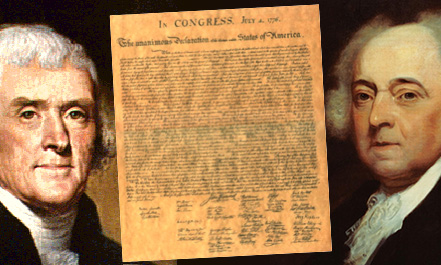
Declaration signed!

The Declaration of Independence was signed by members of the Continental Congress of the United States, on August 2, 1776.

Categories
Thought

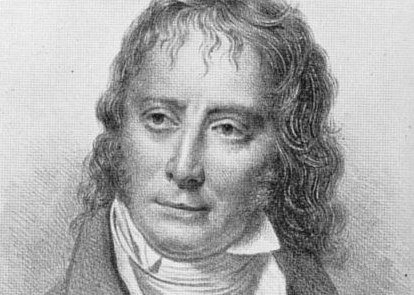
Benjamin Constant

“Commerce makes the action of arbitrary power over our existence more oppressive than in the past, because, as our speculations are more varied, arbitrary power must multiply itself to reach them. But commerce also makes the action of arbitrary power easier to elude, because it changes the nature of property, which becomes, in virtue of this change, almost impossible to seize.

“Commerce confers a new quality on property, circulation. Without circulation, property is merely a usufruct; political authority can always affect usufruct, because it can prevent its enjoyment; but circulation creates an invisible and invincible obstacle to the actions of social power.

“The effects of commerce extend even further: not only does it emancipate individuals, but, by creating credit, it places authority itself in a position of dependence.”


Benjamin Constant, The Liberty of the Ancients Compared with That of the Moderns, 1819.

Categories
general freedom national politics & policies political challengers too much government U.S. Constitution

Is That a Constitution in Your Pocket?

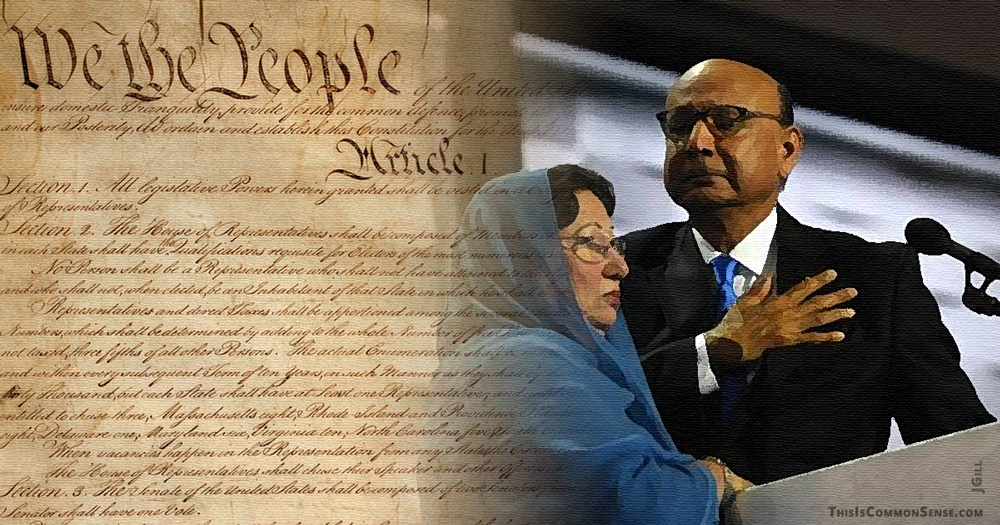
“We were blessed to raise our three sons in a nation where they were free to be themselves and follow their dreams.”

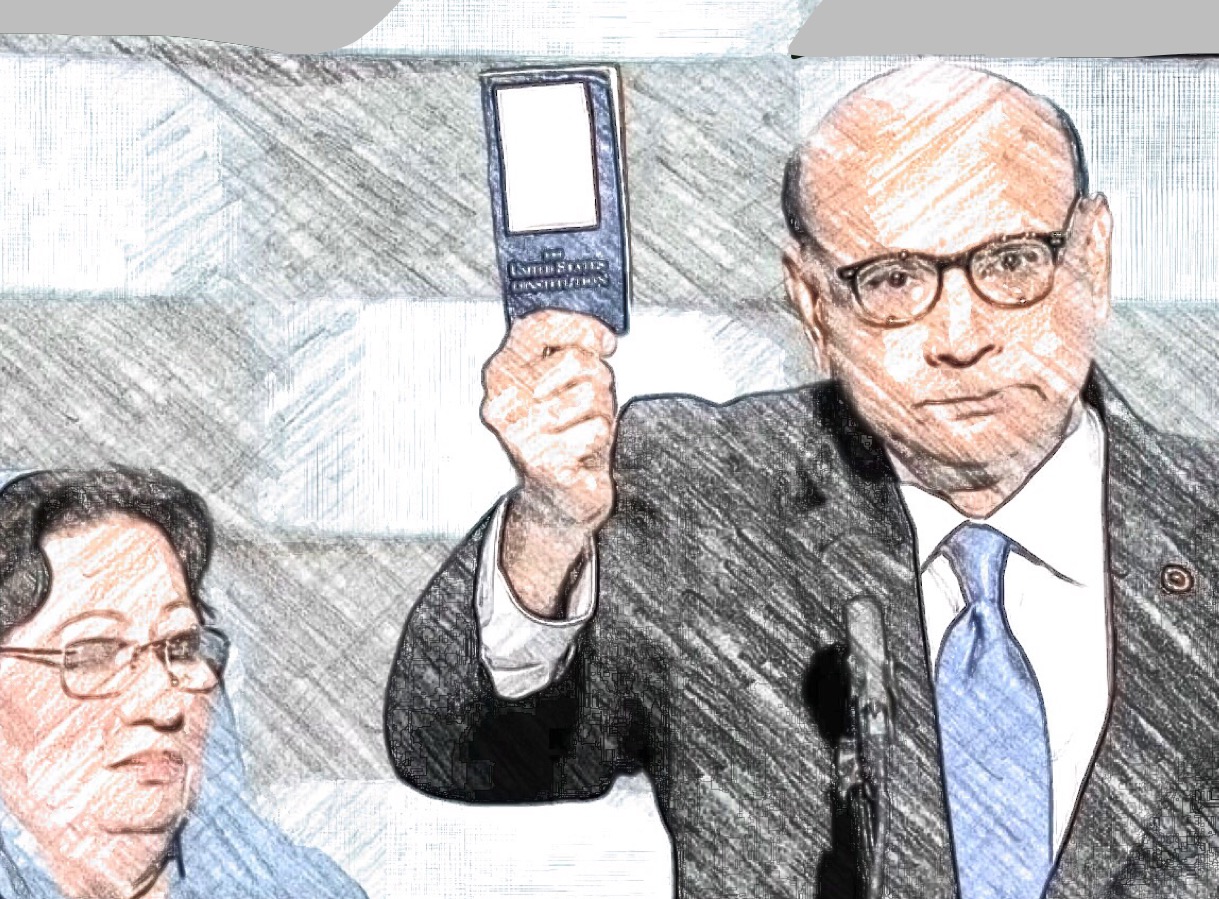
Those eloquent words came from the lips of Khizr Khan, the Pakistani immigrant who spoke at the Democratic National Convention last week about losing his son, Capt. Humayun Khan, to a suicide bomber in Iraq.

Describing his family “as patriotic American Muslims with undivided loyalty to our country,” and charging that, “Trump consistently smears the character of Muslims.” Khan asked Donald J. Trump a great question: “Have you even read the U.S. Constitution?”

Then, reaching into his suit pocket, Khan pulled out a copy, adding, “I will gladly lend you my copy.”

Yesterday at Townhall, I declared Khan my Person of the Week. Not just because Mr. Khan is fond of handing out pocket-sized copies of the U.S. Constitution and told the New York Times that his “real hero” is Thomas Jefferson, but because he asked a great question.

Let’s ask all the candidates. That question, for sure, and three additional ones:

  1. Do you favor repealing parts of the First Amendment to allow incumbent congressmen to regulate their own campaigns and their opponents’ in regard to raising and spending money?
  2. In the Heller case, the Supreme Court ruled that the Second Amendment provides individuals a “right to bear arms” — will you appoint justices who agree or disagree with Heller?
  3. As president, will you issue an executive order instructing all federal agencies and police agents to cease any use of civil asset forfeiture?

I’ve got more questions. I bet you do, too.

This is Common Sense. I’m Paul Jacob.

Printable PDF

Khizr Khan, Pakistan, Democrat, convention, Democratic, Donald Trump, illustration


Categories
Today

Slavery Ends

On August 1, 1834, Great Britain’s Slavery Abolition Act of 1833 took force, freeing slaves throughout the British empire.

Technically, it freed slaves under the age of six. On the August 1 date in 1838 and 1840, the rest of the empire’s slaves were freed, practically speaking.

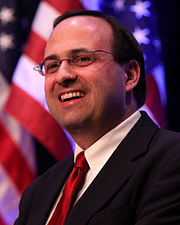
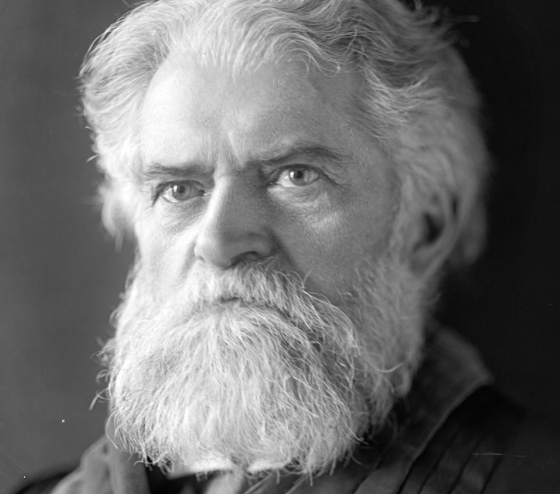
August 1 births include Francis Scott Key (1779), composer of the poem “The Star-Spangled Banner”; American authors Richard Henry Dana, Jr. (1815) and Herman Melville (1819); and Thomas E. Woods, Jr. (1972), historian and popularizer of Austrian economics (pictured at right), podcaster of the Tom Woods Show.
Categories
Thought

Simon Newcomb

[W]ith the progress of society, government has within its sphere grown more powerful and efficient, this sphere has not been greatly enlarged. But the sphere of individual activity has greatly enlarged, and with the spread of knowledge the individual has become better able to maintain his rights against society, and governments are becoming less and less able to manage him.


Simon Newcomb, Principles of Political Economy (New York: Harper & Brothers, 1886), p. 447.

Categories
links

Townhall: Have You Read the Constitution?

What a question! But, even if you have read the document, it might be worth your time to click on over to Townhall.com, and then migrate back here for more reading.