Categories
Accountability general freedom initiative, referendum, and recall moral hazard national politics & policies political challengers term limits too much government U.S. Constitution

Fear and Freedom

“If Libertarian Gary Johnson doesn’t win the presidency,” I posted to Facebook last Monday, “I’m leaving the country.”

Well, Johnson didn’t win. And I wasn’t kidding. I’m writing this from a Parisian café.

Of course, I was also tongue-in-cheek, since — spoiler alert! — I am coming home next week.

This week, I’m speaking at the Global Forum on Modern Direct Democracy in San Sebastián, Spain — a gathering of pro-initiative folks from all over the world. We want people’s votes to count, even if we disagree with their candidate or issue.

Which brings us back to Donald J. Trump’s surprise victory. Protests have broken out in several cities — some violent. And some folks say they’re scared of what Trump may do as president. Sure, one can snicker at these fearful responses as liberal whining. And to the extent they’re talking about university professors canceling tests and coddling “traumatized” students . . . well, no argument here.

Still, I don’t just sympathize when I hear people fear a politician with power, I empathize.

For a long time, I’ve been worried by out-of-control presidential power — from unconstitutionally making laws through executive orders to making war without any real check on that power. Scary. Whether that president is George W or Obama or Hillary or Trump.

Government is a monopoly on force. Therefore, by definition, government is frightening.

Democracy is often an antidote to tyranny, a check on power, but not always. That’s why folks who truly appreciate democracy believe in individual rights that transcend any vote-getting public decision mechanism.

Scared by President-Elect Donald Trump? Protect yourself: enact greater limits on government.

This is Common Sense. I’m Paul Jacob.
 

Ask the next question.

Questions Answered:

Is fear a natural byproduct of government?

Which presidential powers lack sufficient checks and balances?

What is more important: individual freedom or democratic decision-making?

Is democracy a check on power or an enhancement?

The Next Question:

How do we go about creating greater limits on political power?

Printable PDF

Protect Yourself, limited government, meme


Categories
Today

Our Confederation

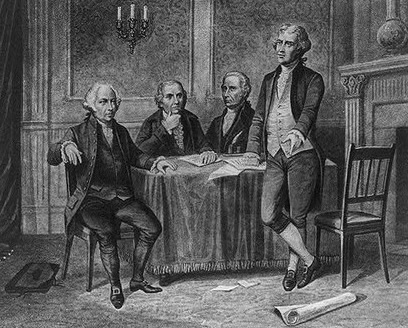
On November 15, 1777, the Continental Congress approved the Articles of Confederation — after 16 months of deliberation.

Categories
Thought

Mary Wollstonecraft

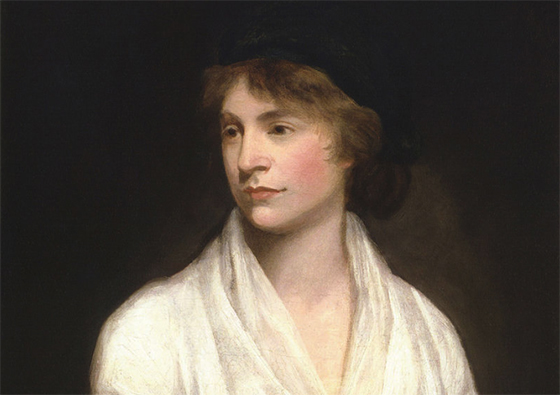
No man chooses evil because it is evil; he only mistakes it for happiness, the good he seeks.


Mary Wollstonecraft, A Vindication of the Rights of Men (1790).

Categories
Accountability ballot access general freedom incumbents initiative, referendum, and recall national politics & policies political challengers responsibility too much government U.S. Constitution

Votes Without Poison

Strange election. So . . . round up the usual suspects!

Immediately after Hillary dried her tears and conceded, out came the Tweets, then the analyses: the “third parties” are to blame!

Over the weekend, I focused* on one such election post-mortem. The basic idea is not altogether wrong: minor party efforts together may have cost the Democrat her Electoral College advantage this time around, just as Nader’s Green Party run spoiled Al Gore’s bid in 2000 and several past congressional races have been spoiled for the GOP by Libertarians.

Is there a problem here? Yes. But do not blame the minor party voters. It’s the way we count their votes that is “problematic.” The current ballot-and-count system turn voters most loyal to particular policy ideas into enemies of those very same ideas.

When we minor party voters turn away from a major party — usually because said party tends to corrupt or betray our ideas, or make only small steps toward our goals — our votes aren’t so much wasted as made poisonous.

Because the candidate least preferred may prevail.

But there’s a way out: On election day, voters in Maine showed how to cut through the Gordian Knot. Voting in approval for Question 5, Maine now establishes “ranked choice voting.”

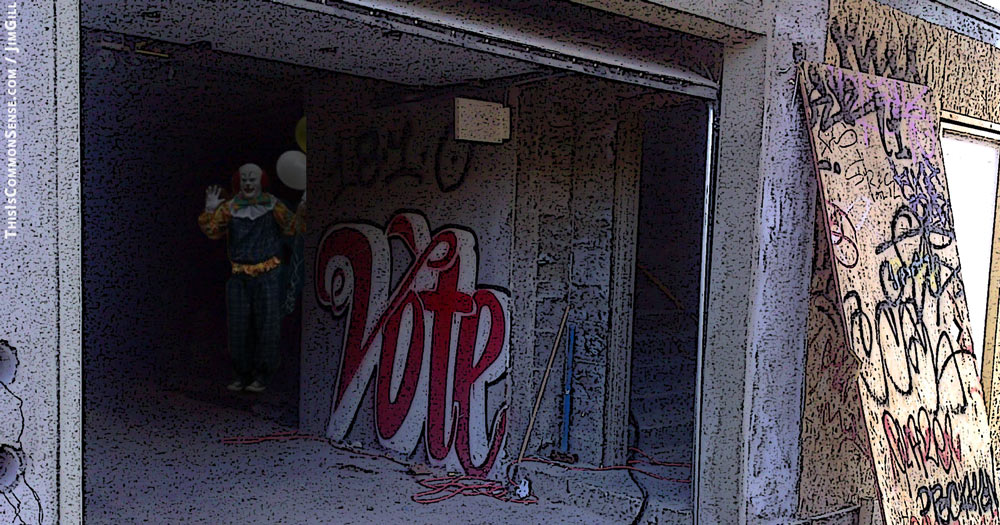
Under this system, you don’t “waste” your vote when expressing a preference for a minor party candidate. You rank your choices and, if your first choice proves unpopular, your second choice (or maybe your third) gets counted. So you don’t “poison” your cause.

Republicans and Democrats have more than enough reason, now, to adopt ranked choice voting across the country.

This is Common Sense. I’m Paul Jacob.


* See yesterday’s links page to my weekend Townhall column for the basic references. But there were many, many articles on the Minor Party Effect, including a skeptical one by Sasha Volokh’s.


Ask the next question.

Questions Answered:

What is the effect of minor parties on major party outcomes?

What causes those effects, voter intent or something else?

Is there a way to prevent this, short of further sewing up the ballot access system to minor parties?

The Next Question:

What might our elections look like if people spent more time discussing issues and ideas … and less about class, culture wars, and sex crimes?


Printable PDF

ranked choice, vote, voting, democracy, clown, illustration


Categories
Thought

Roy Blount, Jr.

English is an outrageous tangle of those derivations and other multifarious linguistic influences, from Yiddish to Shoshone, which has grown up around a gnarly core of chewy, clangorous yawps derived from ancestors who painted themselves blue to frighten their enemies.


Roy Blount, Jr., Alphabet Juice (2008), p. 93.

Categories
Today

PJO!

On November 14, 1918, Czechoslovakia became a republic.

Born on the same date 29 years later, American writer P. J. O’Rourke.

Categories
Thought

P. J. O’Rourke

There is a heartfelt and near-universal refusal to understand the basic economic principles behind the creation of wealth.


P. J. O’Rourke, Eat the Rich: A Treatise on Economics (1998), p. 235.

Categories
links

Townhall: No More Wasted Votes, Poisoned Elections

“You start out not wanting to poison the outcome, and you end by poisoning your soul.” But there is a way out.

Click on over to Townhall.com, for one of the more interesting stories-behind-the-story of last week’s election upset. And then come back here, for more information and perspective:

Categories
Thought

Asra Nomani

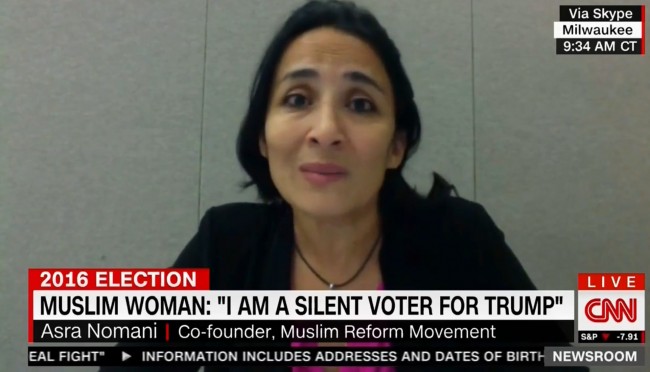
I don’t fear Donald Trump, and I don’t fear the policies he is talking about. What I fear is the extremist interpretation of Islam that is spilling blood on the streets of our world, from Orlando to Dhaka to Brussels.


Asra Nomani, CNN, November 11, 2016.

Categories
video

The Hillary Loss, Are Libertarians to Blame/Thank?

O, the Trump win was a thing to behold! Maybe you are like us here at Common Sense, and did not vote for the man. But you did not vote for Hillary Clinton, either.

So, are you to blame? Er, thank?

There were plenty of Jill Stein voters. And many more Gary Johnson voters — over four million, the largest return of any Libertarian Party candidate in the challenger party’s history.

At least one writer on the ostensible Left has argued that, had ALL of Stein voters “done their duty” and voted for Mrs. Clinton, and HALF of the Libertarian’s vote wised up and voted for the Anti-Trump possibility, Mrs. Clinton would have won. So, these folks blame minor party voters for a Clinton Loss . . . and its allegedly horrible flip side record, the surprising Trump Win.

Well, what do the Libertarians think of it?

As you can see: Not much. That is what. Here is Nicholas Sarwark, Libertarian Party chairperson, doubling down on what Gary Johnson said:

And they are right. How, exactly? Well, it is not just that Hillary/Tim voters took votes away from the Libertarians’ Gary/Bill ticket. It is also the case that, well, the responsible parties for Hillary Clinton losing are . . . Democratic Party voters!

Read the graph and weep, folks:

SO, WHY THE PRECIPITOUS DROP?

Could it be that Hillary Clinton was an awful candidate . . . even by leftist standards? And that is why so many Democrats could not even be bothered to go to the polls and vote for “their” sorry candidate?

The obvious answer is: Yes.