Talking with most people usually involves a search for truth. Talking with congressmen is strictly special effects.
Jack McDevitt, Odyssey (2006), Chapter 5.

Talking with most people usually involves a search for truth. Talking with congressmen is strictly special effects.
Jack McDevitt, Odyssey (2006), Chapter 5.
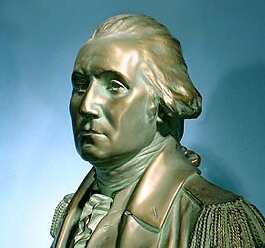
On December 23, 1783, George Washington resigned as commander-in-chief of the Continental Army, at the Maryland State House in Annapolis, Maryland.

Confucius said that our first task is to “rectify the language.”
That amounts to word control, but we probably should not take that too literally. We cannot “control the language.” Instead, we should take caution: error often rests upon improper word choice.
Take as an example not word control, but . . .
Gun control.
Which, Thomas Sowell reminds us, isn’t what it seems to be. “The fatal fallacy of gun-control laws in general is the assumption that such laws actually control guns,” Sowell wrote on the first day of winter. “What such laws actually do is increase the number of disarmed and defenseless victims.”
A new wisdom? No. Sowell, in 2016, is disabusing The New York Times for its inanities regarding the bearing of arms. In 1925, H. L. Mencken took on The Nation.
Gun control, Mencken wrote, “would not take pistols out of the hands of rogues and fools; it would simply take them out of the hands of honest men.”
Sowell argues that, no matter how irrational spree and mass murderers may seem, they “are usually rational enough to attack schools, churches, and other places where there is far less likelihood of someone being on the scene who is armed.”
Mencken noted that the gunman of his day “has great advantages everywhere. He has artillery in his pocket, and he may assume that, in the large cities, at least two-thirds of his prospective victims are unarmed. But if the Nation’s proposed law (or amendment) were passed and enforced, he could assume safely that all of them were unarmed.”
Maybe, following Confucius*, we should call laws against concealed carry not “gun control” but “citizen disarmament.”
This is Common Sense. I’m Paul Jacob.
* “Confucius” is the Western name for Kong Qui (551-479 B.C.E.), the great Chinese sage. He was often referred to by the honorific Kong Fuzi, meaning “Grand Master Kong,” which Jesuit missionaries to China in the 16th-century Latinized to “Confucius.”

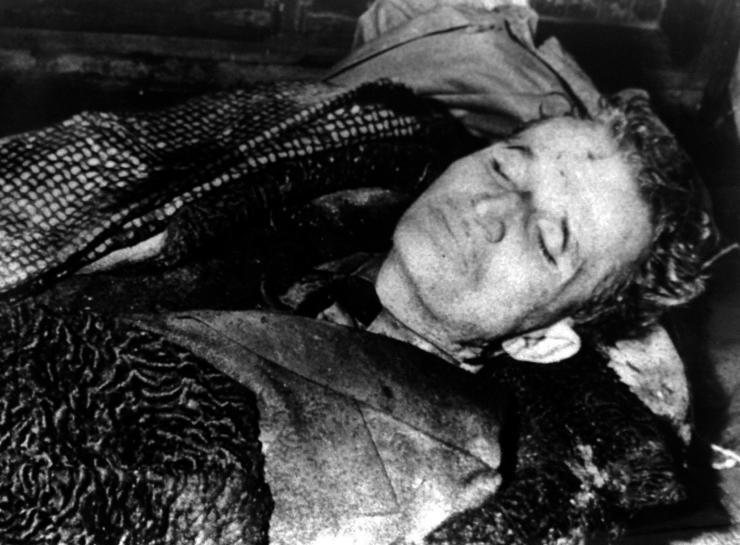
On December 22, 1989, Communist President of Romania Nicolae Ceaușescu was overthrown by Ion Iliescu after days of bloody confrontations. The deposed dictator and his wife fled Bucharest with a helicopter as protesters erupted in cheers.
The couple was quickly caught and, on Christmas day, tried by a military tribunal and executed by firing squad.

It’s a truism in politics: the pendulum swings. Now, around the world, we see a deep swing rightward:
Over the weekend, the Washington Post reported on events in Poland. There, the Law and Justice Party is not only making sweeping changes of a pro-family, religious conservative nature, it has also grown in popularity.
Fearing an anti-intellectual “neo-Dark Age,” the Post finds cause for that worry in the fact that the Poles are downplaying evolutionary science in government school curricula.*
Before the big freak out, note the why of this: the dominant progressive-left paradigm has proven itself incapable of dealing with the challenges of the present age — most being caused by their own policies. Worse yet, those on the vanguard left have become moral scolds and petty language tyrants.
Yes, political correctness is one of the big offenders, here.
So, of course there’s a backlash.
But, turnabout being fair play, if the move to the “right” goes too far — as it probably will — we can expect another swing leftward.
Isn’t it time to give that pendulum bob a whack, to initiate something like an equilibrium position? Many of today’s problems are caused by partisans trying to force their kind of change down others’ throats. There is an alternative: limit government, setting it to just a few tasks, letting society evolve naturally, without forced central planning.
That would be “evolutionary,” and thus neither rightist nor revolutionary-left. Call it neo-Enlightenment.
This is Common Sense. I’m Paul Jacob.
* Poland’s new government has become scary, by reducing transparency, limiting press access, purging the government news network of anti-rightist journalists, hiking subsidies to traditional families and the elderly, shelving the gay marriage issue and allowing local governments to cut back on granting public protest permits. Not all of these are equally frightening, of course. Why should any government be allowed to maintain a government-run news agency? (Ideological purges come with the territory.)

On December 21, 1620, William Bradford and the Mayflower Pilgrims landed on what is now known as Plymouth Rock in Plymouth, Massachusetts.
American settlers in Nacogdoches, Mexican Texas, declared their independence on December 21, 1826, starting the Fredonian Rebellion.
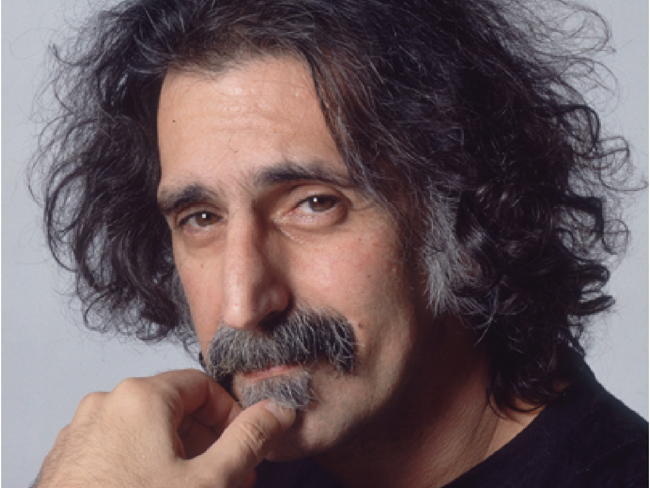
Avant-garde rock ’n’ roll guitarist, band leader, and composer Frank Zappa was born on this date in 1940. In 1985, Zappa testified before the United States Senate Commerce, Technology, and Transportation committee, attacking the Parents Music Resource Center or PMRC, a music organization co-founded by Tipper Gore, wife of then-senator Al Gore. Zappa was a passionate advocate for freedom of speech, self-education, political participation and the abolition of censorship. Describing his political views, Frank Zappa categorized himself as a “practical conservative,” or “independent.” He died in 1993.
Most government and corporate leaders would have trouble getting people to follow them out of a burning building. One way you can tell the worst of them is that they talk about leadership a lot. I doubt Winston Churchill ever used the word. Or, for that matter, Attila the Hun.
Jack McDevitt, Odyssey (2006), Chapter 5.

It’s the Christmas season, so wait to do this until the New Year, but . . . be sure to fire your male doctor.
He’s a quack.
At least, that seems to be the gist of James Hamblin’s “Evidence of the Superiority of Female Doctors,” a report in The Atlantic on a new Harvard School of Public Health study.
“Patients cared for by female physicians,” Hamblin writes, “had lower 30-day mortality than did patients treated by male physicians.” The rate for female physicians was 11.07 percent and for males 11.49 percent.
Though a “modest” difference, it’s still “clinically meaningful.”
The study (conducted by an all-male team) tracked more than 1.5 million Medicare patients treated by nearly 60,000 general internists.
“If male physicians were as adept as females, some 32,000 fewer Americans would die every year — among Medicare patients alone,” concludes Hamblin. “[T]hese numbers may be what it takes to spur equal (or better) compensation and opportunity for female physicians.”
NBC News played the equal pay angle as well: “Many hope the new study pushes hospitals to promote and pay women equally.”
Still, in a poignant moment of concern for the lesser sex, correspondent Kristen Dahlgren advised, “Maybe not a reason to ditch your male doctor, but there might be lessons to learn from his female colleagues.”
Indeed, the study explained that “physician sex by itself does not determine patient outcomes,” arguing instead that “differences in practice patterns between male and female physicians” must be investigated.
Smart.
The other thing, of course, is that every doctor, male or female, is an individual — not merely an XX- or XY-chromosome carbon copy.
Sex isn’t everything.
This is Common Sense. I’m Paul Jacob.

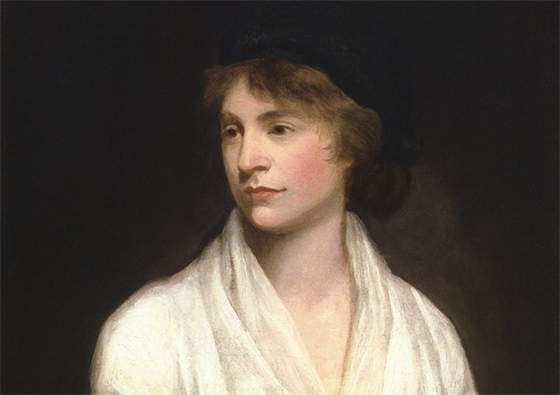
Society . . . as it becomes more enlightened, should be very careful not to establish bodies of men who must necessarily be made foolish or vicious by the very constitution of their profession.
Mary Wollstonecraft, A Vindication of the Rights of Woman (1792), chapter one.

On December 20, 1740, Arthur Lee — Revolutionary Era diplomat, spy, and Virginia delegate to the Continental Congress — was born. He practiced law in London from 1770 to 1776, where he wrote polemics against slavery and in defense of the American colonies’ resistance to the Townshend acts and other tyrannical British policies.
He was brother to Richard Henry Lee and Francis Lightfoot Lee.