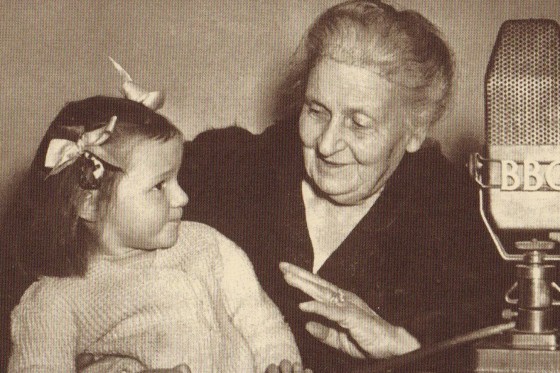
A child educated only at school is an uneducated child.
George Santayana, “Why I Am Not a Marxist” Modern Monthly: Volume: 9 (April 1935); Page: 77-79.
A child educated only at school is an uneducated child.
George Santayana, “Why I Am Not a Marxist” Modern Monthly: Volume: 9 (April 1935); Page: 77-79.
On July 30, 1419, the First Defenestration of Prague: Jan Želivský, a Hussite priest at the church of the Virgin Mary of the Snows, led his congregation on a procession through the streets of Prague to the New Town Hall, on Charles Square. While they were marching, a stone was thrown at Želivský from the window of the town hall. The mob, enraged, stormed the hall. Once inside, the group threw the judge, the burgomaster, and some thirteen members of the town council out of the window and into the street, where they were killed by the fall or dispatched by the mob.
King Wenceslaus IV of Bohemia, upon hearing this news, was so stunned, the legend goes, that he died soon after.
On July 30, 1619, the first representative assembly in the Americas, the House of Burgesses, convened for the first time in Jamestown, Virginia. On the same date in 1676, Nathaniel Bacon issued the “Declaration of the People of Virginia,” beginning Bacon’s Rebellion against the rule of Governor William Berkeley.
On this date in 1863, representatives of the United States and tribal leaders (including the Shoshone’s Chief Pocatello) signed the Treaty of Box Elder.
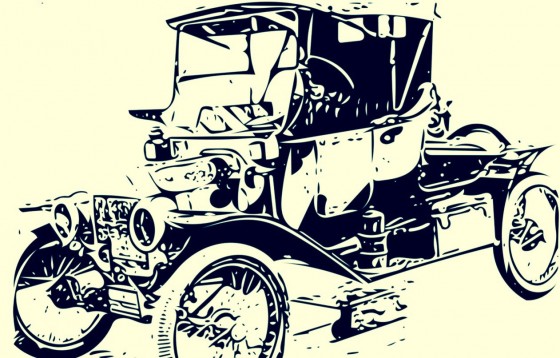
July 30 birthdays include Henry Ford (1863), Gen. Smedley Butler (1881), C. Northcote Parkinson (1909), and former California Governor Arnold Schwarzenegger (1947).
Vanuatuans celebrate Independence Day on July 30.
Marilyn Mosley is frustrated. This State’s Attorney in Baltimore, Maryland, angrily dropped charges against the remaining three police officers not already acquitted in the death of Freddie Gray, who died from injuries sustained while in police custody.
Clearly, Mosley lacked the evidence to convict these officers of murder, manslaughter, false arrest, etc. Were the charges politically motivated, as police allege? Or did police impede her investigation, as she charges?
I don’t know. But here’s what we do know:
Upon sighting police April 12th of last year, Gray ran but was apprehended. Police confiscated a knife, which was perfectly legal to carry. Then police called for a van, and video captured police dragging 25-year-old Freddie Gray, screaming in agony, to that van.
Police transported him on a very circuitous route “downtown” that ended up at the hospital, after police discovered during a stop that he wasn’t breathing. A week later Freddie died.
The cause of death was a spinal injury.
The video suggests impairment before the travel therapy administered by police, though the injury could have been worsened in transit. Gray wasn’t wearing a safety belt. In fact, the medical examiner ruled it a homicide based on his not being belted in.
Whether the spinal injury was a freak accident, caused by police misconduct or, as alleged, Gray was trying to injury himself to seek damages, the medical evidence shows no serious bruises or broken bones — just the spinal injury.
We don’t know what happened.
What we do know is that a man was taken into police custody without any legitimate charge, not treated or attended to as he should have been, and he’s dead.
There’s no victory or vindication here for police.
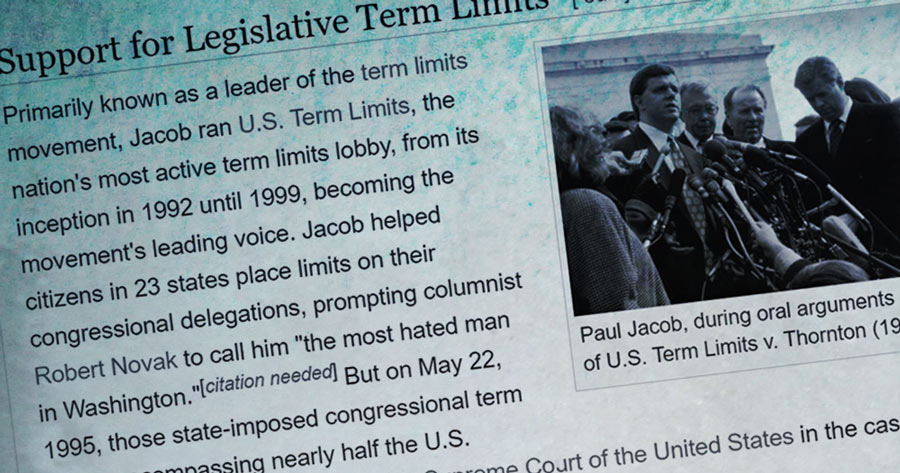
This is Common Sense. I’m Paul Jacob.
AND ANOTHER THING: To what degree is Freddie Gray a casualty of the war of drugs? Back in June, defense attorneys for the police released an email that Prosecutor Mosley’s office had sent to police asking for an “enhanced” police presence to combat drug dealing in the area Freddie Gray was arrested. That was three weeks prior to his arrest.
On July 29, 1805, Alexis de Tocqueville was born. His most famous book, Democracy in America (1835, 1840), quickly became a classic of social and political research and analysis,
and remains the most important early book about the United States of America. He is often referred to as a founder of sociology as well as a major figure in the development of classical liberalism.
Class after class of men have seen a large part of their employment taken from them by machinery, so that at the present time there is scarcely any demand for the labor which millions of men had to perform a century ago. And yet, in spite of this, the laborer gets higher wages than he did a century ago, and is as fully employed as he ever was. In the whole history of the contest we do not find a case of a general and permanent fall of wages from the introduction of machinery.
Simon Newcomb, Principles of Political Economy (New York: Harper & Brothers, 1886), p. 388.
In breaking news, a major politician has promised to give important benefits to the poor and the middle class.
She did not specify where those benefits would come from. But we know where they do come from: taxpayers. What this politician has done is promise to take from some to give others. Actually, it’s even more complicated — after taking from some folks, then there’s the skimming off the top (or: taking a big chunk); and after that, there’s the hoopla about the money she is “giving” back.
This is how politicians work. Vague talk and big promises, backed up by the ability to tax and the sanction to threaten your life if you don’t comply.
Characteristically, they avoid talk of the costs of their actions. They focus on the “benefits.”
Many, many years ago, a great American sociologist explained the process:
A and B put their heads together to decide what C shall be made to do for D. The radical vice of all these schemes, from a sociological point of view, is that C is not allowed a voice in the matter, and his position, character, and interests, as well as the ultimate effects on society through C’s interests, are entirely overlooked. I call C the Forgotten Man.
That was written in 1883. In 1932, a major politician took the term, “The Forgotten Man,” and applied it not to C but to D.
And since then, politicians have tended to ignore C entirely, except to make them feel guilty for not doing more for D (and, by implication, A and B).
You can see why I prefer direct action on discrete issues by responsible citizens. In which the C’s are consulted.
This is Common Sense. I’m Paul Jacob.
Original Photo Credit: David Goehring on Flickr (Creative Commons)
Liberty may be maimed, but not killed; reason may be bent, but not broken.
George Santayana, Egotism in German Philosophy, 1915
When Bill Clinton ran for president, the slogan inside his campaign’s war room was a blunt reminder to focus on “the Economy, Stupid.” This was Clinton’s first enduring contribution to the American stock of catch-phrases.
Now, Bill’s wife, Hillary, seeks the top banana position. But she has a harder job than Bill: he could fight against a lackluster incumbent caught in a big lie (“No New Taxes,” another slogan). Hillary is almost required to defend the outgoing president, in no small part because she served in his Cabinet.
If she were candid, she’d address the weak recovery and long-term stagnation.
Her slogan could be, “It’s the Stupid Economy.”
No matter what politicians say, however, secular (long-term) stagnation is a thing. Lots of people have given up, are off the roles of job-searchers and so don’t appear in official unemployment statistics, and too many people have taken early retirements on trumped-up disability claims.
At least, economist Lawrence Summers is decrying it, jet-setting around the world to meet with financial leaders and political functionaries.
I doubt his diagnosis, however. Summers talks Keynesian, pointing to inadequate aggregate demand. While there may be something to the general shift in the desire to hold monetary assets, leading to deflation and even negative interest rates, I bet the underlying problem is regime uncertainty — when widespread fears of the future and doubts about governmental consistency and follow-through lead the owners of capital to withhold investing in production.
There are also the effects of general regulatory and redistributionist kludge.
When the problems stem from your favored policies, you can’t revive FDR’s slogan “nothing to fear but fear itself” and let it go at that.
Hillary will surely explain — Thursday night.
This is Common Sense. I’m Paul Jacob.
July 27 births include that of Samuel Smith (1872; pictured), an American who served as a captain, major, and lieutenant colonel in the Continental Army,
and later as a politician in several capacities in the state of Maryland; Hillaire Belloc (1870), author of a classic analysis of modern political governance, The Servile State; and American singer and songwriter Bobbie Gentry (1944).
On July 27, 1694, the Bank of England received a royal charter, beginning a long history of central banking in England. Subsequent inflationary booms and deflationary busts are subsequently considered “mysterious” by people connected with the bank.