Categories
Accountability free trade & free markets general freedom government transparency nannyism national politics & policies responsibility too much government

Sledgehammer to a Bureaucracy

The media hysterically pushes the line that the new Trump administration is so much “in chaos” it even frightens seasoned (salt-and-pepper?) heads in the Republican Party. But perhaps folks at the Environmental Protection Agency have more reason to panic.

“It looks like the EPA will be the agency hardest hit by the Trump sledgehammer,” writes Julie Kelly over at National Review.

Ms. Kelly offers striking reasons to hit the agency hard, quoting from Steve Malloy, the author of Scare Pollution: Why and How to Fix the EPA. “I can think of no agency that has done more pointless harm to the U.S. economy than the EPA — all based on junk science, if not out-and-out science fraud.” Malloy looks forward to the new president’s promised rethink and restructuring of the agency.

Just how bad is it?

Environmentalists often cry foul over any corporate funding of ecological research. But if one worries about money influencing results, the case against grants funded by regulatory agencies for regulatory purposes is even stronger.

Especially when the agency is run by ideologues.

Trump’s transition team seeks to make all the EPA’s relevant data public, for peer and public review, and would really like to curtail the agency’s research funding entirely.

Pipe dream? Better than the recent nightmare: “For eight years,” writes Kelly, “President Obama used the agency as his de facto enforcer of environmental policies he couldn’t pass in Congress even when it was controlled by his own party.”

The EPA needs to be checked. And balanced. And more.

This is Common Sense. I’m Paul Jacob.

Printable PDF


Categories
Today

Groundhog!

On February 2, 1887, Punxsutawney, Pennsylvania, celebrated the first Groundhog Day. On the same day in 1976, the Groundhog Day gale hit the north-eastern United States and south-eastern Canada.

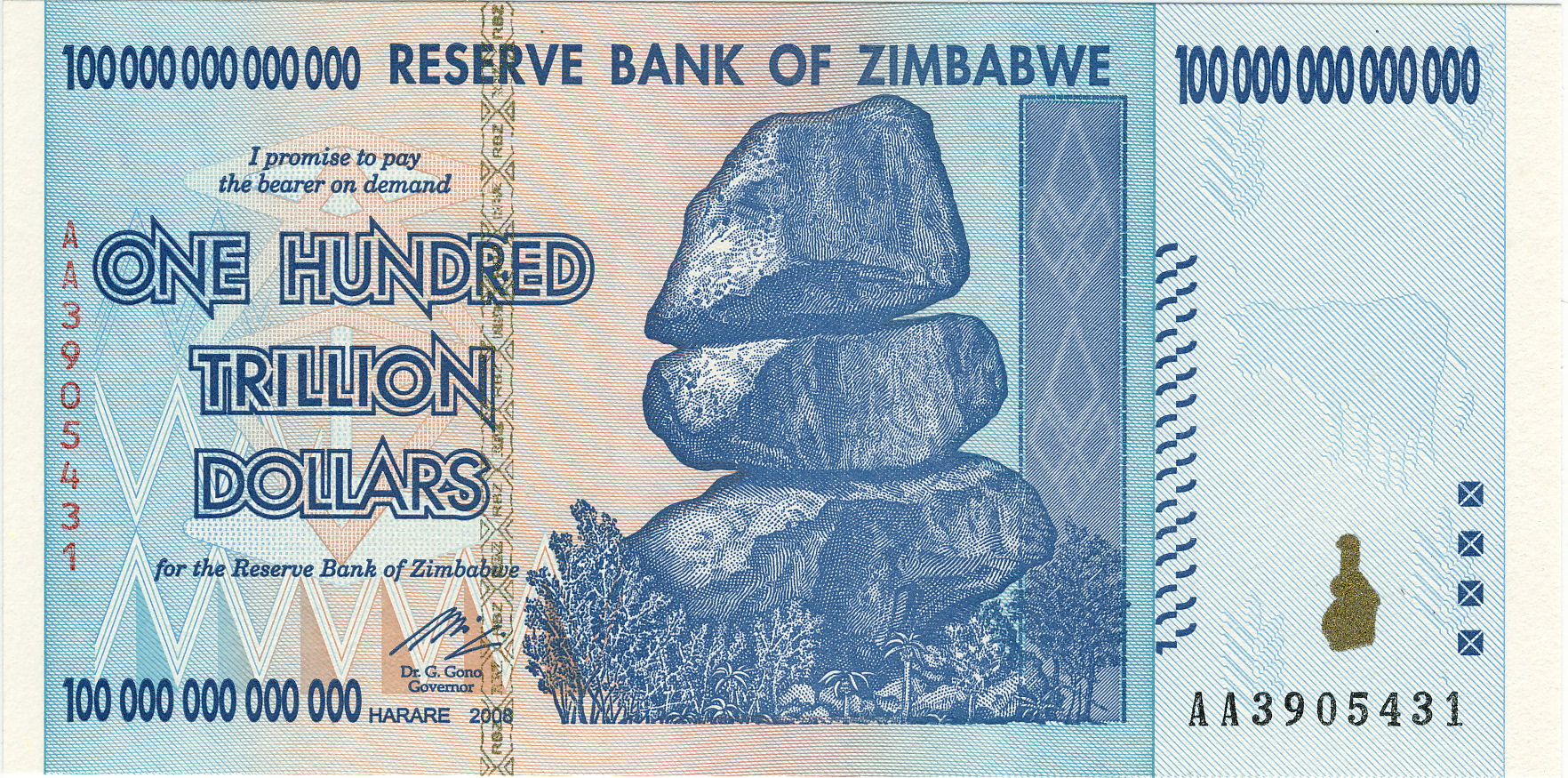
In 2009, the Reserve Bank of Zimbabwe officially devalued the Zimbabwean dollar for the third and final time, making Z$1 trillion now only Z$1 of the new currency, equivalent to Z$10 septillion before the first devaluation. Politicians in Zimbabwe looked up, saw their shadow, and realized that they had only a couple months more of their inflation binge. Indeed, the legalization of trading currencies, the previous month, had sealed the fate of Zimbabwe’s independent dollar. The Zimbabwean dollar was abandoned officially on the 9th of April, 2009.

Categories
Thought

Dave Rubin

We should be more worried about the government taking away our free speech rather than us taking it away from ourselves.


Dave Rubin, Rubin Report transcript.

Categories
crime and punishment ideological culture judiciary national politics & policies Second Amendment rights Tenth Amendment federalism term limits U.S. Constitution

Perry Mason for the Court

Legend has it that a juror once ran up to attorney Neil Gorsuch, after Gorsuch won a case proving a gravel pit owner had been cheated, declaring, “You’re Perry Mason.”

These days, Gorsuch sits on the Tenth Circuit Court of Appeals, and is President Donald Trump’s nominee for the late Justice Scalia’s seat on the nation’s highest court.

And now Gorsuch is receiving testimonials worthy of the indefatigable TV lawyer.

Brad Smith, the chairman of the Center for Competitive Politics, expressed his pleasure “that President Trump has nominated someone who will defend a robust First Amendment.”

Ballot access expert Richard Winger noted that Gorsuch has a “good record in cases involving independent candidates and minor parties.”

“I am hard-pressed to think of one thing President Trump has done right in the last 11 days since his inauguration,” wrote Neal Katyal in the New York Times. “Until Tuesday,” continued the Georgetown law professor, “when he nominated an extraordinary judge and man, Neil Gorsuch, to be a justice on the Supreme Court.”

Katyal, who had served as an acting solicitor general in the Obama administration, added that Gorsuch’s record of holding government officials accountable “should give the American people confidence that he will not compromise principle to favor the president who appointed him.”*

Even I have pertinent testimony: back in 1992, Gorsuch argued (in a co-authored Cato Institute paper) that term limits were “constitutionally permissible” as “institutional constraints on the power of government” that “the Framers,” if alive today, would likely see as “necessary preconditions for liberty.”

No, Gorsuch is not actually Perry Mason — I never knew where Perry stood on term limits.

This is Common Sense. I’m Paul Jacob.
 

* On Reason’s Hit & Run blog, Damon Root strongly agreed.


Printable PDF


Categories
Thought

Ben Shapiro

Facts don’t care about your feelings.


Ben Shapiro, professional motto, as seen on Twitter (and heard on his show).

Categories
Today

Slavery Abolished

On February 1, 1835, slavery was abolished in Mauritius. Twenty-six years later, in the American Civil War, Texas seceded from the United States. On this date in 1865, President Abraham Lincoln signed a Joint Resolution from Congress formally submitting the proposed Thirteenth Amendment to the United States Constitution, which abolished slavery (and involuntary servitude), to the states for ratification.

Categories
ideological culture media and media people nannyism national politics & policies privacy responsibility too much government

Women and Men for Life

At Townhall on Sunday, I applauded the Women’s March on Washington for being peaceful, despite Madonna’s F-bomb laden speech, culminating with her daydream of “blowing up the White House.”

We’ll never know how many more folks marched in that much-heralded event than attended last weekend’s pro-life march, because the mainstream media did not pay enough attention to the later, inconvenient-to-their-narrative event, and crowd-counters didn’t count.

The two marches did “intersect” (figuratively) when a pro-life group was kicked out as a “partner” to the women’s march.

“If you want to come to the march you are coming with the understanding that you respect a woman’s right to choose [abortion],” declared Linda Sarsour, one of four chairwomen for the women’s march, who was described by the New York Times as “a Brooklyn-born Palestinian-American Muslim racial justice and civil-rights activist.”

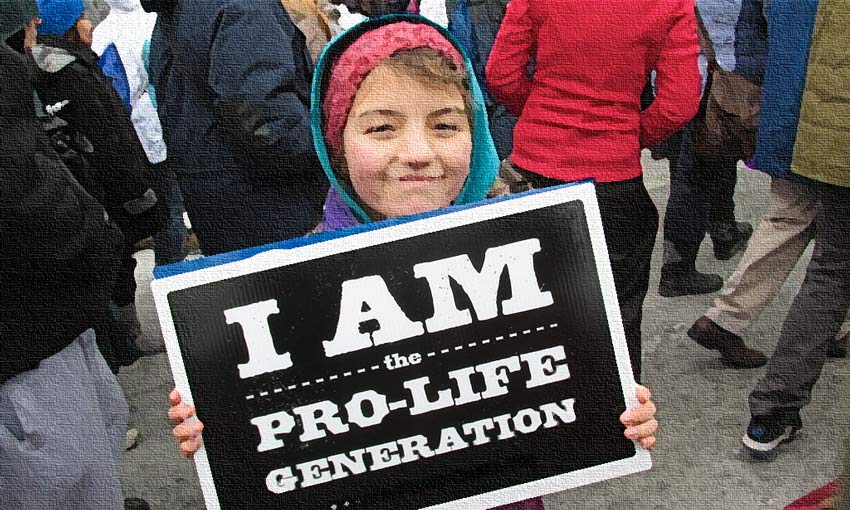
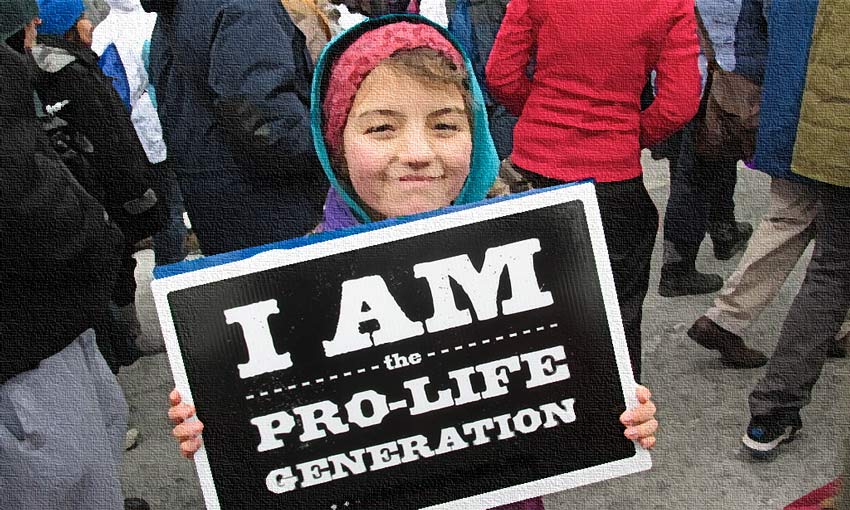
In its favor, the pro-life march, anti-celebrating the 44th year since the Roe v. Wade decision, had far more tasteful placards — despite the fact that pro-life protesters are often remembered for grisly signs picturing aborted fetuses. I particularly liked a sign held by a young women, reading:

“We are having a clump of cells.” — [said] No One Ever

Speaking of young people, Slate magazine reported that “the demographic outlook for the pro-life movement looks anything but bleak,” citing a 2015 poll wherein “52 percent of millennials said the label ‘pro-life’ describes them somewhat or very well.”

Remember, the pro-life movement has been marching all these years not to secure government benefits for themselves, but to protect others.

This is Common Sense. I’m Paul Jacob.

Printable PDF


Categories
Thought

Götz Aly

Another major source of stop-gap revenues to fund Hitler’s popular tax and rearmament policies was Germany’s — and later much of Europe’s — Jewish population. By late 1937, civil servants in the Finance Ministry had pushed the state’s credit limit as far as it would go. Forced to come up with ever more creative ways of refinancing the national debt, they urged their attention to property owned by German Jews, which was soon confiscated and added to the so-called Volksvermögen, or the collective assets of the German people.


Götz Aly, Hitler’s Beneficiaries: Plunder, Racial War, and the Nazi Welfare State (2005), Jefferson Chase, trans., p. 41.

Categories
Today

Corn Law

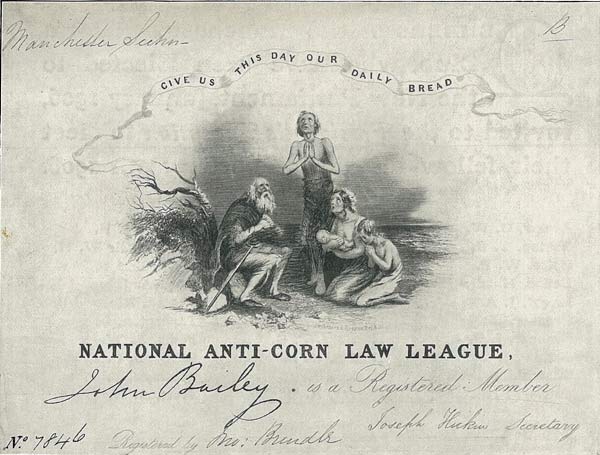
On January 31, 1849, the Corn Laws were abolished in the United Kingdom, one of the most impressive and far-reaching anti-protectionist moves of all time. “Corn” stood for all grains, including wheat, oats, barley, etc.; the free-trade agitation by John Bright and Richard Cobden was one of the main impetuses for the reform.

On Jan. 31, 1865, the United States Congress proposed the Thirteenth Amendment to the U.S. Constitution, submitting it to the states for ratification. The Amendment’s main section reads: “Neither slavery nor involuntary servitude, except as a punishment for crime whereof the party shall have been duly convicted, shall exist within the United States, or any place subject to their jurisdiction.”

On Jan. 31, 1990, the first McDonald’s fast food restaurant opens in the Soviet Union. Having once traveled to Moscow, I’m exceedingly thankful for this.

Categories
folly general freedom moral hazard national politics & policies responsibility U.S. Constitution

Deplorable Distrust?

The United States is no longer a “full-fledged democracy.”

According to a New York Post story, our union is, instead, a “flawed democracy.”

Hmmm. Where to begin?

Despite the article’s featured photo of President Trump, the downgrading of America’s democratic status occurred prior to the billionaire’s swearing-in.

Technically, of course, the United States is not now nor has ever been a full-fledged (much less a flawed) democracy. We live in a republic . . . if we can keep it.

As is often the case, folks use the term “democracy” not to indicate it as a form of government — a pure democracy — but as a shorthand for a country with democratic elections, where “basic political freedoms and civil liberties are respected,” and with “an independent judiciary.”

An organization associated with The Economist, the Economist Intelligence Unit (EIU), has for a decade been rating the world’s countries based on numerous political factors. For the first time, this year, the United States has dropped out of the top tier and into the second, joining the likes of Botswana, Ghana and India.

“The U.S. is the second-highest ranking flawed democracy,” the Post noted, “coming in right behind Japan and tying with Italy.” Norway garnered first place among the 19 “full-fledged democracies,” including most Western European countries.

Why was the U.S. downgraded? The EIU report explained the lower score “was caused by the same factors that led Mr. Trump to the White House: a continued erosion of trust in government and elected officials.”

So, if the American people simply placed their heads in the sand, blindly trusting politicians, we’d be “full-fledged,” eh?

Full-fledged fools fiddling away our freedom, that is.

This is Common Sense. I’m Paul Jacob.


Printable PDF