Privacy is the foundation of all other rights. Arguing that you don’t care about privacy because you have nothing to hide is no different from saying you don’t care about free speech because you have nothing to say.
On December 10, 1884, Mark Twain’s Adventures of Huckleberry Finn was first published. This novel, narrated in the first person by the title character, is a dark comedy of the antebellum South and slavery, and has been considered by many American critics and writers to qualify as the “Great American Novel.”
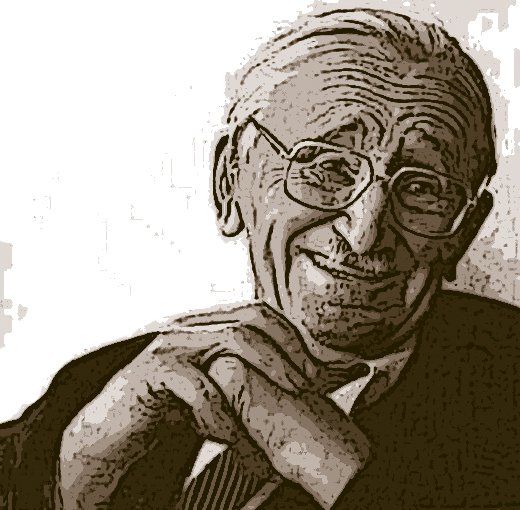
On this date in 1901, the first Nobel Peace Prizes were awarded — to economist Frédéric Passy (pictured above), co-founder of the Inter-Parliamentary Union; and to Henry Dunant the founder of the International Committee of the Red Cross.
Passy was an admirer of Cobden and an active member in the French Liberal School of Political Economy that developed in the tradition of J.B. Say, Destutt de Tracy, Charles Comte and Charles Dunoyer, and Frédéric Bastiat. His published works include Leçons d’économie politique (1860-61); La Démocratie et l’Instruction (1864); L’Histoire du Travail (1873); Malthus et sa Doctrine (1868); and La Solidarité du Travail et du Capital (1875).
Richard Phillips Feynman May 11, 1918 – February 15, 1988) was an American theoretical physicist known for his work in the path integral formulation of quantum mechanics, the theory of quantum electrodynamics, and the physics of the superfluidity of supercooled liquid helium, as well as in particle physics for which he proposed the parton model. For his contributions to the development of quantum electrodynamics, Feynman, jointly with Julian Schwinger and Sin-Itiro Tomonaga, received the Nobel Prize in Physics in 1965.
“Science is the belief in the ignorance of experts.”
(address “What is Science?“, presented at the fifteenth annual meeting of the National Science Teachers Association, in New York City (1966), published in The Physics Teacher, volume 7, issue 6 (1969), p. 313-320)
I know Scott Pruitt, Donald Trump’s pick to head the EPA; he replaced the egregious Drew Edmondson as Oklahoma Attorney General.
Pruitt seems like a good man.
But Sen. Bernie Sanders (I-Vt) says different. “Mr. Pruitt’s record is not only that of being a climate change denier, but also . . .”
Wait: that “climate change denier” charge is everywhere. But all I’ve seen is assertion.
It would indeed be weird were he — or anyone — to deny the reality of climate change. Way back in my Seventies’ youth, I saw all sorts of climate change articles . . . predicting a new Ice Age.
Decades later, the headlines began to change: Global Warming was in.
But note: those Seventies’ articles usually mentioned that the world had been heating out of the recent Little Ice Age, with the thaw beginning before the dreaded Industrial Revolution.
I bet that what our new Trump pick really believes is that
Betting aside, what does Pruitt believe? The Advocate actually repeats the disproven “97 percent of climate scientists” meme to pile on the abuse*, but did link to a National Review article Pruitt co-authored with Alabama’s attorney general.
They did not deny climate change, merely insisting that “the debate is far from settled.” More importantly, they argued that governments should not intimidate energy companies in service to the climate cause. Instead, they called for open debate.
Shocking!
This is Common Sense. I’m Paul Jacob.
* The Advocate also irrelevantly charged Pruitt with “transphobia.” But then, Trump’s Small Business Administration pick, Linda McMahon, has also been tarred with the “climate denier” charge, which is as irrelevant to an SBA head as vegetarianism would be for a Secretary of Treasury.
Original (cc) photo by Gage Skidmore on Flickr
On December 9, 1958, the John Birch Society was founded in the United States. December 9 also marks the birthdays of
Mary Wollstonecraft, A Vindication of the Rights of Woman (1792), Chapter 4.
It is justice, not charity, that is wanting in the world.
Sir Karl Raimund Popper (28 July 1902 – 17 September 1994) was an Austrian-British philosopher and professor. He is generally regarded as one of the greatest philosophers of science of the 20th century.
“The game of science is, in principle, without end. He who decides one day that scientific statements do not call for any further test, and that they can be regarded as finallyverified, retires from the game.”
Voting’s a right, not a duty.
So voter registration and actual voting should be made easy. But I’m not for mandating that people vote, or for registering them involuntarily.
Which is why I oppose the Automatic Voter Registration Initiative (AVRI), an indirect Nevada initiative that state officials just announced has turned in enough petition signatures.
Now, you may not be familiar with this “indirect initiative” process. These are initiatives that first go to the legislature and then, should the legislature not pass them, appear on a later ballot (in this case, 2018’s) for voters to either enact or reject.
Currently, when Nevadans conduct business at the Department of Motor Vehicles, they’re asked if they’d like to register to vote. If they opt in, i.e., say “yes,” then the DMV transmits their information to the Secretary of State to be added to the voter rolls.
However, the new initiative would automate the process, so every person’s information gets whisked over to the Secretary of State, whether said person wants to be registered or not. It reads: “Unless the person affirmatively declines in writing,” he or she “shall be deemed to be an applicant to register to vote.”
Declining registration must be “in writing”?
A simple, “No, thank you,” won’t suffice?
Now, I understand: should the AVRI become law, the seriousness of the injury Nevada’s government would inflict on those seeking to remain unregistered admittedly pales in comparison to the Japanese internment camps during World War II, the Trail of Tears, civil asset forfeiture abuse, etc., etc.
But still. Assert a simple truth: people have a right to register and vote, which entails a right not to register and not to vote.
This is Common Sense. I’m Paul Jacob.
Revolutions of ages do not oft recover the loss of a rejected truth, for the want of which whole nations fare the worse.
John Milton, Areopagitica; A speech of Mr. John Milton for the Liberty of Unlicenc’d Printing, to the Parlament of England (1644).
On December 8, 1927, one of the United States’ oldest think tanks was founded through the merger of three organizations that had been created by philanthropist Robert S. Brookings. Called the Brookings Institution, it would provide a blueprint for future work by research and advocacy organizations in the modern era.
On this date in 1974, a plebiscite abolished the monarchy in Greece.