Categories
Thought

Herbert Spencer

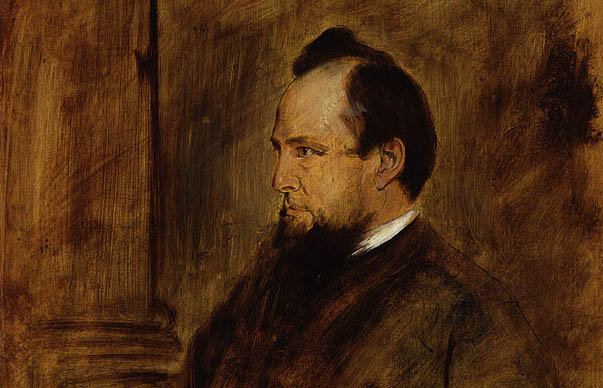
If we adopt pessimism as a creed, and with it accept the implication that life in general being an evil should be put an end to, then there is no ethical warrant for these actions by which life is maintained: the whole question drops. But if we adopt either the optimist view or the meliorist view — if we say that life on the whole yields more pleasure than pain; or that it is on the way to become such that it will yield more pleasure than pain; then these actions by which life is maintained are justified, and there results a warrant for the freedom to perform them. Those who hold that life is valuable, hold, by implication, that men ought not to be prevented from carrying on life-sustaining activities. In other words, if it is said to be ‘right’ that they should carry them on, then, by permutation, we get the assertion that they ‘have a right’ to carry them on. Clearly the conception of ‘natural rights’ originates in recognition of the truth that if life is justifiable, there must be a justification for the performance of acts essential to its preservation; and, therefore, a justification for those liberties and claims which make such acts possible.

Herbert Spencer, “The Great Political Superstition,” The Man versus The State (1884).

Categories
Accountability initiative, referendum, and recall local leaders responsibility

The Maine Thing

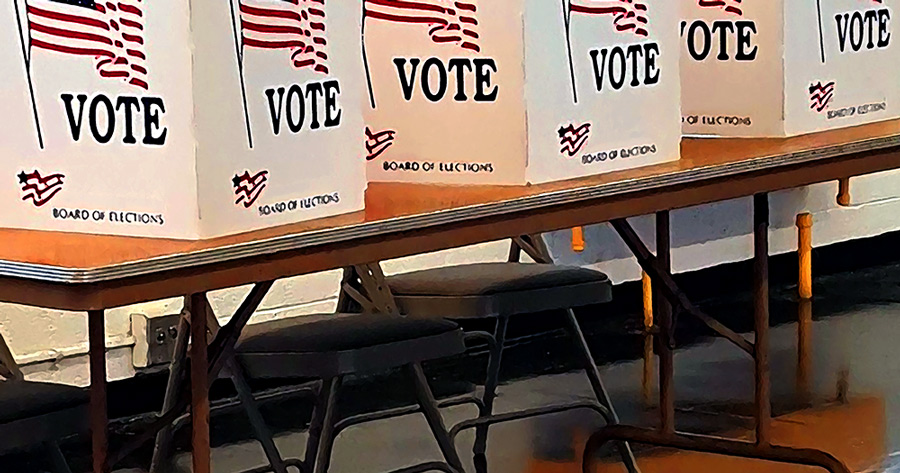
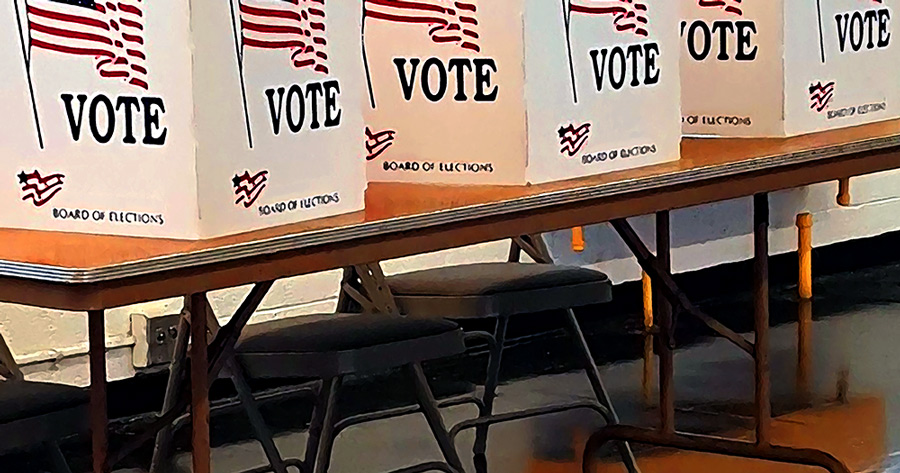
Ranked Choice Voting (RCV) allows voters to rank electoral candidates and not “waste” their vote in cases where their most favored candidate is* unlikely to win. RCV also requires a majority for election, not merely a plurality of the vote.

Last November, Mainers passed Question 5 to begin using this voting system for statewide races, state legislative races and congressional contests. Voters in Portland, the state’s largest city, already use ranked choice voting for several city offices.

Nonetheless, Gov. Paul LePage, who has won twice for governor without ever capturing a majority, opposes RCV, as do many state legislators, also elected under a different first-past-the-post plurality system.

Because Maine’s state constitution specifically mentions plurality winners for statewide officials and state legislators (in the General Election), legislative leaders asked the Maine Supreme Court for an advisory opinion on the constitutionality of the ballot measure. Earlier this week, the court ruled that Question 5 was not constitutional when applied to those specific offices and elections.

However, the constitutionality of RCV was not challenged regarding congressional elections or primary elections for the state legislature.

Now some legislators are proposing a constitutional amendment to enact the RCV that voters supported. Others are urging that the entire law be repealed — even the parts not ruled unconstitutional. They claim the new system is too confusing if not used for every office.

But Portland city voters use RCV for some offices and not others, without confusion.

Legislators should follow the court’s decision, sure, but also respect the vote of the people for every part of the measure not addressed by the court.

This is Common Sense. I’m Paul Jacob.


* Ranked Choice Voting also prevents wasted votes in cases where a voter merely expects or fears (even inaccurately) that his or her favorite candidate does not have enough support to get elected.


Printable PDF


Original cc Photo by Tim Evanson on Flickr


Categories
Today

Jacob Burckhardt

May 25, 1818, the Swiss historian and academic Jacob Burckhardt was born. Burckhardt’s best known work is The Civilization of the Renaissance in Italy (1860), but is remembered here as the author of Reflections on History (1905).

Categories
Thought

Lord Acton

Power tends to corrupt and absolute power corrupts absolutely. Great men are almost always bad men, even when they exercise influence and not authority: still more when you superadd the tendency or the certainty of corruption by authority. There is no worse heresy than that the office sanctifies the holder of it.

John Dalberg-Acton, 1st Baron Acton, Letter to Mandell Creighton (April 5, 1887), published in Essays on Freedom and Power (1972)
Categories
Accountability moral hazard national politics & policies responsibility U.S. Constitution

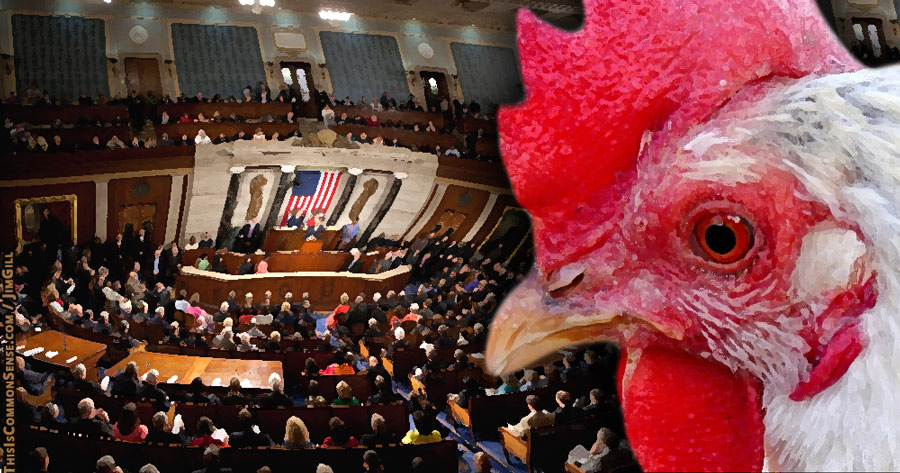
The Chicken-Ostrich Congress

Those who work for the president must tell the POTUS hard truths — on matters of war, most of all. Citizens must also be told hard truths. After all, we are, at least theoretically, the ultimate decision-makers . . . the president works for us.

That was my point yesterday.

But when it comes to life-and-death decisions about war and peace, there is also a congressional check on executive power.

Well, theoretically.

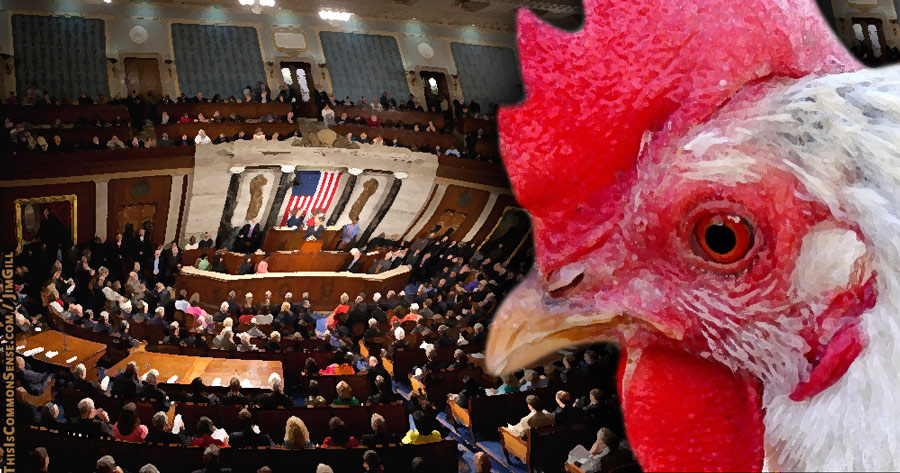
The big problem isn’t chicken-hawks in Congress, but chicken-ostriches. Bird-brained members of Congress implant their heads deep into the sand when it comes to foreign policy.

Where is the congressional debate over what to do in Afghanistan, our nation’s longest war? Rather than helping shape policy, Congress gladly lets the commander-in-chief control every aspect of foreign and military policy.

This gives the president unitary war-making power, anathema to the original character of our Republic, but it also means precious members of Congress are never held accountable for the disasters. After all, they didn’t do anything.

When mistakes are made or policy fails, the legislative branch can hold hearings to carp and moan and pontificate for the TV cameras.

American citizens, on the other hand, cannot so easily dodge the consequences of unaccountable foreign policies. In addition to engaging in military action in seven countries at present, the U.S. Government has pledged to defend another 50 countries, about one-fourth of the world.

Should more conflicts erupt, Congress won’t fight them. But our sons and daughters will.

This is Common Sense. I’m Paul Jacob.


Printable PDF


Categories
Today

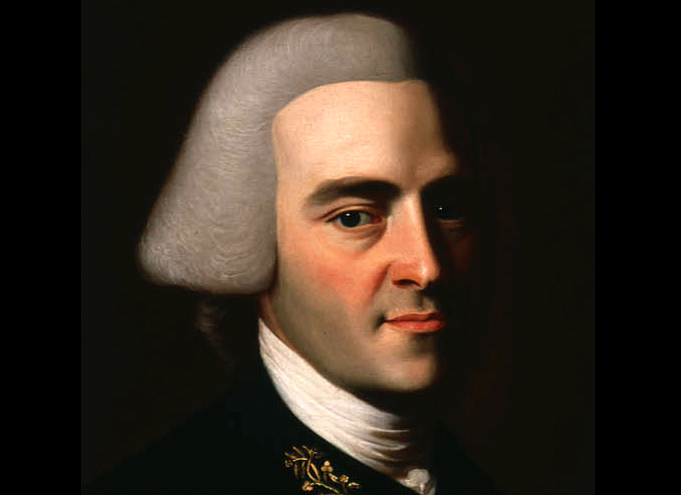
John Hancock

On May 24, 1775, John Hancock was elected president of the Second Continental Congress.

Hancock’s involvement with Samuel Adams and his radical group, the Sons of Liberty, won the wealthy merchant the dubious distinction of being one of only two Patriots (the other being Sam Adams) that the Redcoats marching to Lexington in April 1775 to confiscate Patriot arms were ordered to arrest. When British General Thomas Gage offered amnesty to the colonists holding Boston under siege, he excluded those same two men from his offer.

Categories
Thought

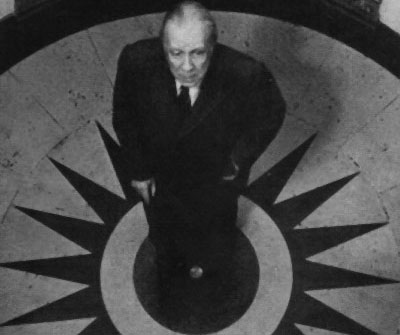
Jorge Luis Borges

Dictatorships foster oppression, dictatorships foster servitude, dictatorships foster cruelty; more abominable is the fact that they foster idiocy.


Jorge Luis Borges statement to the Argentine Society of Letters (c.1946)

Categories
Accountability general freedom national politics & policies responsibility

The First Casualty

Former Marine Lt. Gen. H.R. McMaster, President Trump’s current national security advisor, is the author of Dereliction of Duty, a look at how President Lyndon Johnson conducted the Vietnam War. 

Last Sunday, the Washington Post’s Carlos Lozada reviewed the 1997 non-fiction book, noting that McMaster hadn’t minced words. 

McMaster argues, for instance, that LBJ had a “real propensity for lying.” McMaster also takes Defense Secretary Robert McNamara and the Joint Chiefs of Staff to task for not telling Johnson hard truths about the war, and going along with what they knew were poor policies. 

Life-and-death policies. 

“McMaster explains how a culture of deceit and deference, of divided and misguided loyalties, of policy overrun by politics, resulted in an ever-deeper U.S. involvement in Vietnam,” Lozada reports. 

Lozada then compares the dishonest bubble within which LBJ made decisions about Vietnam to the people around President Trump today, fearing they too will fail to tell the president inconvenient truths or dare risk his wrath by opposing his policy whims. 

That tilted Trump focus is the 24/7 obsession of the national press corps.

But this problem isn’t new with Trump. It’s universal. 

The wise have long understood that truth is the first casualty of war. If not taken out before hostilities even begin.

It is critical to find people of integrity to work at the White House and tell presidents the unvarnished truth. And even more critical is to pick presidents with integrity to tell the American people — the ultimate decision-makers — the truth. 

It’s long past time that U.S. foreign policies be publicly discussed — and decided — by an informed electorate.

This is Common Sense. I’m Paul Jacob.


Printable PDF


Whisper cc photo by Jamin Gray on Flickr

Categories
Today

Eighth State and Drew Carey

On May 23, 1788, South Carolina became the 8th state to ratify the U.S. Constitution.

Other May 23 events include:

* 1813: South American independence leader Simón Bolívar entered Mérida, where he was proclaimed El Libertador (“The Liberator”), leading the invasion of Venezuela.

* 1900: Sergeant William Harvey Carney became the first African American to be awarded the Medal of Honor, for his heroism in a Civil War battle fought 37 years prior, in 1863.

* 1958: Birthday of American comedian and game show host Drew Carey.

Categories
Thought

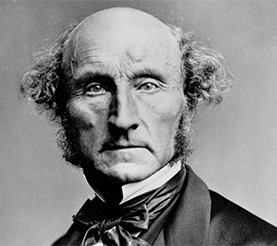
J. S. Mill

Both in England and on the Continent a graduated property tax (l’impôt progressif) has been advocated, on the avowed ground that the state should use the instrument of taxation as a means of mitigating the inequalities of wealth. I am as desirous as any one that means should be taken to diminish those inequalities, but not so as to relieve the prodigal at the expense of the prudent. To tax the larger incomes at a higher percentage than the smaller is to lay a tax on industry and economy; to impose a penalty on people for having worked harder and saved more than their neighbours.

John Stuart Mill, Principles of Political Economy (1848), Book V, Chapter II.