Categories
Today

Heroes Executed

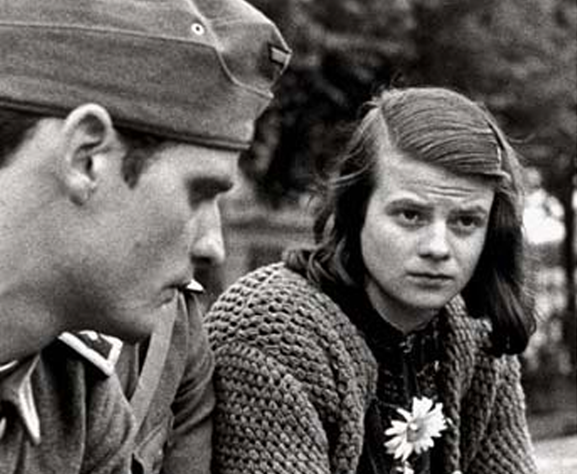
On Feb. 22, 1943, brother and sister Hans and Sophie Scholl, and their colleague in the White Rose resistance organization, Christoph Probst, stood trial before the Volksgericht — the People’s Court that tried political offenses against the Nazi German state. Found guilty of treason by Roland Freisler, head judge of the court, the three were executed that same day.

The method of capital punishment was guillotine.

Their six pamphlets had spread throughout German-held territory before the war ended.

Categories
Today

Enver Hoxha

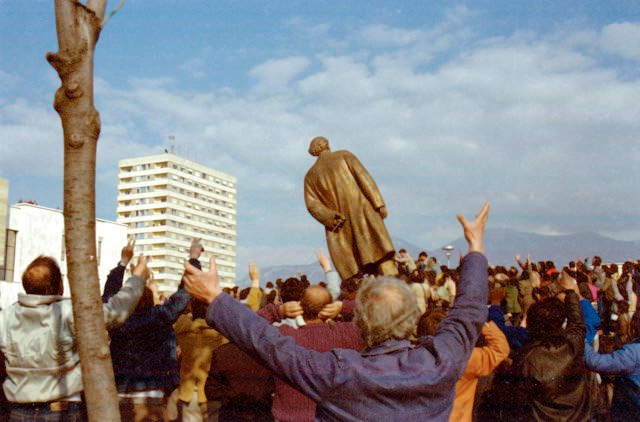
On February 20, 1991, in the Albanian capital Tirana, a gigantic statue of Albania’s long-time leader, Enver Hoxha, was brought down by mobs of angry protesters.

Categories
Today

U. S. Military Zones

February 19, 1942, was a sad day for constitutional rights, with President Franklin D. Roosevelt signing Executive Order 9066, authorizing the Secretary of War to prescribe certain areas of the country as military zones. These zones were used to incarcerate Japanese Americans in internment camps.

Categories
Today White Rose

White Rose

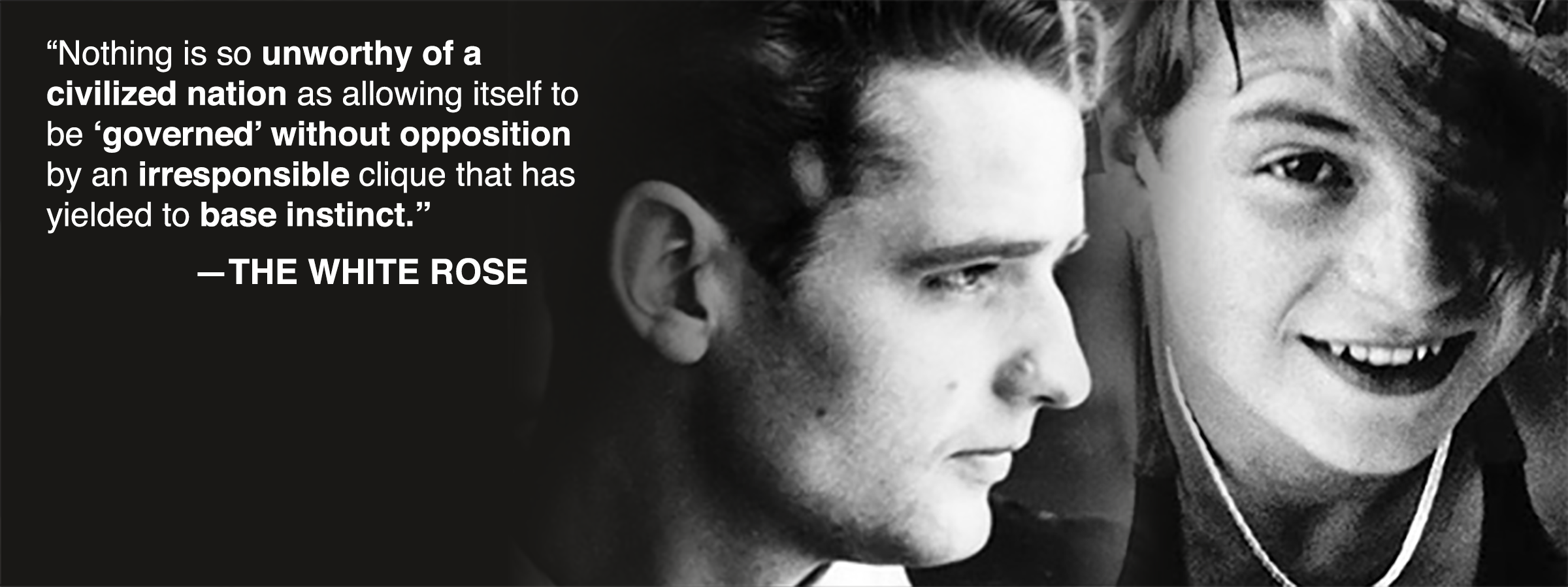
On Feb. 18, 1943, Hans and Sophie Scholl, a brother and sister, were arrested at the University of Munich for secretly (or not so secretly) putting out leaflets calling on Germans to revolt against Adolf Hitler and the Nazi regime.

In the previous year Hans had founded a group of students, who called themselves “The White Rose.” The group wrote and distributed six leaflets aimed at educated Germans. The leaflets made their way across Germany and to several other occupied countries. The Allies later dropped them all over the Third Reich.

Categories
Today

President Jefferson

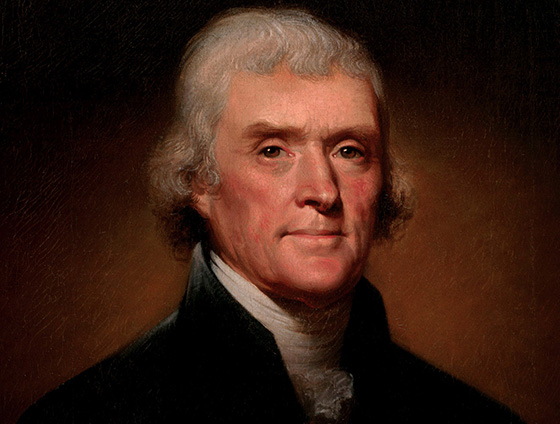
On Feb. 17, 1801, Thomas Jefferson was elected by the U.S. House of Representatives to be the third president of the United States, after an arduous election process that ended only 15 days prior to inauguration.

The fracas included a tie vote in the Electoral College followed by 35 indecisive ballots in the House. At that time, votes were cast for president, with the second place candidate becoming Vice-President. But in the Electoral College, Jefferson tied with his vice-presidential running mate, Aaron Burr. When that sent the balloting to the House of Representatives, the Federalists opposing Jefferson initially threw their support to Burr.


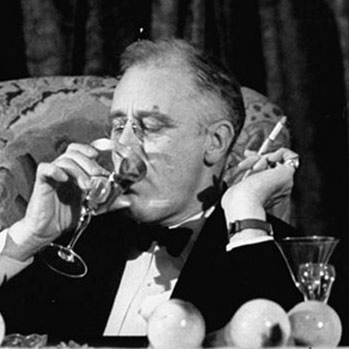
On Feb. 17, 1933, a constitutional amendment to repeal the Eighteenth Amendment to the U.S. Constitution, which had established the national prohibition of alcohol, was passed by the U.S. Senate. Known as the Blaine Act, the prime author was Wisconsin Senator John J. Blaine. By the end of 1933, the repeal of prohibition was adopted as the 21st Amendment to the Constitution.
Categories
Today

Silver Coinage

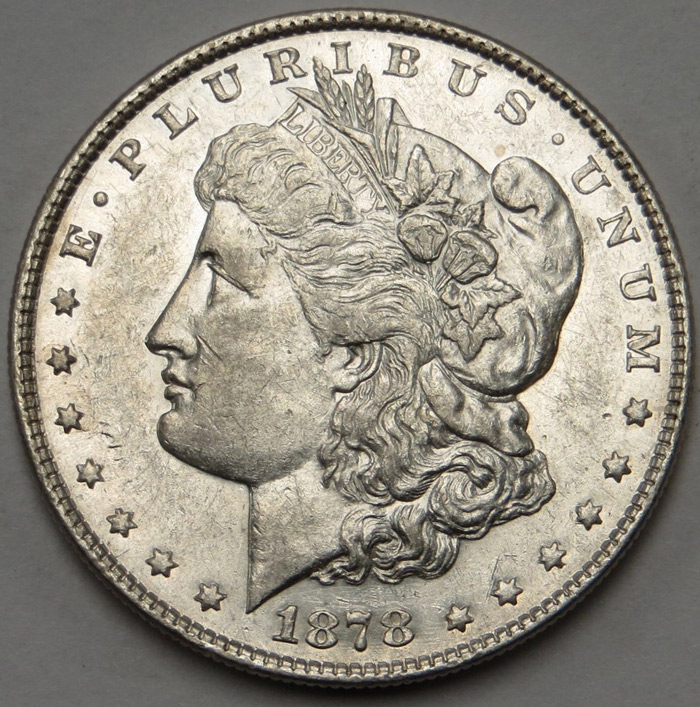
On February 16, 1878, the Bland-Allison Act, which provided for a return to the minting of silver coins, became U.S. law.

Categories
Today

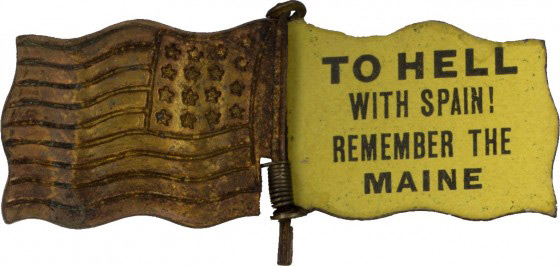
Remember the Maine

On Feb. 15, 1898, the USS Maine, a battleship, exploded in the Cuba’s Havana harbor, killing 260 American sailors. An official U.S. Naval Court of Inquiry ruled in March 1898 that the ship was blown up by a mine, without directly blaming Spain. Nonetheless, Congress declared war and, within three months, the U.S. had decisively defeated Spanish forces. On December 12, 1898, the Treaty of Paris was signed between the U.S. and Spain, granting the United States its first overseas empire with the ceding of such former Spanish possessions as Puerto Rico, Guam, and the Philippines.

In 1976, a team of American naval investigators concluded that the Maine explosion was likely caused by a fire that ignited its ammunition stocks, not by a Spanish mine or act of sabotage.

Categories
Today

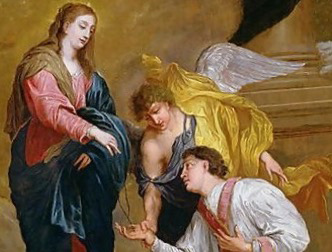
St. Valentine’s Day

On Feb. 14, 278 A.D., Valentine, a priest in Rome during the reign of Emperor Claudius II, was executed. In order to facilitate the raising of an army for his unpopular military campaigns, the emperor outlawed all marriages and engagements. Valentine defied Claudius’s order and continued to perform marriages for young lovers in secret. Once discovered, Valentine was arrested and condemned by the Prefect of Rome to be beaten to death with clubs and to have his head cut off. The sentence was carried out on February 14.

Valentine was named a saint by the Roman Catholic Church after his death.

Though February 14th is celebrated as “St. Valentine’s Day,” in today’s vernacular, the 14th of February, 278, was, ahem, “not his day.”

Categories
Today

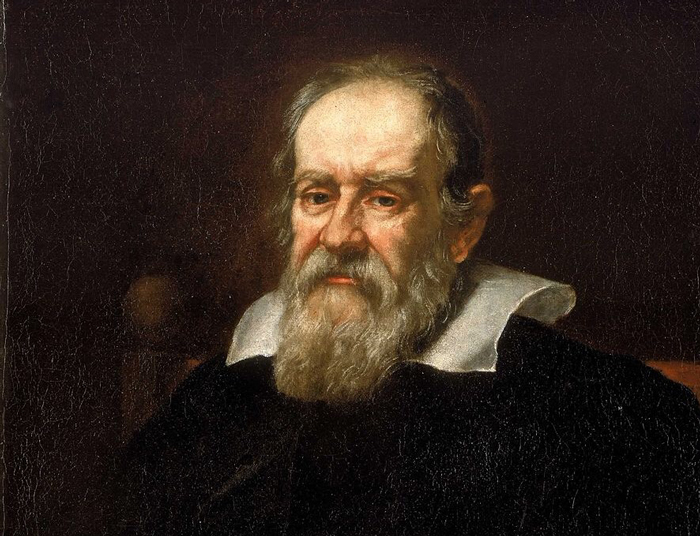
Galileo’s Heresy

On Feb. 13, 1633, Italian philosopher, astronomer and mathematician Galileo Galilei arrived in Rome to face charges of heresy for advocating Polish astronomer Nicolaus Copernicus’s theory that the Earth revolves around the Sun. In April, Galileo pled guilty before the Roman Inquisition in exchange for a lighter sentence. Put under house arrest indefinitely by Pope Urban VIII, Galileo spent the rest of his life at his villa in Arcetri, near Florence, dying in 1642.

Categories
Today

Scharansky Freed

On Feb. 12, 1986, Soviet human rights activist Anatoly Scharansky was released after spending eight years in Soviet prisons and labor camps. The amnesty deal was arranged at a summit meeting between Soviet leader Mikhail Gorbachev and President Ronald Reagan. Scharansky had been imprisoned for his campaign to win emigration rights for Russian Jews — who had been forbidden to practice Judaism in the USSR.

On Feb. 12, 1909, the National Association for the Advancement of Colored People (NAACP) was founded.

On Feb. 12, 1593, approximately 3,000 Korean defenders led by General Kwon Yul successfully repelled more than 30,000 invading Japanese forces in the Siege of Haengju.