On September 28, 2008, SpaceX launched the Falcon 1, the first private spacecraft to go into orbit around planet Earth.
SpaceX has achieved many records since.
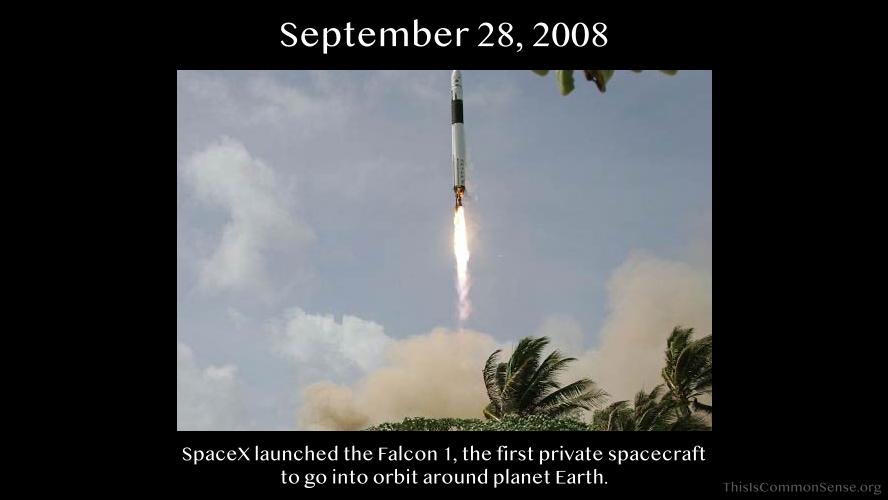
On September 28, 2008, SpaceX launched the Falcon 1, the first private spacecraft to go into orbit around planet Earth.
SpaceX has achieved many records since.
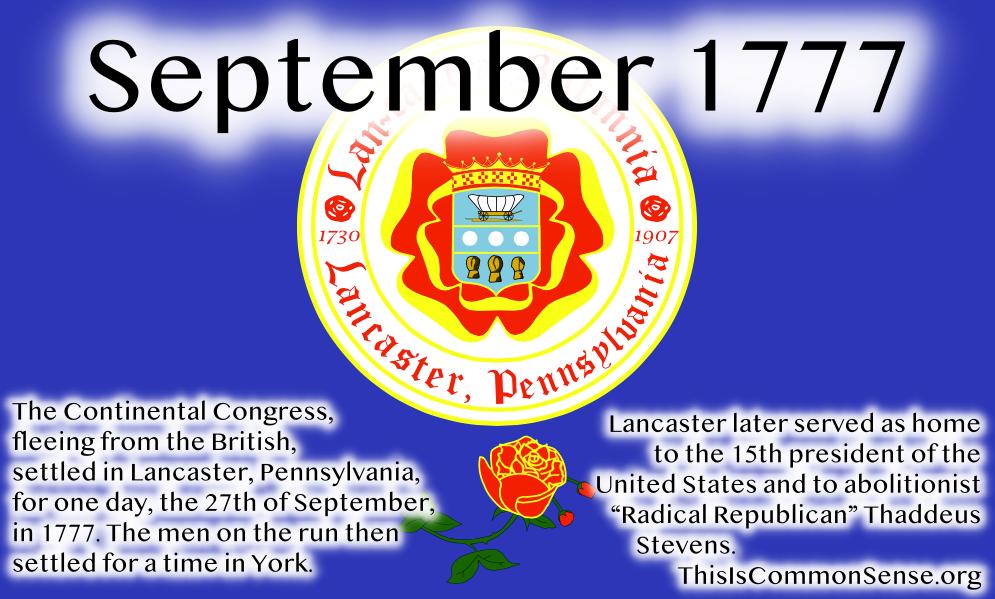
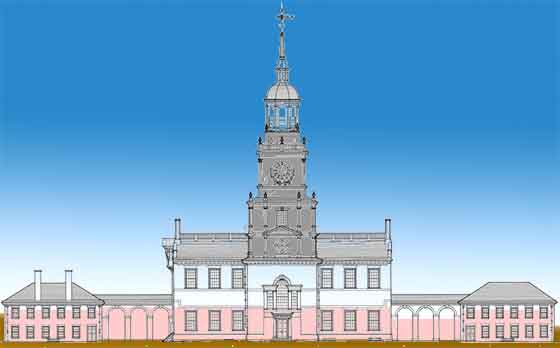
Lancaster, Pennsylvania — home to James Buchanan, Jr., the 15th president of the United States, and to congressman, abolitionist and “Radical Republican” Thaddeus Stevens — served, during the American Revolution, as the capital of the United States for one day, on September 27, 1777.
This occurred after the Continental Congress fled Philadelphia, which had been captured by the British. The revolutionary government then moved still further away, to York.
On September 26, 1786, protestors shut down the court in Springfield, Massachusetts, beginning a military standoff and ushering in Shays’ Rebellion.
This anti-tax revolt spurred a dramatic reaction on the part of the day’s politicians, including their attempts to reform the Articles of Confederation and to figure out better ways than high state taxes to pay off Revolutionary War debts. These efforts directly led to the adoption of a new Constitution.
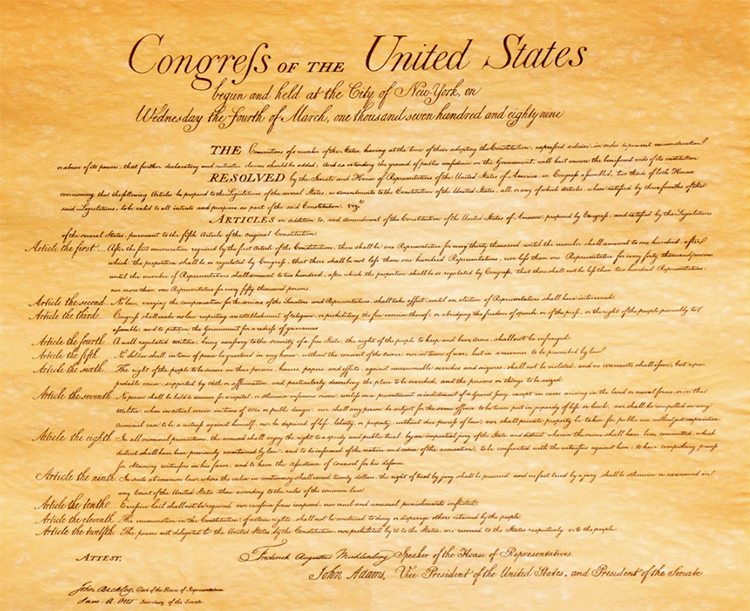
On September 25, 1789, the U.S. Congress passed twelve amendments to the United States Constitution: the Congressional Apportionment Amendment (which was never ratified), the Congressional Compensation Amendment (which was later enacted as the Twenty-seventh Amendment), and the ten that are known as the Bill of Rights.
Centuries earlier on that date, in 1555, the Peace of Augsburg was signed in Augsburg by Charles V and the princes of the Schmalkaldic League.
On September 24, 1789, the United States Congress passed the Judiciary Act, creating the office of the United States Attorney General and the federal judiciary system, and ordered the composition of the Supreme Court of the United States.
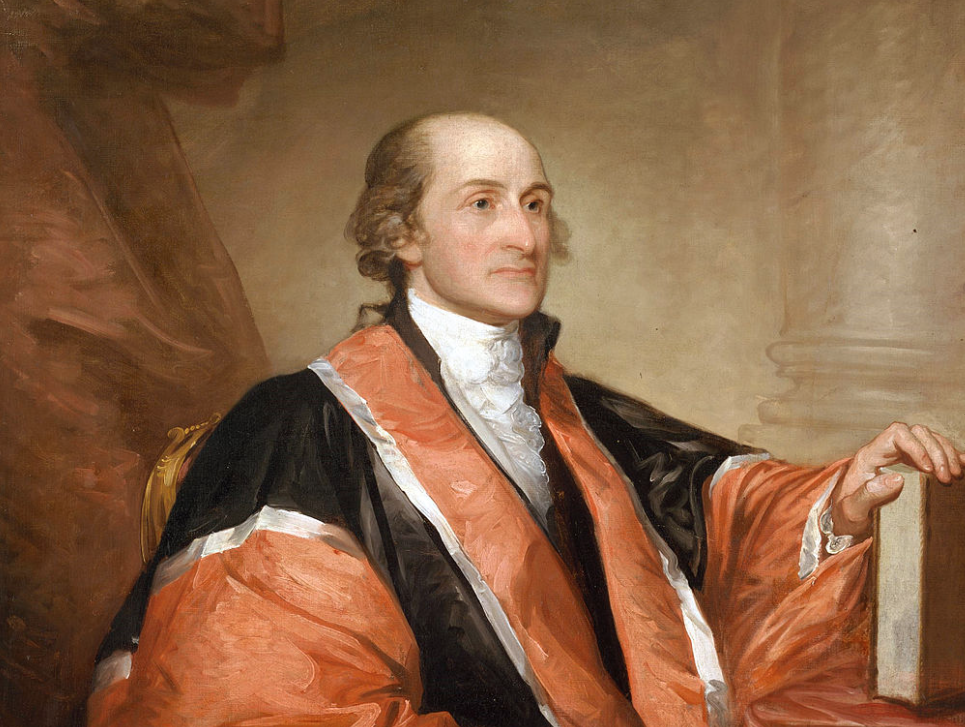
On the same day that President George Washington signed the bill into law, he officially nominated John Jay to the new position of Chief Justice of the Supreme Court. Jay (pictured in his official portrait, above) served in that position until 1795, when he resigned to take up his elected position as second governor of the State of New York. The Supreme Court heard only four cases during Jay’s Chief Justiceship; Jay refused to consult, officially, on legislation written by Alexander Hamilton, establishing the precedent that the Supreme Court has followed to this day: the Court would only rule on cases tried before it.
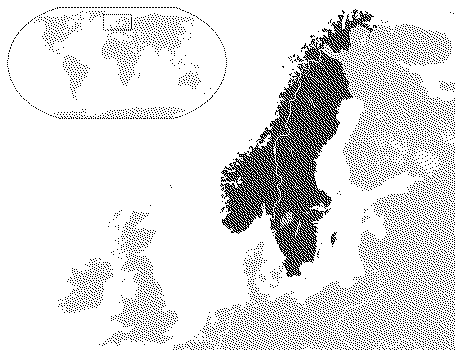
On September 23, 1905, Norway and Sweden signed the “Karlstad treaty,” peacefully dissolving the union between the two countries.
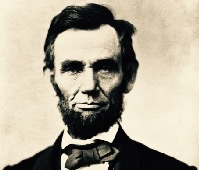
On September 22, 1862, U.S. President Abraham Lincoln issued a preliminary proclamation that he would order the emancipation of all slaves in any state of the Confederate States of America that did not return to Union control by January 1, 1863. None returned, and the subsequent order, signed and issued January 1, 1863, took effect except in locations where the Union had already mostly regained control.
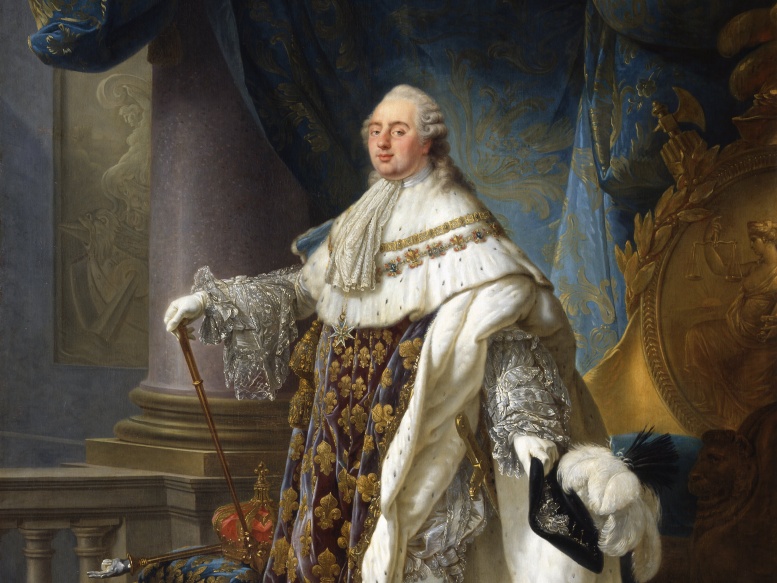
On September 21, 1792, The National Convention abolished the French monarchy, thereby deposing King Louis XVI.
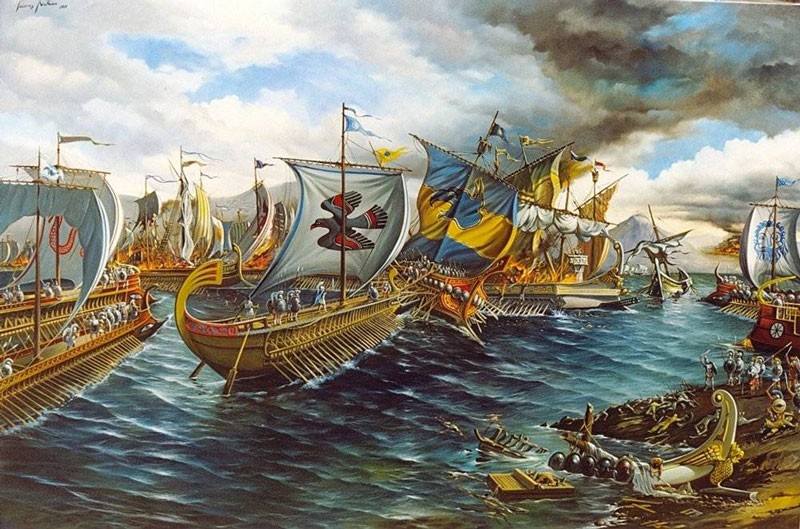
On September 20, 480 BC, Greeks defeated Persian forces in the battle of Salamis.
On September 19, 1778, the Continental Congress passed the first budget of the United States.
Congress last passed a budget in 1997.