Categories
Today

Comes Good Sailing

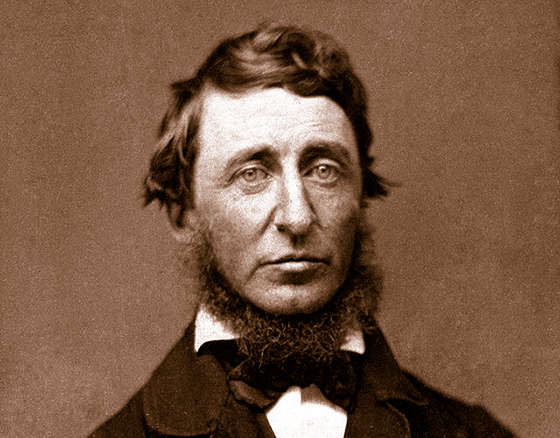
On May 6, 1862, American author, philosopher and abolitionist Henry David Thoreau died, after many years of tuberculosis.

Aware he was dying, Thoreau’s last words were “Now comes good sailing,” followed by two lone words, “moose” and “Indian.” Bronson Alcott planned the service and read selections from Thoreau’s works, and Ralph Waldo Emerson wrote the eulogy spoken at his funeral.

His remains, as well as those of members of his immediate family, were eventually moved to Sleepy Hollow Cemetery in Concord, Massachusetts.

Categories
Today

Cinco de Mayo

In 1862, troops led by Ignacio Zaragoza stopped a French invasion in the Battle of Puebla in Mexico — an event leading to the popular “Cinco de Mayo” celebration.

Categories
Today

Great Historian

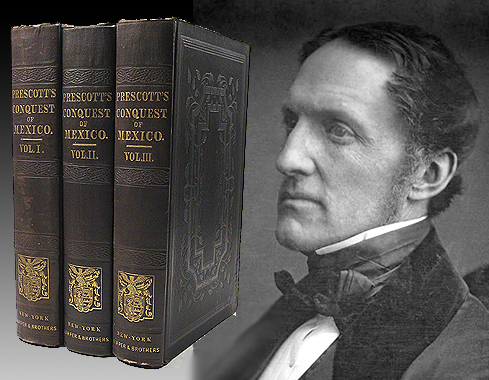
On May 4, 1796, American historian William H. Prescott was born. Prescott’s History of the Conquest of Mexico and his Conquest of Peru remain classic works of well-researched, “scientific history.” Prescott, Arizona, was named in his honor.

Categories
Today

Between the crosses

In 1791, the Constitution of May 3, the first modern constitution in Europe, was proclaimed by the Sejm of the Polish–Lithuanian Commonwealth.

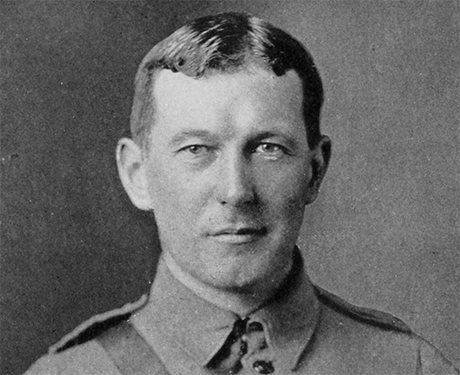
On May 3 in 1915, Lieutenant Colonel John McCrae composed the poem “In Flanders Fields.”


In Flanders fields the poppies blow
Between the crosses, row on row,
That mark our place; and in the sky
The larks, still bravely singing, fly
Scarce heard amid the guns below.

We are the Dead. Short days ago
We lived, felt dawn, saw sunset glow,
Loved and were loved, and now we lie
In Flanders fields.

Take up our quarrel with the foe:
To you from failing hands we throw
The torch; be yours to hold it high.
If ye break faith with us who die
We shall not sleep, though poppies grow
In Flanders fields.

Categories
Today

Run for the border

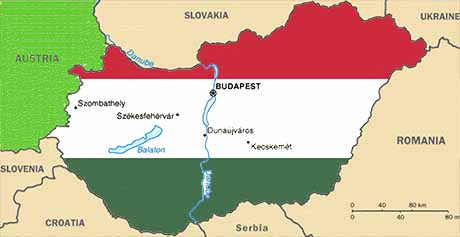
On May 2, 1989, Hungary began dismantling its border fence with Austria, allowing a number of East Germans to defect.

Categories
Today

Great Exhibition

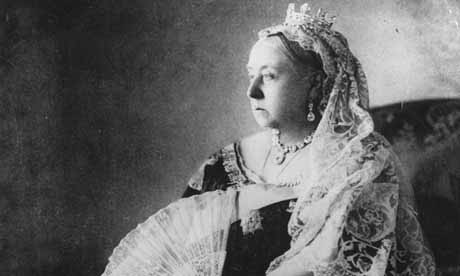
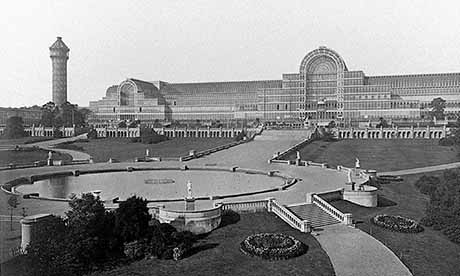
On May 1, 1851, Queen Victoria performed the ritual function of opening the Great Exhibition in London.
Crystal Palace

Categories
Today

Philosopher of Common Sense

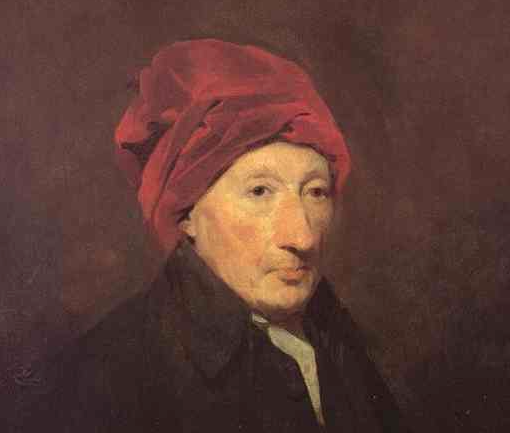
On April 26, 1710, English philosopher of “common sense” Thomas Reid was born. A highly influential figure in the Scottish Enlightenment, and well-known critic of Hume before Kant, his major works were An Inquiry into the Human Mind on the Principles of Common Sense, Essays on the Intellectual Powers of Man, and Essays on the Active Powers of the Human Mind. Reid died in 1796.

The Scottish “common sense” approach (shared by Adam Ferguson and Dugald Stewart) continued, in varying forms, into the 19th and 20th centuries in the works of William Hamilton, Herbert Spencer, C.S. Peirce, G.E. Moore and George Santayana.

Categories
Today

The F-word Defined

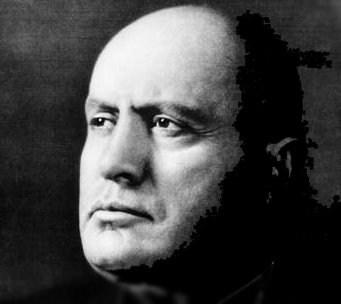
The Manifesto of Fascist Intellectuals was first published in Il Mondo, then by most Italian newspapers on April 21, 1925 — the national, anniversary-day celebration of the Founding of Rome (ca.  April 21, 753 BC). Nowadays, all sorts of people call other people “fascist,” often on the shakiest of rationales. It might be a good idea to look up this original document, for a good idea what politics’ “f-word” really means. Here is an excerpt:

Fascism was . . . a political and moral movement at its origins. It understood and championed politics as a training ground for self-denial and self-sacrifice in the name of an idea, one which would provide the individual with his reason for being, his freedom, and all his rights. The idea in question is that of the fatherland. It is an ideal that is a continuous and inexhaustible process of historical actualization. It represents a distinct and singular embodiment of a civilization’s traditions which, far from withering as a dead memory of the past, assumes the form of a personality focussed on the end towards which it strives. The fatherland is, thus, a mission.


Categories
Today

New Amsterdam Jews

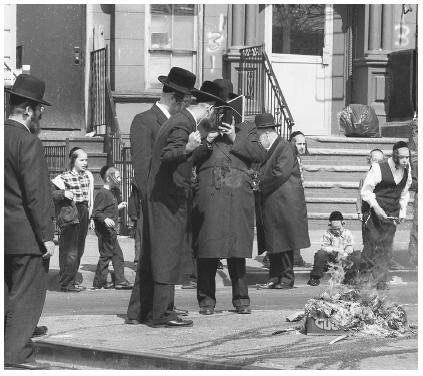
On April 20, 1657, freedom of religion was granted to the Jews of New Amsterdam (later New York City).

Categories
Today

The Revolution Begins

On April 19, 1775, the American Revolution began when the “shot heard around the world” was fired between the 700 British troops on a mission to capture Patriot leaders Sam Adams and John Hancock and to seize a Patriot arsenal and the 77 armed minutemen under Captain John Parker waiting for them on the Lexington town green. The Battle of Lexington ended with eight Americans killed and ten wounded, along with one wounded British soldier.

In Concord, a couple of hours later, British troops were encircled by hundreds of armed Patriots. The British commander ordered his men to return to Boston without directly engaging the Americans, but on the 16-mile journey they were constantly attacked by Patriot marksmen firing at them Indian-style from behind trees, rocks, and stone walls. By the time the British reached the safety of Boston, nearly 300 soldiers had been killed, wounded, or were missing in action. The Patriots suffered fewer than 100 casualties. (See Liberty’s Kids for a video on these events, or the video featured on this page.)

On April 19, 1782, John Adams secured the Dutch Republic’s recognition of the United States as an independent government.