Categories
Today

F-Word Defined

The Manifesto of Fascist Intellectuals was first published in Il Mondo, then by most Italian newspapers on April 21, 1925 — the national, anniversary-day celebration of the Founding of Rome (ca.  April 21, 753 BC).

Nowadays, all sorts of people call their political opponents “fascist,” often on the shakiest of rationales. It might be a good idea to look up this original document, for a good idea what politics’ “f-word” originally meant. Here is an excerpt:

Fascism was . . . a political and moral movement at its origins. It understood and championed politics as a training ground for self-denial and self-sacrifice in the name of an idea, one which would provide the individual with his reason for being, his freedom, and all his rights. The idea in question is that of the fatherland. It is an ideal that is a continuous and inexhaustible process of historical actualization. It represents a distinct and singular embodiment of a civilization’s traditions which, far from withering as a dead memory of the past, assumes the form of a personality focussed on the end towards which it strives. The fatherland is, thus, a mission.

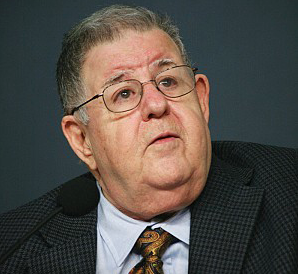
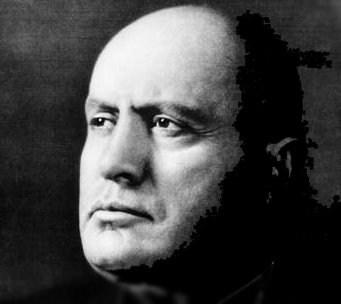
The manifesto was written by Giovanni Gentile, in support of the regime of Benito Mussolini (pictured above).
Categories
Today

New Amsterdam

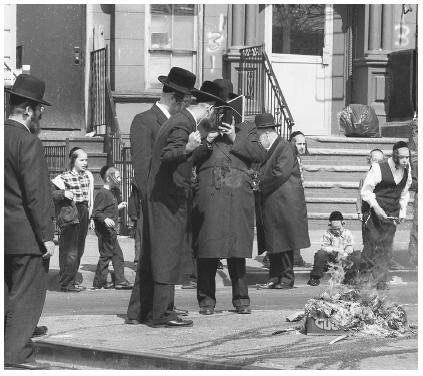
On April 20, 1657, freedom of religion was granted to the Jews of New Amsterdam (which was later renamed New York City).

Categories
Today

The Revolution Begins

On April 19, 1775, the American Revolution began when the “shot heard around the world” was fired between the 700 British troops on a mission to capture Patriot leaders Sam Adams and John Hancock and to seize a Patriot arsenal and the 77 armed minutemen under Captain John Parker waiting for them on the Lexington town green. The Battle of Lexington ended with eight Americans killed and ten wounded, along with one wounded British soldier.

In Concord, a couple of hours later, British troops were encircled by hundreds of armed Patriots. The British commander ordered his men to return to Boston without directly engaging the Americans, but on the 16-mile journey they were constantly attacked by Patriot marksmen firing at them Indian-style from behind trees, rocks, and stone walls. By the time the British reached the safety of Boston, nearly 300 soldiers had been killed, wounded, or were missing in action. The Patriots suffered fewer than 100 casualties. (See Liberty’s Kids for a video on these events, or the video featured on this page.)

On April 19, 1782, John Adams secured the Dutch Republic’s recognition of the United States as an independent government.

Categories
Today

Tax Day

On April 18, 1689, Bostonians rebelled against the government of Sir Edmund Andros.

On this day in April, in 2007, the Supreme Court of the United States, split 5-4, upheld the Partial-Birth Abortion Ban Act.

April 18 marks the 1772 birthday of David Ricardo, English political economist and one of the most influential thinkers in economic theory. An advocate for free trade and the abolition of slavery, Ricardo’s most famous work is his Principles of Political Economy and Taxation (1817).

Common Sense takes the occasion of the word “taxation” to mention that today is Tax Day for most of the nation, except for taxpayers in Maine and Massachusetts who have a still extra day to file (but who nevertheless are required to file quarterly payments on April 18). It was postponed three days from April 15, as was explained on Friday in these pages.

Categories
Today

Ronald Hamowy

April 17 marks the 1937 birth of Ronald Hamowy, Canadian historian, who first came to international prominence for his writings in the short-lived New Individualist Review. Hamowy died in 2012.

Categories
Today

Letter from Birmingham Jail

Dr. Martin Luther King, Jr., penned his Letter from Birmingham Jail while incarcerated in Birmingham, Alabama, for protesting segregation, on April 16, 1963.

Categories
Today

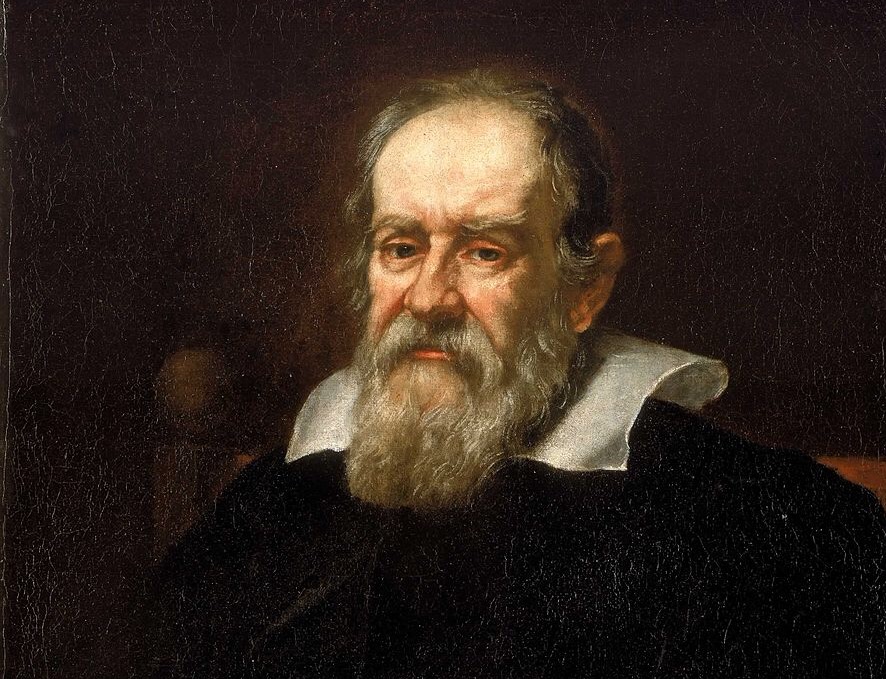
Galileo Galilei

In questions of science the authority of a thousand is not worth the humble reasoning of a single individual.


Galileo Galilei, as quoted in Biographies of Distinguished Scientific Men (1859) by François Arago.

Categories
Today

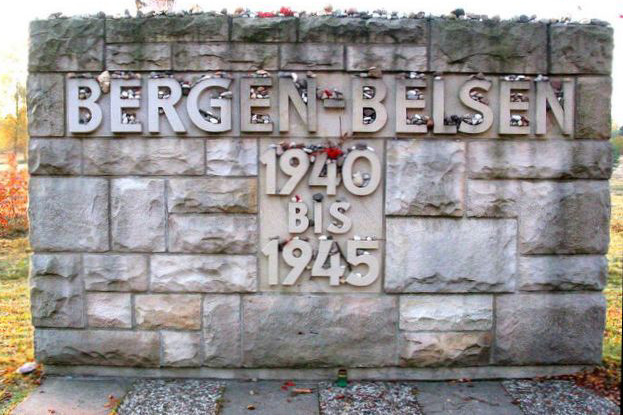
Bergen-Belsen Liberated

On April 15, 1945, the Bergen-Belsen concentration camp was liberated.

Categories
Today

Americanisms

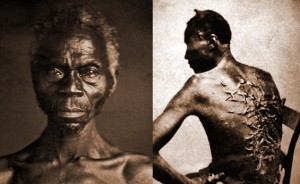
On April 14, 1775, the Society for the Relief of Free Negroes Unlawfully Held in Bondage, the first American organization committed to the abolition of slavery, was formed in Philadelphia.

On April 14, 1818, Noah Webster published his American Dictionary of the English Language, one of the first lexicons to include distinctly American words. The dictionary, which took him more than two decades to complete, introduced more than 10,000 “Americanisms.”

On April 14, 1988, representatives of the Soviet Union, Afghanistan, the United States, and Pakistan signed an agreement calling for the withdrawal of Soviet forces from Afghanistan. In exchange for an end to the disputed Soviet occupation, the United States agreed to end its arms support for the Afghan anti-Soviet factions, and Afghanistan and Pakistan agreed not to interfere in each other’s affairs.

Categories
Today

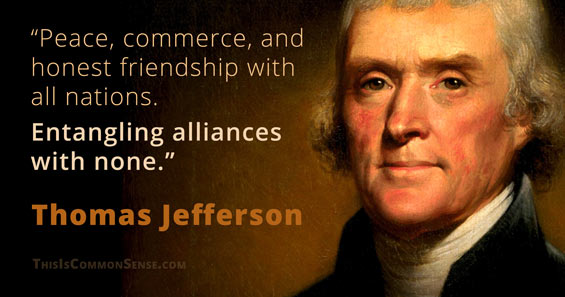
Thomas Jefferson

On April 13, 1743, Thomas Jefferson was born. Author of Notes on the State of Virginia and the first draft of the United States’ Declaration of Independence, Jefferson was also a scientist, philosopher, inventor, diplomat, and American politician. He also composed music, designed buildings, and translated works from his favorite French writers, whom he had met in his diplomatic missions to Paris.