Categories
Today

A telegram

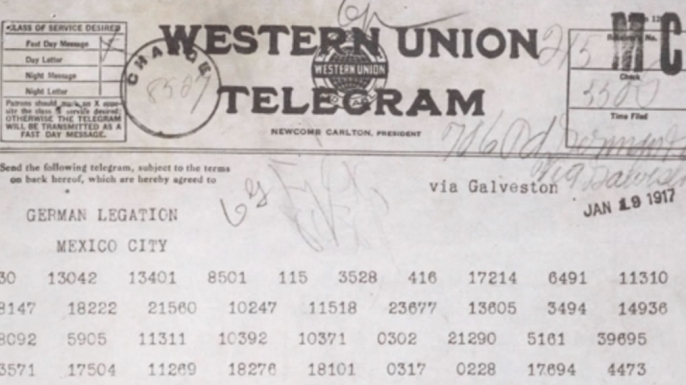
On February 24, 1917, United States ambassador to the United Kingdom, Walter Hines Page, was shown the intercepted Zimmermann Telegram, in which Germany offered to give the American Southwest back to Mexico were Mexico to declare war on the United States.

On February 24, 1803, the Supreme Court, in Marbury v. Madison, established the principle of judicial review.

Categories
Today

Zola and Menger

On February 23, 1898, Émile Zola was imprisoned in France after writing J’accuse, a letter accusing the French government of anti-Semitism and wrongfully imprisoning Captain Alfred Dreyfus. Zola was a leading force in extending realism to the novel.

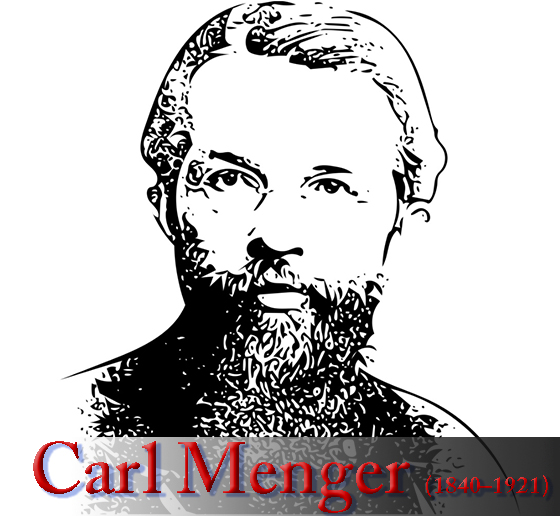
Fifty-eight years earlier, Austrian economist Carl Menger was born.

Menger would go on to contribute to the development of the theory of marginal utility, which supplanted cost-of-production theories of value in economics, in his first book, translated into English as Principles of Economics. Though expert in mathematics (he served as tutor in economics and statistics to Archduke Rudolf von Habsburg, the Crown Prince of Austria not long after the publication of the Principles), his approach to marginal theory was the least mathematical of his famous “co-discovers” of the principle, William Stanley Jevons and Leon Walras. Rooted in a subjective theory of value, it was the most realistic and least model-based of the marginalist revolutionaries, and he was most interested in price formation, not “price determination,” which focused almost exclusively on equilibrium conditions. He developed an evolutionary theory of money, as well. His second book expanded upon invisible hand processes in society.

Zola died in 1902; Menger died in 1921.

Categories
Today

Heroes Executed

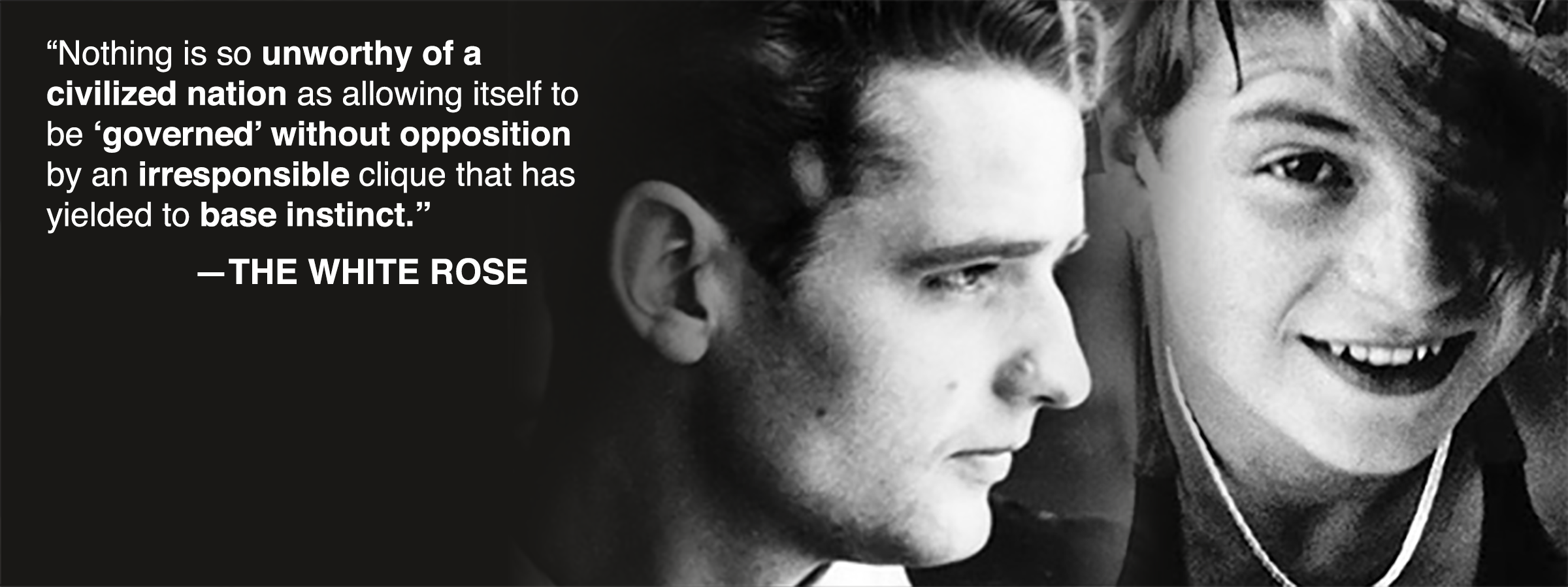
On Feb. 22, 1943, brother and sister Hans and Sophie Scholl, and their colleague in the White Rose resistance organization, Christoph Probst, stood trial before the Volksgericht — the People’s Court that tried political offenses against the Nazi German state. Found guilty of treason by Roland Freisler, head judge of the court, the three were executed that same day.

The method of capital punishment was guillotine.

Their six pamphlets had spread throughout German-held territory before the war ended.

Categories
Today

Three Horrors

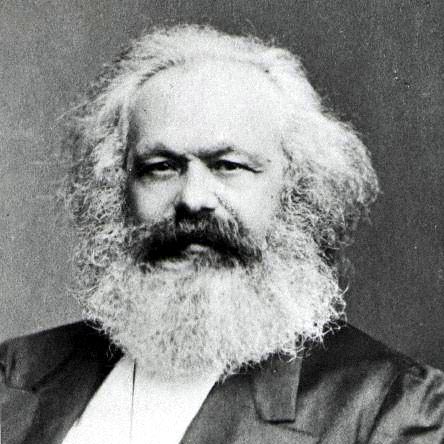
On Feb. 21, 1848, Karl Marx and Friedrich Engels published The Communist Manifesto.

On Feb. 21, 1916, the Battle of Verdun began with German bombardment of the city of Verdun, France.  For ten months, the longest single engagement of the First World War, German forces attacked the French along a 20-kilometer front crossing the Meuse River. When the battle ended, with no change in the strategic position of either army, the combined death toll was over 300,000 (out of over 700,000 casualties).

On Feb. 21, 1965, Malcolm X was gunned down by rival Black Muslims while addressing his Organization of Afro-American Unity in New York City.

Categories
Today

Enver Hoxha

On February 20, 1991, in the Albanian capital Tirana, a gigantic statue of Albania’s long-time leader, Enver Hoxha, was brought down by mobs of angry protesters.

Categories
Today

U. S. Military Zones

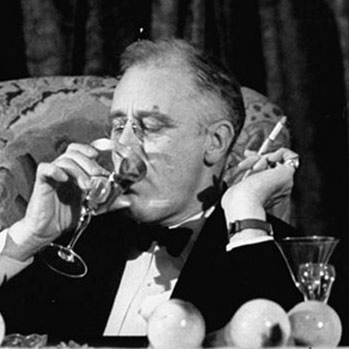
February 19, 1942, was a sad day for constitutional rights, with President Franklin D. Roosevelt signing Executive Order 9066, authorizing the Secretary of War to prescribe certain areas of the country as military zones. These zones were used to incarcerate Japanese Americans in internment camps.

Categories
Today White Rose

White Rose

On Feb. 18, 1943, Hans and Sophie Scholl, a brother and sister, were arrested at the University of Munich for secretly (or not so secretly) putting out leaflets calling on Germans to revolt against Adolf Hitler and the Nazi regime.

In the previous year Hans had founded a group of students, who called themselves “The White Rose.” The group wrote and distributed six leaflets aimed at educated Germans. The leaflets made their way across Germany and to several other occupied countries. The Allies later dropped them all over the Third Reich.

Categories
Today

President Jefferson

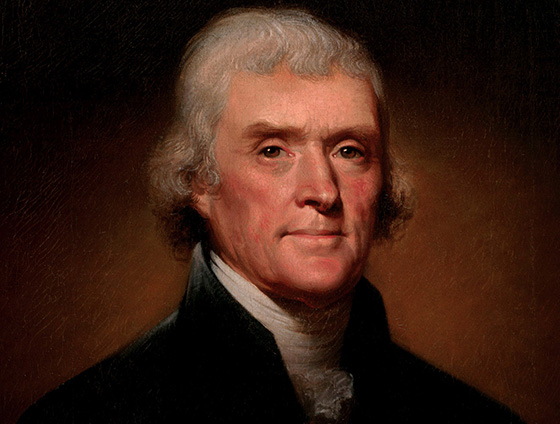
On Feb. 17, 1801, Thomas Jefferson was elected by the U.S. House of Representatives to be the third president of the United States, after an arduous election process that ended only 15 days prior to inauguration.

The fracas included a tie vote in the Electoral College followed by 35 indecisive ballots in the House. At that time, votes were cast for president, with the second place candidate becoming Vice-President. But in the Electoral College, Jefferson tied with his vice-presidential running mate, Aaron Burr. When that sent the balloting to the House of Representatives, the Federalists opposing Jefferson initially threw their support to Burr.


On Feb. 17, 1933, a constitutional amendment to repeal the Eighteenth Amendment to the U.S. Constitution, which had established the national prohibition of alcohol, was passed by the U.S. Senate. Known as the Blaine Act, the prime author was Wisconsin Senator John J. Blaine. By the end of 1933, the repeal of prohibition was adopted as the 21st Amendment to the Constitution.

Categories
Today

Silver Coinage

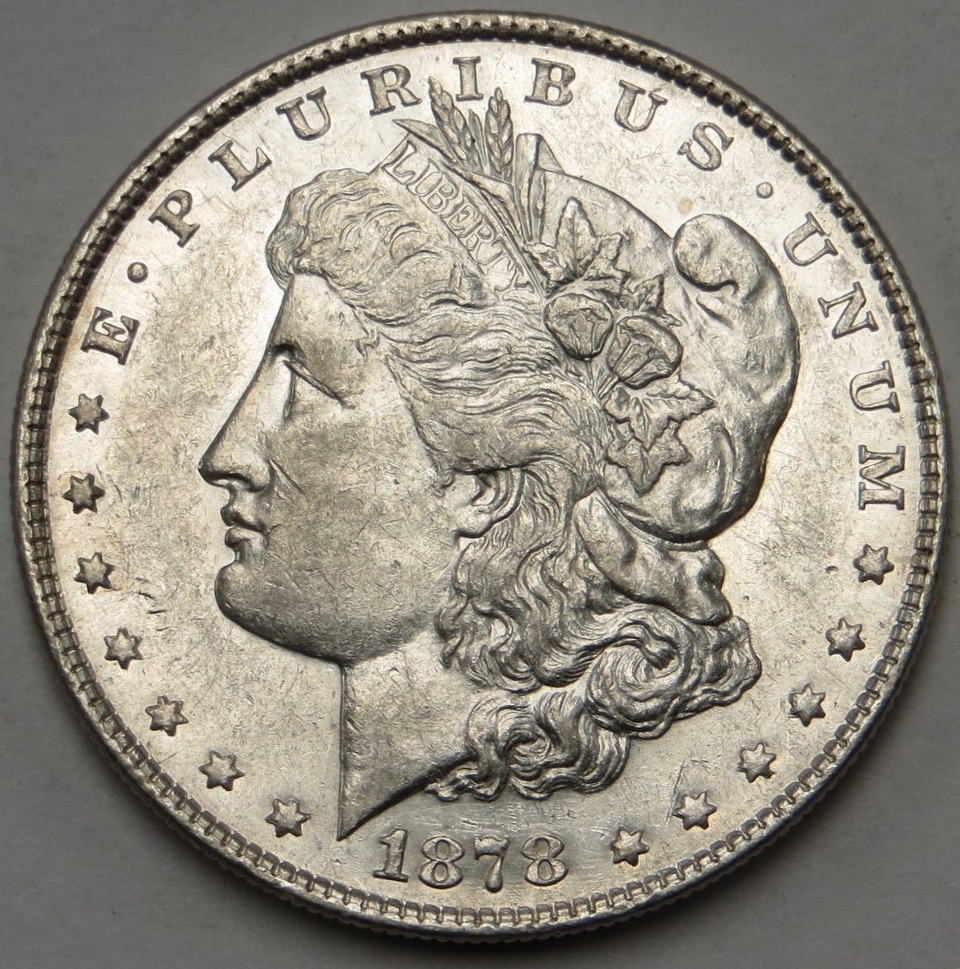
On February 16, 1878, the Bland-Allison Act, which provided for a return to the minting of silver coins, became U.S. law. Today, the value of American money is secured only by public faith in the stability of the government, but during the 19th Century, money was backed by actual deposits of silver and gold.

That is, money was silver and gold. But that did not mean that all was right with the monetary system.

Five years earlier, when Congress had stopped buying silver and minting silver coins — following the lead of European nations — a financial panic ensued. Reasons for the suspension lay in the fact that the exchange value of silver and gold had retained an old, out-moded fixed ratio that favored silver producers. Had the United States Treasury let the two standards freely float, making a distinction between silver dollars and gold dollars, none of the political strife over bimetallism would have occurred.

As it was, with silver over-valued, the silver coins increasingly “drove” gold out of circulation, as well as out of the Treasury and into private hands.

In 1893, in the midst of another financial panic, this time as a result of depletion of gold reserves in the U.S. Treasury, President Grover Cleveland called a special session of Congress to repeal the bimetallic standard. He was successful, though agrarian inflationists took over the Democratic Party and offered up, for the next election, William Jennings “Cross of Gold” Bryan as a counter to Cleveland’s old-fashioned fiscal conservative/social liberalism.
Categories
Today

Remember the Maine

On Feb. 15, 1898, the USS Maine, a battleship, exploded in the Cuba’s Havana harbor, killing 260 American sailors. An official U.S. Naval Court of Inquiry ruled in March 1898 that the ship was blown up by a mine, without directly blaming Spain. Nonetheless, Congress declared war and, within three months, the U.S. had decisively defeated Spanish forces. On December 12, 1898, the Treaty of Paris was signed between the U.S. and Spain, granting the United States its first overseas empire with the ceding of such former Spanish possessions as Puerto Rico, Guam, and the Philippines.

In 1976, a team of American naval investigators concluded that the Maine explosion was likely caused by a fire that ignited its ammunition stocks, not by a Spanish mine or act of sabotage.