Every revolutionary ends by becoming either an oppressor or a heretic.
Albert Camus, The Rebel (1951).
Categories
Albert Camus
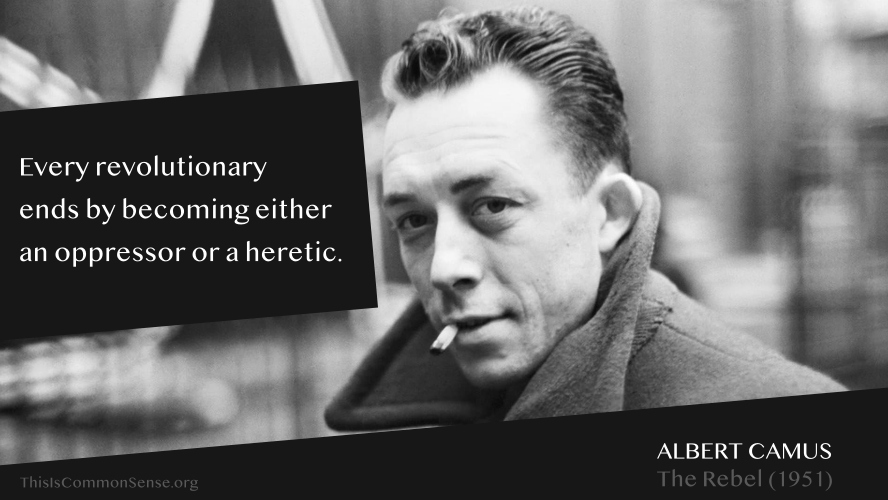
Every revolutionary ends by becoming either an oppressor or a heretic.
Albert Camus, The Rebel (1951).
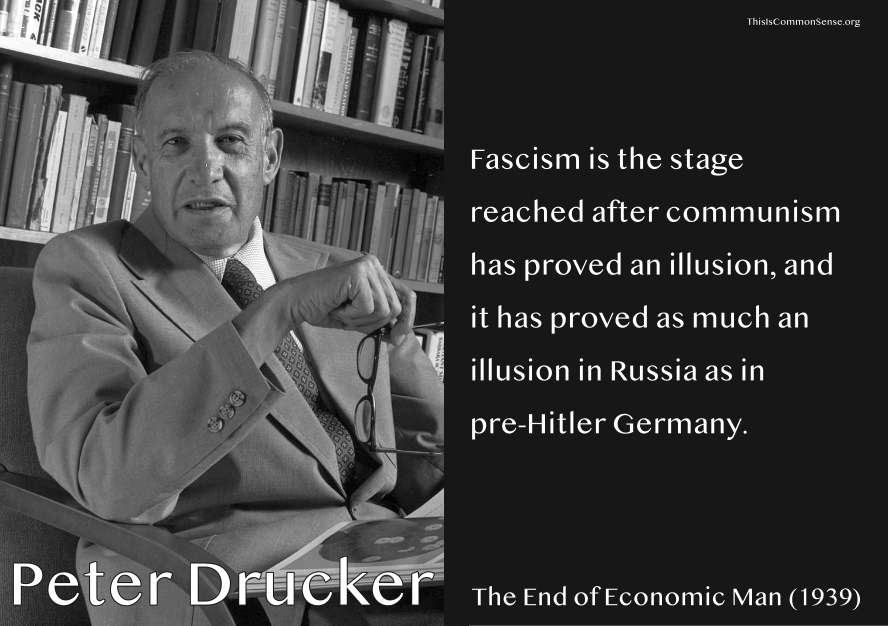
Fascism is the stage reached after communism has proved an illusion, and it has proved as much an illusion in Russia as in pre-Hitler Germany.
Peter Drucker, The End of Economic Man: The Study of the New Totalitarians (1939), pp. 245-246.
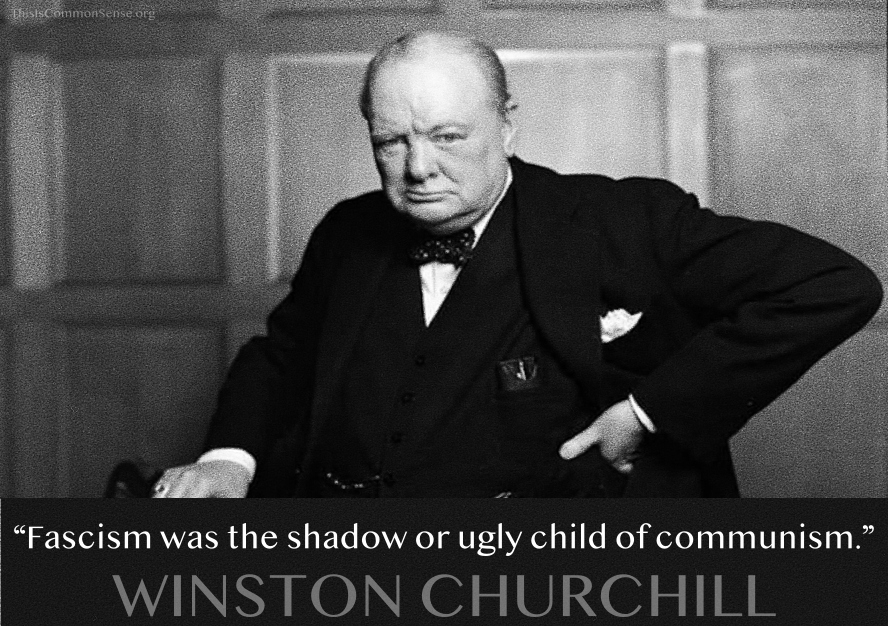
Fascism was the shadow or ugly child of communism. . . . As Fascism sprang from Communism, so Nazism developed from Fascism. Thus were set on foot those kindred movements which were destined soon to plunge the world into more hideous strife, which none can say has ended with their destruction.
Winston Churchill, The Second World War, Volume 1, The Gathering Storm (1948).
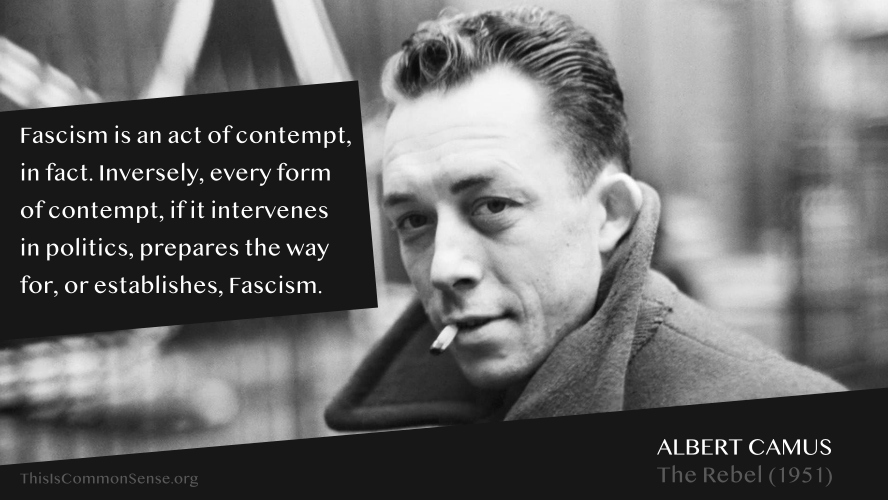
Fascism is an act of contempt, in fact. Inversely, every form of contempt, if it intervenes in politics, prepares the way for, or establishes, Fascism.
Albert Camus, The Rebel (1951).
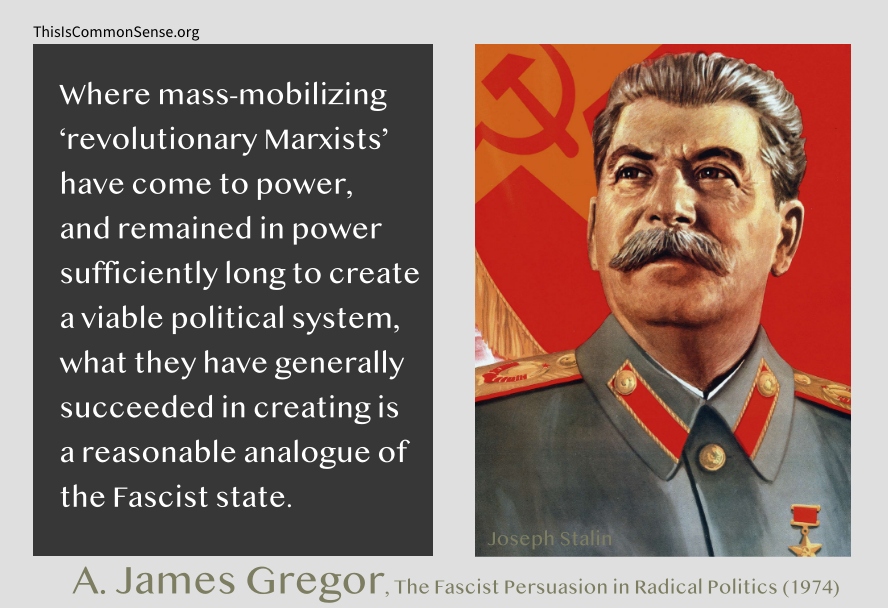
Where mass-mobilizing ‘revolutionary Marxists’ have come to power, and remained in power sufficiently long to create a viable political system, what they have generally succeeded in creating is a reasonable analogue of the Fascist state.
A. James Gregor, The Fascist Persuasion in Radical Politics (1974), p. 134.
Mussolini was a Marxist ‘heretic.’
A. James Gregor, Young Mussolini and the Intellectual Origins of Fascism (1979), p. xi. In his 1969 analysis, The Ideology of Fascism, he elaborated on Mussolini’s socialist bona fides: “Mussolini was a well-informed and convinced Marxist. His ultimate political convictions represent a reform of classical Marxism in the direction of a restoration of its Hegelian elements.”
In 1934, Mussolini reiterated that capitalism, as an economic system, was no longer viable. Fascist economy was to be based not on individual profit but on collective interest.
A. James Gregor, The Ideology of Fascism: The Rationale of Totalitarianism (1969), p. 299, showing that fascism has always been the very opposite of a free-trade, freedom-of-contract society.
A legislature is always badly set to work in manufacturing crime. To risk money in a wager is not a crime per se, whether the wager be on the result of a race, on the fate of a lottery ticket, on the turn of a dicebox, or on any other like contingency. It is folly, perhaps, in all cases, and it becomes crime and madness in some; but to draw the line between allowable folly and criminality, in a matter of this kind, is rather the office of publick opinion, than of the law.
William Leggett, in an editorial in the Plaindealer, January 28, 1837, republished in A Collection of the Political Writings of William Leggett (1840), and titled “Gambling Laws.”
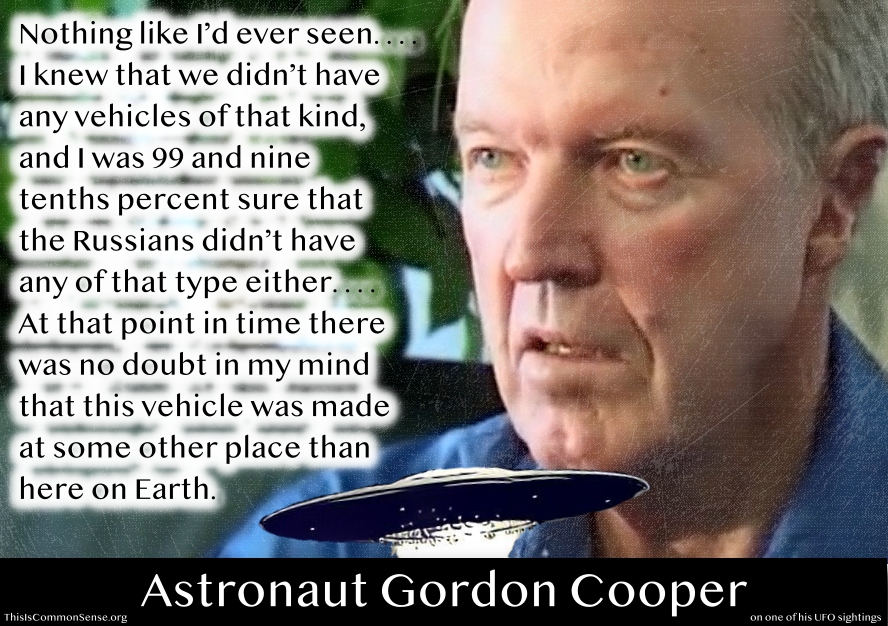
Nothing like I’d ever seen. . . . I knew that we didn’t have any vehicles of that kind, and I was 99 and nine tenths percent sure that the Russians didn’t have any of that type either. . . . At that point in time there was no doubt in my mind that this vehicle was made at some other place than here on Earth.
NASA astronaut Gordon Cooper, on one of his several encounters with UFOs in the 1950s.

The illiterate of the 21st century will not be those who cannot read and write, but those who cannot learn, unlearn and relearn.
Herbert Gerjuoy, as quoted by Alvin Toffler in Future Shock (1970), Ch. 18, p. 414. Quotation from this psychologist is often misattributed to Toffler.