A knowledge of different literatures is the best way to free one’s self from the tyranny of any of them.
José Martí, On Oscar Wilde (1882).
Categories
José Martí

A knowledge of different literatures is the best way to free one’s self from the tyranny of any of them.
José Martí, On Oscar Wilde (1882).

Ideas are more difficult to kill than people, but they can be killed, in the end.
Neil Gaiman, American Gods (2001).
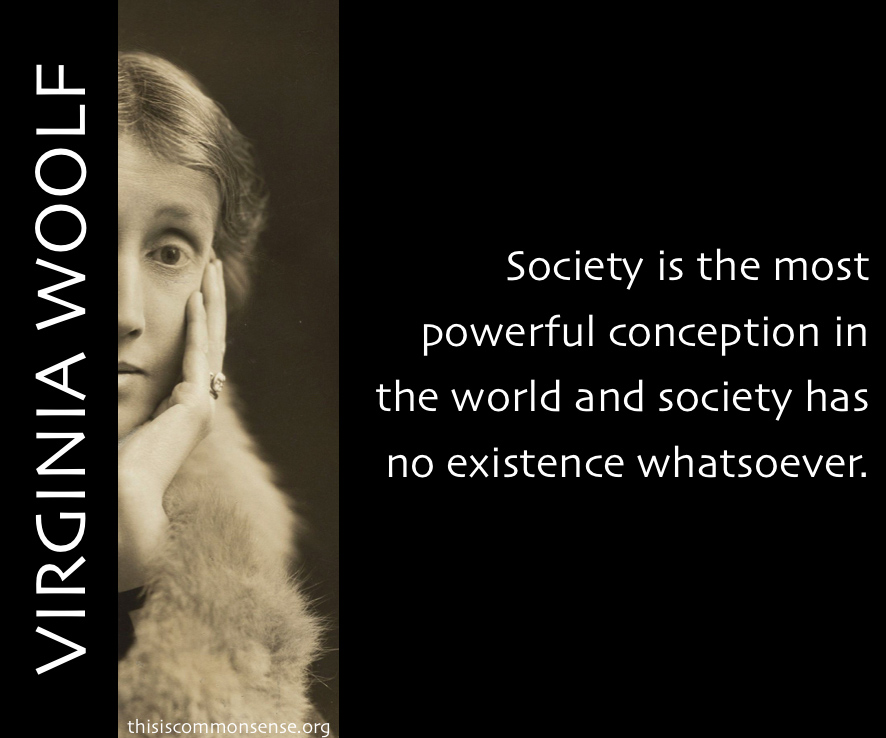
Society is the most powerful conception in the world and society has no existence whatsoever.
Virginia Woolf, Orlando: A Biography (1928).

Deny human rights, and however little you may wish to do so, you will find yourself abjectly kneeling at the feet of that old-world god, Force — that grimmest and ugliest of gods that men have ever created for themselves out of the lusts of their hearts.
Auberon Herbert, The Voluntaryist Creed, Being the Herbert Spencer Lecture Delivered at Oxford, June 7, 1906, London.

No passion is stronger in the breast of man than the desire to make others believe as he believes. Nothing so cuts at the root of his happiness and fills him with rage as the sense that another rates low what he prizes high. Whigs and Tories, Liberal party and Labour party — for what do they battle except their own prestige? It is not the love of truth, but desire to prevail that sets quarter against quarter and makes parish desire the downfall of parish. Each seeks peace of mind and subserviency rather than the triumph of truth and exaltation of virtue — But these moralities belong, and should be left to the historian, since they are as dull as ditch water.
Virginia Woolf, Orlando: A Biography (1928).
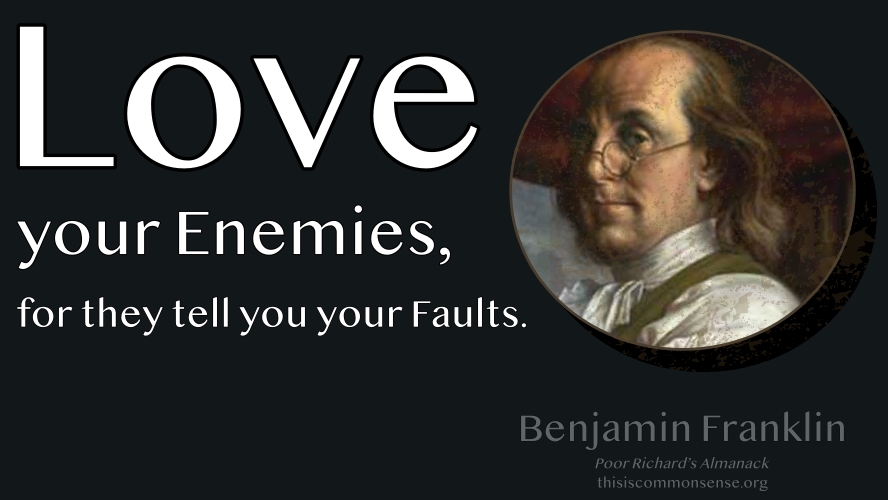
Love your Enemies, for they tell you your Faults.
Poor Richard’s Almanack, 1756.
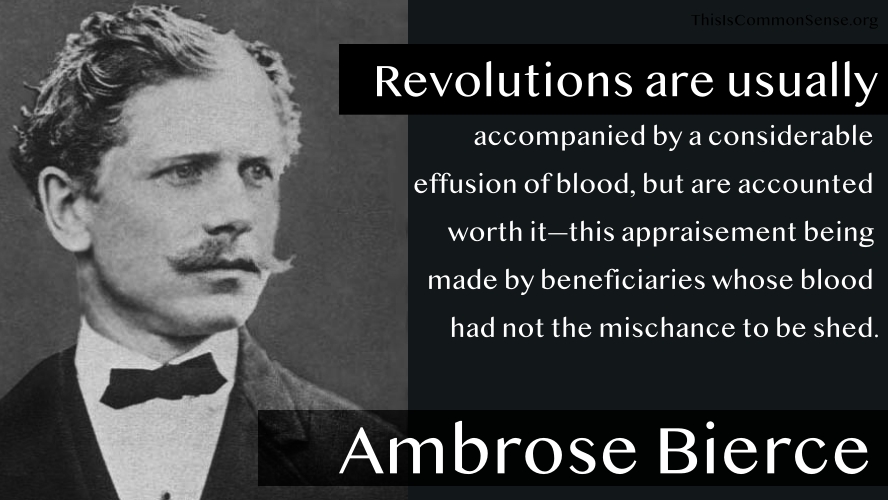
Revolutions are usually accompanied by a considerable effusion of blood, but are accounted worth it — this appraisement being made by beneficiaries whose blood had not the mischance to be shed.
From The Devil’s Dictionary (1911).
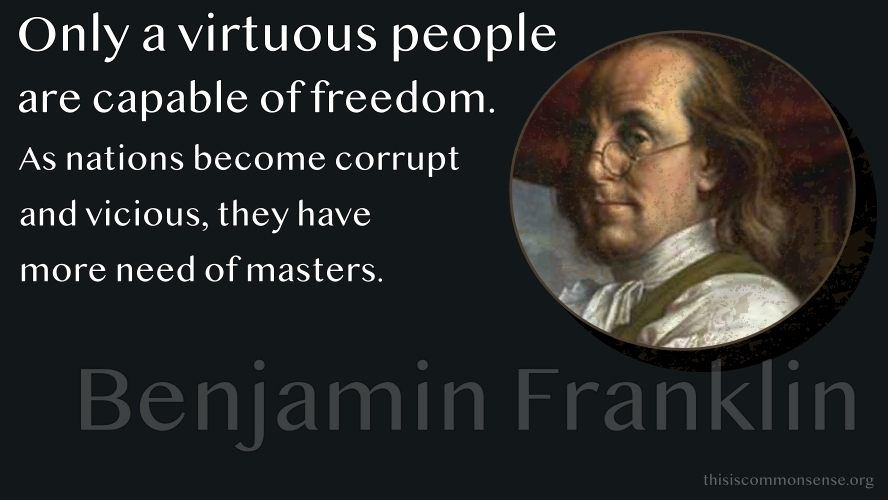
Let me add, that only a virtuous people are capable of freedom. As nations become corrupt and vicious, they have more need of masters.
Ben Franklin, letter to the Abbés Chalut and Arnaud (April 17, 1787).
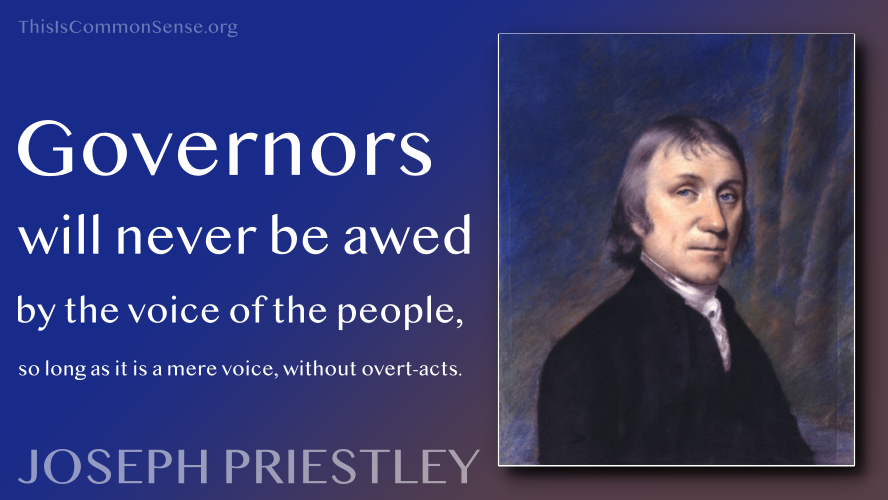
Governors will never be awed by the voice of the people, so long as it is a mere voice, without overt-acts.
Joseph Priestley, Essay on the First Principles of Government, 2nd Edition (1771), Section II, “Of Political Liberty.”
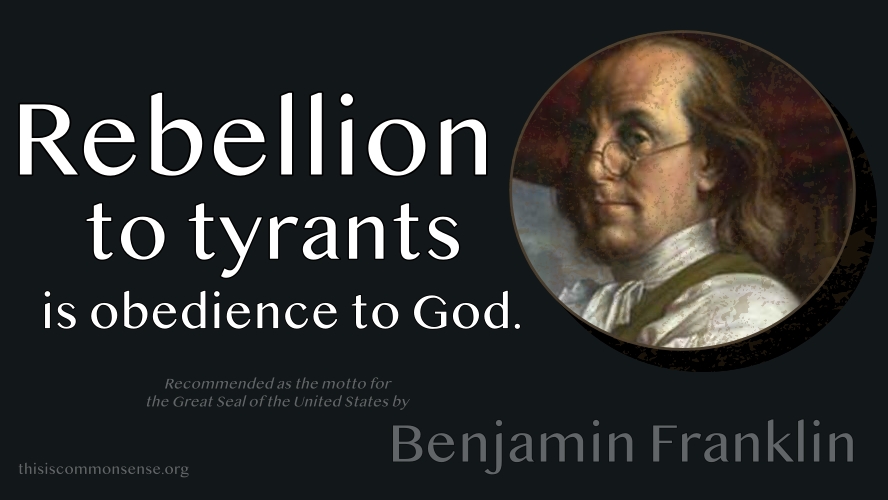
Rebellion to tyrants is obedience to God.
Ben Franklin’s recommended motto for the Great Seal of the United States, August 1776.