 Some circumstantial evidence is very strong, as when you find a trout in the milk.
Categories
Some circumstantial evidence is very strong, as when you find a trout in the milk.
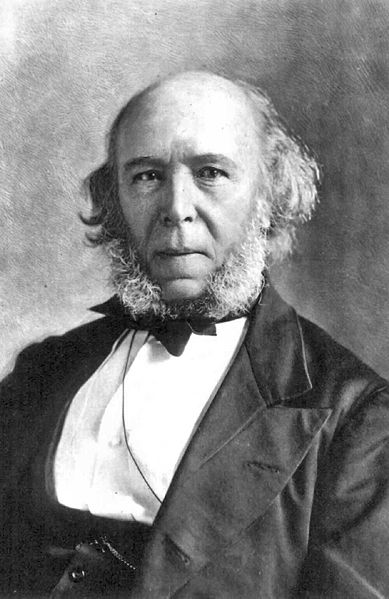 A life of constant external enmity generates a code in which aggression, conquest, revenge, are inculcated, while peaceful occupations are reprobated. Conversely a life of settled internal amity generates a code inculcating the virtues conducing to harmonious cooperation — justice, honesty, veracity, regard for other’s claims. And the implication is that if the life of internal amity continues unbroken from generation to generation, there must result not only the appropriate code, but the appropriate emotional nature — a moral sense adapted to the moral requirements. Men so conditioned will acquire to the degree needful for complete guidance, that innate conscience which the intuitive moralists erroneously suppose to be possessed by mankind at large. There needs but a continuance of absolute peace externally and a rigorous insistence on nonaggression internally to ensure the molding of men into a form naturally characterized by all the virtues
Perhaps the soul of goodness in things evil is by nothing better exemplified than by the good thing, justice, which, in rudimentary form, exists within the evil thing revenge.
The bank, Mr. Van Buren, is trying to kill me, but I will kill it.
(said to the Vice President, July 8, 1832)
 There ought to be no laws to guarantee property against the folly of its possessors.
Every book is a monopoly, and copyrights, perhaps, better than anything else serve to illustrate the wide range through which monopoly may act. Volumes are written which scarcely anyone will buy. The owner of the copyright has an absolute monopoly, but, there being no demand, his monopoly is worthless — from which it appears that a man cannot oppress his fellows simply because “he has a monopoly.”
The men who start out with the notion that the world owes them a living generally find that the world pays its debt in the penitentiary or the poor house.
It is the supreme test of a system of government whether its machinery is adequate for repressing the selfish undertakings of cliques formed on special interests and saving the public from raids of plunderers.
If I want to be free from any other man’s dictation, I must understand that I can have no other man under my control.
 Liberty sets the mind free, fosters independence and unorthodox thinking and ideas. But it does not offer instant prosperity or happiness and wealth to everyone. This is something that politicians in particular must keep in mind.