[A] man’s consent as regards his own actions is the most sacred thing in the world, and the one foundation on which all human relations must be built.
Auberon Herbert (1912).
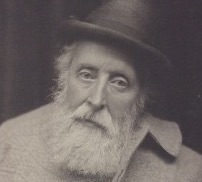
[A] man’s consent as regards his own actions is the most sacred thing in the world, and the one foundation on which all human relations must be built.
Auberon Herbert (1912).
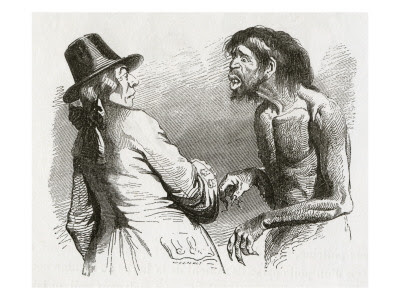
Man is not a Yahoo, but he is rather like a Yahoo and needs to be reminded of it from time to time.
The American taxpayer has always been deceived: it is his birthright.
Lord Mountjoy, in Mouse on the Moon. The passage in the original Leonard Wibberley novel runs as follows:
The American taxpayer’s government has been deceiving him for years, lending money to South American dictators, for instance, which the taxpayer thought was being spent on South American peasants. Besides, his own Secretary of State agrees with the deceit. He knows that it is good for the American taxpayer. And it is good for him.
Law, say the gardeners, is the sun,
Law is the one
All gardeners obey
To-morrow, yesterday, to-day.
Law is the wisdom of the old,
The impotent grandfathers feebly scold;
The grandchildren put out a treble tongue,
Law is the senses of the young.
Law, says the priest with a priestly look,
Expounding to an unpriestly people,
Law is the words in my priestly book,
Law is my pulpit and my steeple.
Law, says the judge as he looks down his nose,
Speaking clearly and most severely,
Law is as I’ve told you before,
Law is as you know I suppose,
Law is but let me explain it once more,
Law is The Law.
Yet law-abiding scholars write:
Law is neither wrong nor right,
Law is only crimes
Punished by places and by times,
Law is the clothes men wear
Anytime, anywhere,
Law is Good morning and Good night.
Others say, Law is our Fate;
Others say, Law is our State;
Others say, others say
Law is no more,
Law has gone away.
And always the loud angry crowd,
Very angry and very loud,
Law is We,
And always the soft idiot softly Me.
If we, dear, know we know no more
Than they about the Law,
If I no more than you
Know what we should and should not do
Except that all agree
Gladly or miserably
That the Law is
And that all know this
If therefore thinking it absurd
To identify Law with some other word,
Unlike so many men
I cannot say Law is again,
No more than they can we suppress
The universal wish to guess
Or slip out of our own position
Into an unconcerned condition.
Although I can at least confine
Your vanity and mine
To stating timidly
A timid similarity,
We shall boast anyway:
Like love I say.
Like love we don’t know where or why,
Like love we can’t compel or fly,
Like love we often weep,
Like love we seldom keep.
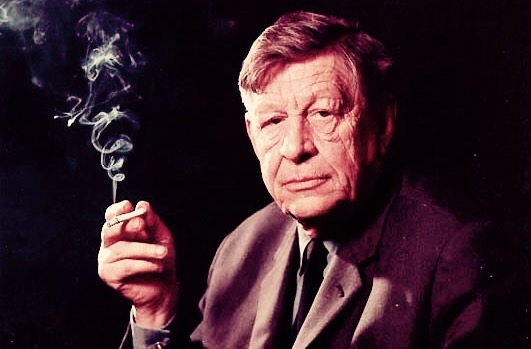
— W. H. Auden, included in The Collected Shorter Poems of W. H. Auden, 1927–1957 (1964), and as retrievable from numerous websites.
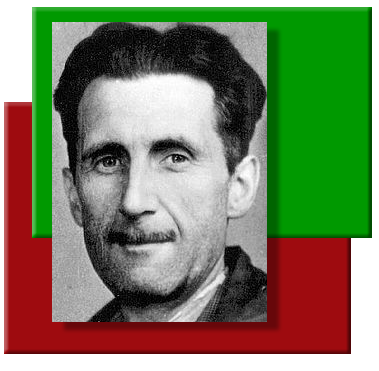
The Socialist who finds his children playing with soldiers is usually upset, but he is never able to think of a substitute for the tin soldiers; tin pacifists somehow won’t do.
Our belief in force, our readiness to use it, and our obedience yielded to it, are but forms of fetish worship still left amongst us. Written in almost every heart, though unknown to the owner of it, are the words ‘force makes right.’ Those who wish to escape from this baneful superstition, who wish to destroy its altar and cut down its groves, can only do so by taking their stand on plain, intelligible principle; can only do so by recognizing that there are moral laws standing above our human dealings with each other, laws which we cannot depart from, which we cannot recognize at one moment and ignore at the next to suit our party conveniences. No detached effort, no rising of a few people against some special wrong which personally affects them, will ever alter the world’s present way of thinking. It must be the battle of principles — the principle of liberty against the principle of force.
Auberon Herbert, The Choices Between Personal Freedom and State Protection (1880).
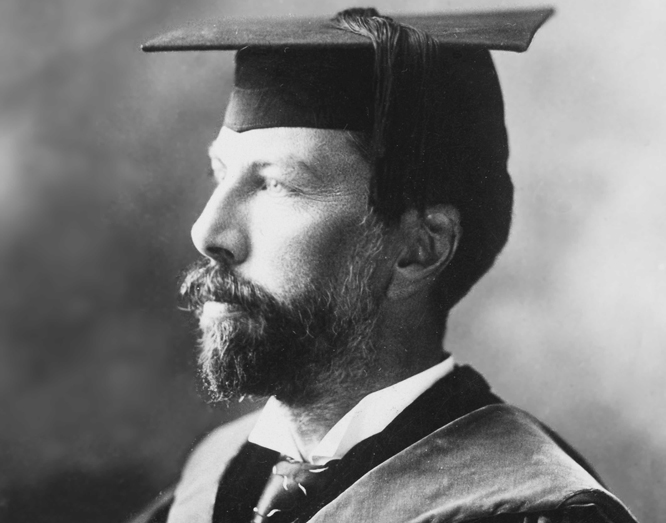
The true basis for an estimate of a nation’s wealth is to be found in the enjoyments of its members. The wealth of a community does not depend on the money value
its means for such enjoyment, nor even on their physical amount, but on their utilization.
Arthur Twining Hadley, Economics: An Account of the Relations Between Private Property and Public Welfare (1896), pp. 4-5.
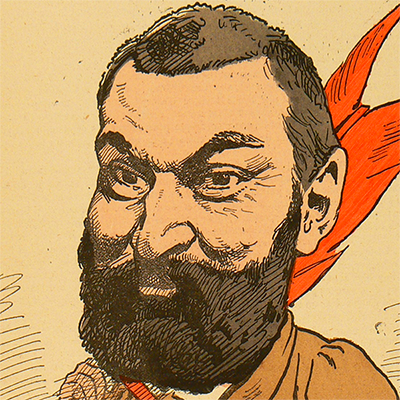
For all except the very few of extraordinary gifts, the spur of gain is not only powerful, it is indispensable.
Yves Guyot, stating what he called “the third incentive of human action,” in Where and why Public Ownership Has Failed (H. F. Baker, trans., 1914).
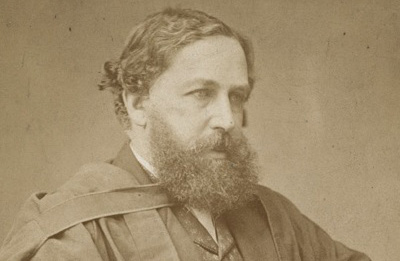
[I]f people do not understand a true political economy, they will make a false one of their own.
W. Stanley Jevons, Political Economy (1880).
The advantages of intervention on the part of a government are visible and tangible facts: The evil that results from such intervention is much more indirect and can only be appreciated after close and intensive study.
Arthur Twining Hadley, Economics: An Account of the Relations Between Private Property and Public Welfare (1896)