That men do not learn very much from the lessons of history is the most important of all the lessons that history has to teach.
Categories
Aldous Huxley
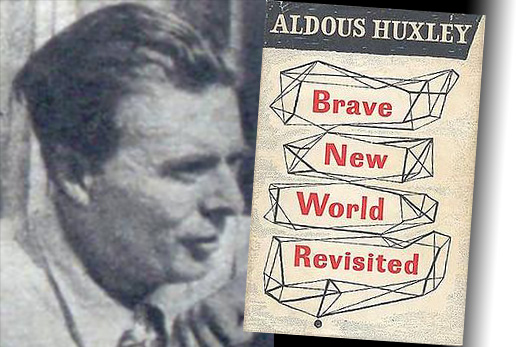
That men do not learn very much from the lessons of history is the most important of all the lessons that history has to teach.
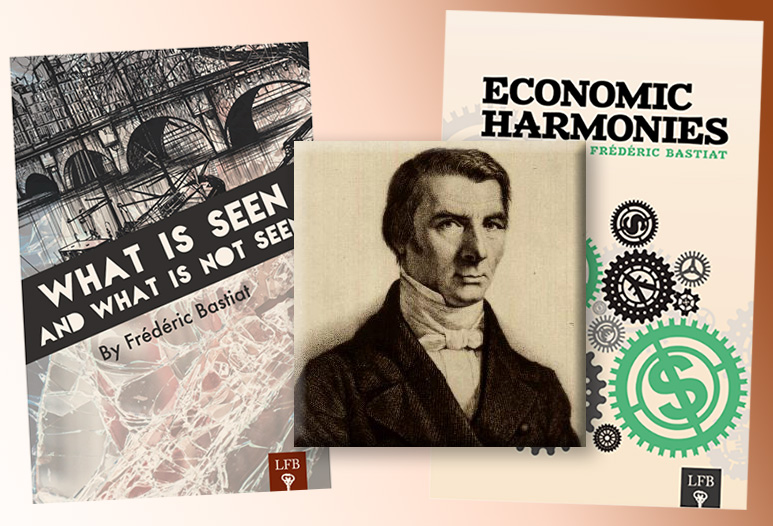
Government is not maimed, and cannot be so. It has two hands — one to receive and the other to give; in other words, it has a rough hand and a smooth one. The activity of the second is necessarily subordinate to the activity of the first. Strictly, Government may take and not restore. This is evident, and may be explained by the porous and absorbing nature of its hands, which always retain a part, and sometimes the whole, of what they touch. But the thing that never was seen, and never will be seen or conceived, is, that Government can restore more to the public than it has taken from it. It is therefore ridiculous for us to appear before it in the humble attitude of beggars. It is radically impossible for it to confer a particular benefit upon any one of the individualities which constitute the community, without inflicting a greater injury upon the community as a whole.
Frédéric Bastiat, “Government” in Essays on Political Economy (New York:
G. P. Putnams & Sons, 1874)
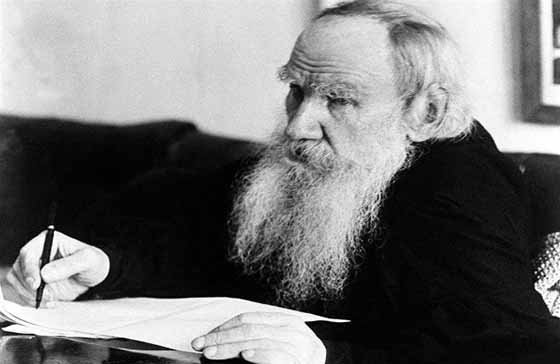
We shall soon cease completely to understand the language of the people. Now we say: ‘The theory of progress,’ ‘the role of the individual in history,’ ‘the evolution of science’ and a peasant says: ‘You can’t hide an awl in a sack,’ and all theories, histories, evolutions become pitiable and ridiculous, because they are incomprehensible and unnecessary to the people. But the peasant is stronger than we; he is more tenacious of life, and there may happen to us what happened to the tribe of Atzurs, of whom it was reported to a scholar:
‘All the Atzurs have died out, but there is a parrot here who knows a few words of their language.’
Leo Tolstoy, quoted in Maxim Gorky, Reminiscences of Leo Nicolayevitch Tolstoi, (1919; English, 1920), S. S. Koteliansky and Leonard Woolf, translators.
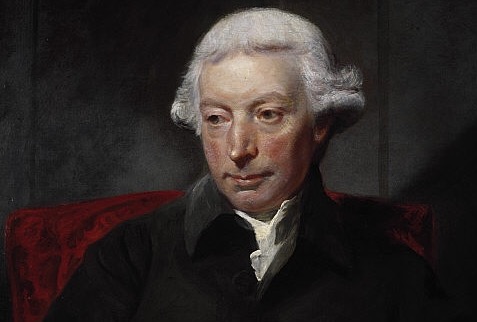
Men are to be estimated, not from what they know, but from what they are able to perform.
Adam Ferguson, An Essay on the History of Civil Society (1767) Part I, Section V.
Every step and every movement of the multitude, even in what are termed enlightened ages, are made with equal blindness to the future; and nations stumble upon establishments, which are indeed the result of human action, but not the execution of any human design. If Cromwell said, that a man never mounts higher, than when he knows not whither he is going; it may with more reason be affirmed of communities, that they admit of the greatest revolutions where no change is intended, and that the most refined politicians do not always know whither they are leading the state by their projects.
Adam Ferguson, An Essay on the History of Civil Society (1767). The first sentence has been cited often, becoming a byword for Austrian economist and social philosopher F. A. Hayek.
Friedrich of Prussia said very truly: ‘Everyone must save himself in his own way.’ He also said: ‘Argue as much as you like, but obey.’ But when dying he confessed: ‘I have grown weary of ruling slaves.’ So-called great men are always terribly contradictory: that is forgiven them with all their other follies. Though contradictoriness is not folly: a fool is stubborn, but does not know how to contradict himself. Yes, Friedrich was a strange man: among the Germans he won the reputation of being the best king, yet he could not bear them; he disliked even Goethe and Wieland.
Leo Tolstoy, quoted in Maxim Gorky, Reminiscences of Leo Nicolayevitch Tolstoi, (1919; English, 1920), S. S. Koteliansky and Leonard Woolf, translators.
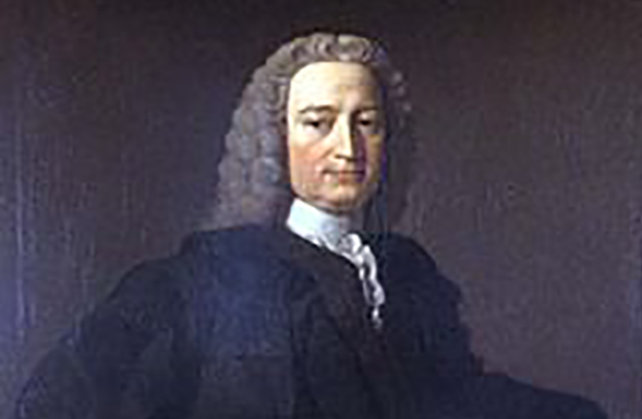
Francis Hutcheson, A System of Moral Philosophy (1755), Book II, Ch. III, No. 12.
The ultimate notion of right is that which tends to the universal good; and when one’s acting in a certain manner has this tendency, he has a right thus to act.
I have done nothing more than show that there is a distinction between an urn and a chamber pot and that it is this distinction above all that provides culture with elbow room. The others, those who fail to make this distinction, are divided into those who use the urn as chamber pot and those who use the chamber pot as urn.
Karl Kraus, as quoted in Thomas Szasz, Karl Kraus and the Soul Doctors: A Pioneer Critic and His Criticism of Psychiatry and Psychoanalysis (Louisiana State University Press, 1976).
Dystopia is not very evenly distributed.
William Gibson, in Abraham Riesman’s interview article, “William Gibson Has a Theory About Our Cultural Obsession With Dystopias” (Vulture.com, August 1, 2017)
How is the world ruled and led to war? Diplomats lie to journalists and believe these lies when they see them in print.