Categories
Thought

Yves Guyot

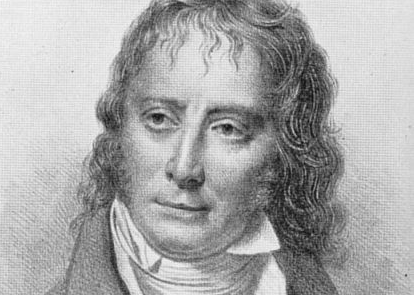
Neither government nor municipal monopolies are novelties; they are antiques. To represent them in the light of consequences of modern economic changes is to commit a solecism. They are not indicative of evolution, but of retrogression.


Yves Guyot, Where and Why Public Ownership Has Failed, Book IV: Political and Social Consequences of Public Operation, Chapter I, Socialist Programs and the Facts” (American edition, 1913).

Categories
Thought

Willa Cather

I tell you there is no such thing as creative hate!


Willa Cather, The Song of the Lark (1915).

Categories
Thought

Soren Kierkegaard

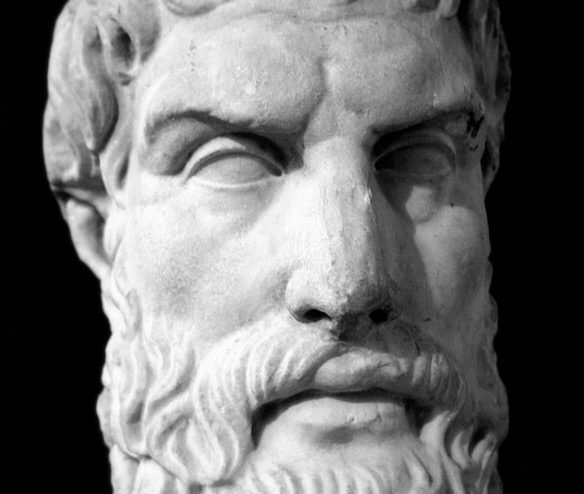
Aristotle’s view that philosophy begins with wonder, not as in our day with doubt, is a positive point of departure for philosophy. Indeed, the world will no doubt learn that it does not do to begin with the negative, and the reason for success up to the present is that philosophers have never quite surrendered to the negative and thus have never earnestly done what they have said. They merely flirt with doubt.


Soren Kierkegaard, Journals and Papers III 3284 (1841).

Categories
Thought

Willa Cather

The history of every country begins in the heart of a man or a woman.


Willa Cather, O Pioneers! (1913).

Categories
Thought

Soren Kierkegaard

Someone can conquer kingdoms and countries without being a hero; someone else can prove himself a hero by controlling his temper. Someone can display courage by doing the out-of-the-ordinary, another by doing the ordinary. The question is always — how does he do it?


Soren Kierkegaard, Either/Or (1843).

Categories
Thought

Lao Tzu

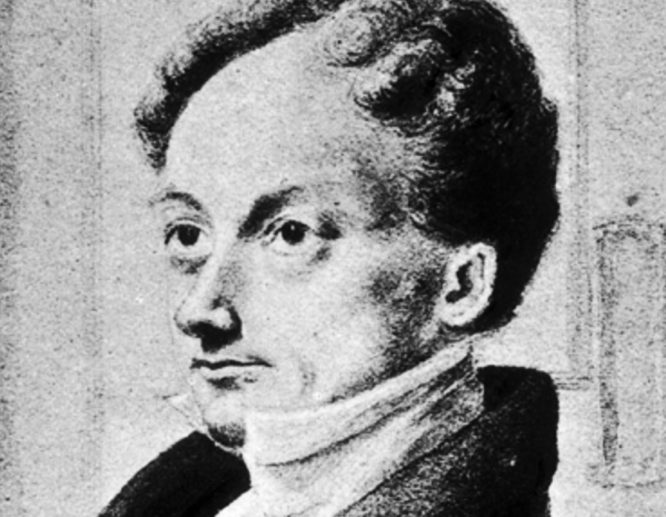
Whoever undertakes to rule the kingdom and to shape it according to his whim — I foresee that he will fail to reach his goal. That is all.

The kingdom is a living being. It cannot be constructed, in truth! He who tries to manipulate it will spoil it, he who tries to put it under his power will lose it.

Therefore: Some creatures go out in front, others follow, some have warm breath, others cold, some are strong, some weak, some attain abundance, other succumb.

The wise man will accordingly forswear excess, he will avoid arrogance and not overreach.


Lao Tzu, as quoted in the second of the Six Pamphlets of the “White Rose” Students

Categories
Thought

Henry David Thoreau

The law will never make men free; it is men who have got to make the law free.

Henry David Thoreau, “Slavery in Massachusetts” (1854).

Categories
Thought

Ives on Thoreau

Thoreau was a great musician, not because he played the flute but because he did not have to go to Boston to hear ‘the Symphony.’ The rhythm of his prose, were there nothing else, would determine his value as a composer. He was divinely conscious of the enthusiasm of Nature, the emotion of her rhythms and the harmony of her solitude.

Charles Ives, on Henry David Thoreau [pictured], Essays Before a Sonata (1920).

Categories
Thought

Henry David Thoreau

It is not enough to be industrious; so are the ants. What are you industrious about?

Henry David Thoreau, Letter to Harrison Blake (November 16, 1857).

Categories
Thought

Ives on Thoreau

[T]he message of Thoreau, though his fervency may be inconstant and his human appeal not always direct, is, both in thought and spirit, as universal as that of any man who ever wrote or sang — as universal as it is nontemporaneous — as universal as it is free from the measure of history, as ‘solitude is free from the measure of the miles of space that intervene between man and his fellows.’ In spite of the fact that Henry James (who knows almost everything) says that ‘Thoreau is more than provincial — that he is parochial,’ let us repeat that Henry Thoreau, in respect to thought, sentiment, imagination, and soul, in respect to every element except that of place of physical being — a thing that means so much to some — is as universal as any personality in literature. That he said upon being shown a specimen grass from Iceland that the same species could be found in Concord is evidence of his universality, not of his parochialism. He was so universal that he did not need to travel around the world to prove it.

Charles Ives, on Henry David Thoreau [pictured], Essays Before a Sonata (1920).