Political correctness will die as it lived — kicking and screaming ad hominem abuse as a substitute for arguments.
Categories
Wendy McElroy
Political correctness will die as it lived — kicking and screaming ad hominem abuse as a substitute for arguments.
The member [of Congress] who is not making a career of politics looks quite differently at the world.
Bob Novak, as quoted in Breach of Trust: How Washington Turns Outsiders Into Insiders, by Tom Coburn (2003).
I do not develop man, nor as man, but, as I, I develop — myself.

Herbert Spencer, “The New Toryism,” The Man Versus the State (1884).
If men use their liberty in such a way as to surrender their liberty, are they thereafter any the less slaves?
Whoever will be free must make himself free. Freedom is no fairy gift to fall into a man’s lap. What is freedom? To have the will to be responsible for one’s self.
Je suis condamné à être libre..
I am condemned to be free
Jean-Paul Sartre, L’Être et le néant: Essai d’ontologie phénoménologique (Being and Nothingness, 1943), Part 4, chapter 1.
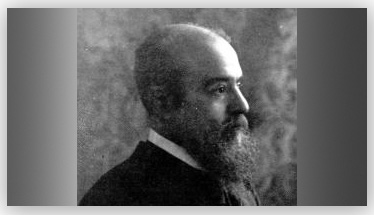
“We can group socialists and protectionists under the name of restrictionists, whilst those who want to base the distribution of wealth solely on free competition can be called liberationists…
“Thus restrictionists are divided into two types: socialists, who through the intervention of the state, wish to change the distribution of wealth in favour of the less rich; and the others, who, even if they are sometimes not completely conscious of what they are doing, favour the rich — these are the supporters of commercial protectionism and social organisation of a military type.”
Vilfredo Pareto, “Socialism and Freedom,” 1891.
I am responsible for everything . . . except for my very responsibility, for I am not the foundation of my being. Therefore everything takes place as if I were compelled to be responsible. I am abandoned in the world . . . in the sense that I find myself suddenly alone and without help, engaged in a world for which I bear the whole responsibility without being able, whatever I do, to tear myself away from this responsibility for an instant.
Let us suppose that in a country of thirty million inhabitants it is proposed, under some pretext or other, to get each citizen to pay out one franc a year, and to distribute the total amount amongst thirty persons. Every one of the donors will give up one franc a year; every one of the beneficiaries will receive one million francs a year. The two groups will differ very greatly in their response to this situation. . . . In these circumstances the outcome is not in doubt: the spoliators will win hands down.
We will freedom for freedom’s sake, in and through particular circumstances. And in thus willing freedom, we discover that it depends entirely upon the freedom of others and that the freedom of others depends upon our own. Obviously, freedom as the definition of a man does not depend upon others, but as soon as there is a commitment, I am obliged to will the liberty of others at the same time as my own. I cannot make liberty my aim unless I make that of others equally my aim.