Categories
Thought

Robinson Jeffers

Science and mathematics
Run parallel to reality, they symbolize it, they squint at it,
They never touch it: consider what an explosion
Would rock the bones of men into little white fragments and unsky the world
If any mind for a moment touch truth.

Robinson Jeffers, “The Silent Shepherds” (1958).
Categories
Thought

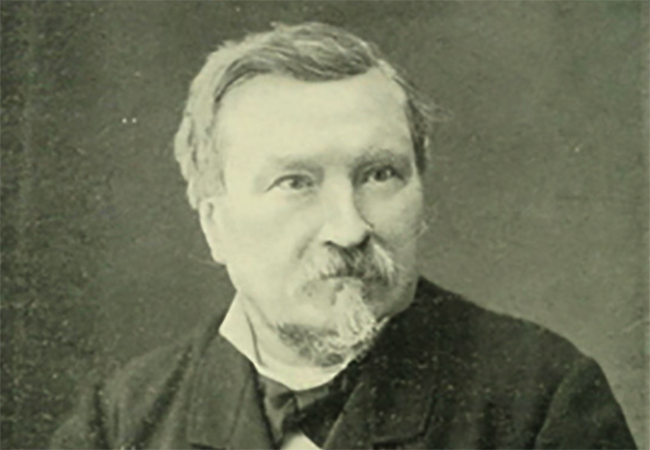
Gustave de Molinari

These associations, or political parties, are actual armies which have been trained to pursue power; their immediate objective is to so increase the number of their adherents as to control an electoral majority. Influential electors are for this purpose promised such or such share in the profits which will follow success, but such promises — generally place or privilege — are redeemable only by a multiplication of ‘places,’ which involves a corresponding increase of national enterprises, whether of war or of peace. It is nothing to a politician that the result is increased charges and heavier drains on the vital energy of the people. The unceasing competition under which they labour, first in their efforts to secure office, and next to maintain their position, compels them to make party interest their sole care, and they are in no position to consider whether this personal and immediate interest is in harmony with the general and permanent good of the nation.

Gustave de Molinari, The Society of To-morrow (1904).
Categories
Thought

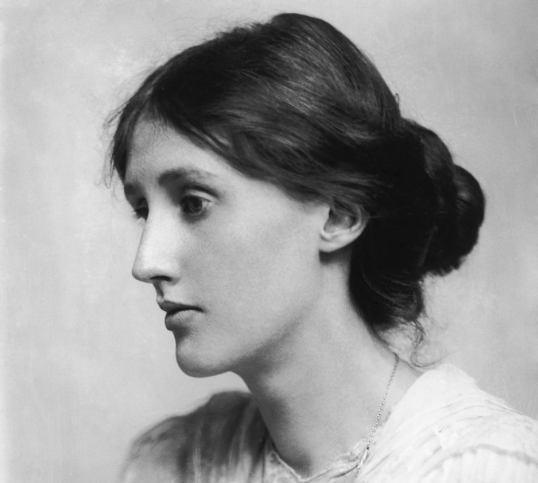
Virginia Woolf

Rigid, the skeleton of habit alone upholds the human frame.

Virginia Woolf, “On Being Ill” (1926).
Categories
Thought

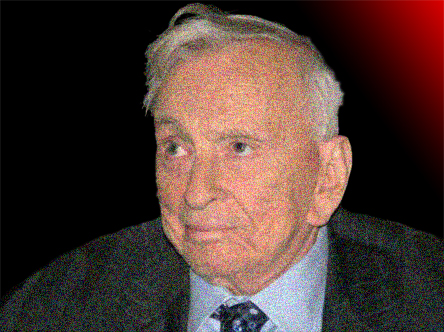
Gore Vidal

The early Thomas Jefferson had a dream: a society of honest yeomen, engaged in agricultural pursuits, without large cities, heavy industry, banks, military pretensions. The early (and the late) Alexander Hamilton wanted industry, banks, cities, and a military force capable of making itself felt in world politics. It is a nice irony that so many of today’s laissez-faire conservatives think that they descend from Hamilton, the proponent of a strong federal government, and that so many liberals believe themselves to be the heirs of the early Jefferson, who wanted little more than a police force and a judiciary. 

Gore Vidal, “Homage to Daniel Shays,” The New York Review of Books, August 10, 1972

Categories
Thought

Arsène Houssaye

Plato did not believe any more in his republic than old Homer did in his gods.

Arsène Houssaye, Philosophers and Actresses (1886)
Categories
Thought

Irving Kristol

Our youthful rebels are anything but inarticulate; and though they utter a great deal of nonsense, the import of what they are saying is clear enough. What they are saying is that they dislike — to put it mildly — the liberal, individualist, capitalist civilization that stands ready to receive them as citizens. They are rejecting this offer of citizenship and are declaring their desire to see some other kind of civilization replace it.

Irving Kristol, “‘When virtue loses all her loveliness’ — some reflections on Capitalism and ‘the free society,’National Affairs, No. 21, Fall 1970.
Categories
Thought

Virginia Woolf

Life is not a series of gig lamps symmetrically arranged; life is a luminous halo, a semi-transparent envelope surrounding us from the beginning of consciousness to the end.

Virginia Woolf, “Modern Fiction,” The Common Reader (1925).
Categories
Thought

Ayn Rand

An individualist is a man who says: ‘I’ll not run anyone’s life — nor let anyone run mine. I will not rule nor be ruled. I will not be a master nor a slave. I will not sacrifice myself to anyone — nor sacrifice anyone to myself.

Ayn Rand, “Textbook of Americanism” (1946)
Categories
Thought

William Gibson

The future’s already here; it’s just not evenly distributed.

William Gibson, Distrust That Particular Flavor (2012).

Categories
Thought

Theodore Dalrymple

“In my study of communist societies, I came to the conclusion that the purpose of communist propaganda was not to persuade or convince, not to inform, but to humiliate; and therefore, the less it corresponded to reality the better. When people are forced to remain silent when they are being told the most obvious lies, or even worse when they are forced to repeat the lies themselves, they lose once and for all their sense of probity. To assent to obvious lies is . . . in some small way to become evil oneself. One’s standing to resist anything is thus eroded, and even destroyed. A society of emasculated liars is easy to control.”