Categories
Thought

Alfred North Whitehead

In formal logic, a contradiction is the signal of a defeat; but in the evolution of real knowledge it marks the first step in in progress to victory.

Categories
Thought

Frédéric Bastiat

He who rejects liberty has no faith in human nature.

Categories
Thought

Antonin Scalia

A journalistic purpose could be someone with a Xerox machine in a basement.

Categories
Thought

Destutt de Tracy

Government is a very great consumer, living not on its profits but on its revenues.

Categories
Thought

Joseph Butler

Things and actions are what they are, and the consequences of them will be what they will be: why then should we desire to be deceived?

Bishop Butler, epigraph for The Moral Economy (1909) by Ralph Barton Perry.
Categories
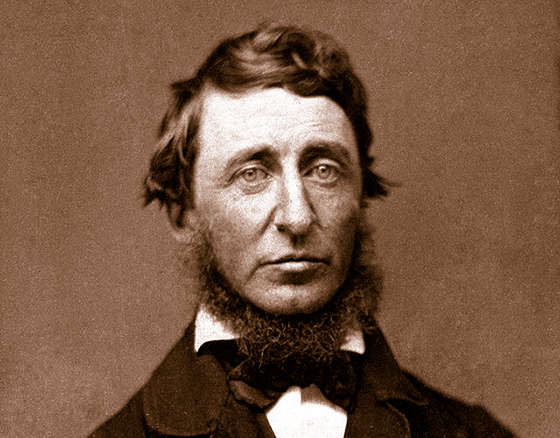
Thought

Henry David Thoreau

Where there is a lull of truth, an institution springs up. But the truth blows right on over it, nevertheless, and at length blows it down.

Categories
Thought

William Leggett

‘DO NOT GOVERN TOO MUCH,’ is a maxim which should be placed in large letters over the speaker’s chair in all legislative bodies. The old proverb, ‘too much of a good thing is good for nothing,’ is most especially applicable to the present time, when it would appear, from the course of our legislation, that common sense, common experience, and the instinct of self-preservation, are utterly insufficient for the ordinary purposes of life; that the people of the United States are not only incapable of self-government, but of taking cognizance of their individual affairs; that industry requires protection, enterprize bounties, and that no man can possibly find his way in broad day light without being tied to the apron-string of a legislative dry-nurse. The present system of our legislation seems founded on the total incapacity of mankind to take care of themselves or to exist without legislative enactment.

William Leggett, in an editorial in the Evening Post, March 11, 1835 — republished in A Collection of the Political Writings of William Leggett (1840) and titled “The Legislation of Congress”).
Categories
Thought

Jacky Colliss Harvey

We live in this extraordinary age in which a butterfly flapping its wings on one side of the planet truly can create a tornado on the other—but only if the butterfly then sets up a website.

Jacky Colliss Harvey, Red: A History of the Redhead (2015).
Categories
Thought

George Mason

There is a Passion natural to the Mind of man, especially a free Man, which renders him impatient of Restraint.

George Mason, Letter to the Committee of Merchants in London (June 6, 1766).

Categories
Thought

Michel Foucault

Sometimes, because my position has not been made clear enough, people think I’m a sort of radical anarchist who has an absolute hatred of power. No! What I am trying to do is to approach this extremely important and tangled phenomenon in our society, the exercise of power, with the most reflective, and I would say prudent attitude. Prudent in my analysis, in the moral and theoretical postulates I use: I try to figure out what’s at stake. But to question the relations of power in the most scrupulous and attentive manner possible, looking into all the domains of its exercise, that’s not the same thing as constructing a mythology of power as the beast of the apocalypse.

Michel Foucault, “Power, Moral Values, and the Intellectual,” interview in History of the Present 4 (Spring 1988).