Categories
Thought

Georgia O’Keeffe

I do not like the idea of happyness — it is too momentary — I would say that I was always busy and interested in something — interest has more meaning to me than the idea of happyness.

Georgia O’Keeffe, a corrective note marked in Anita Pollitzer’s mss. biography of the artist.
Categories
Thought

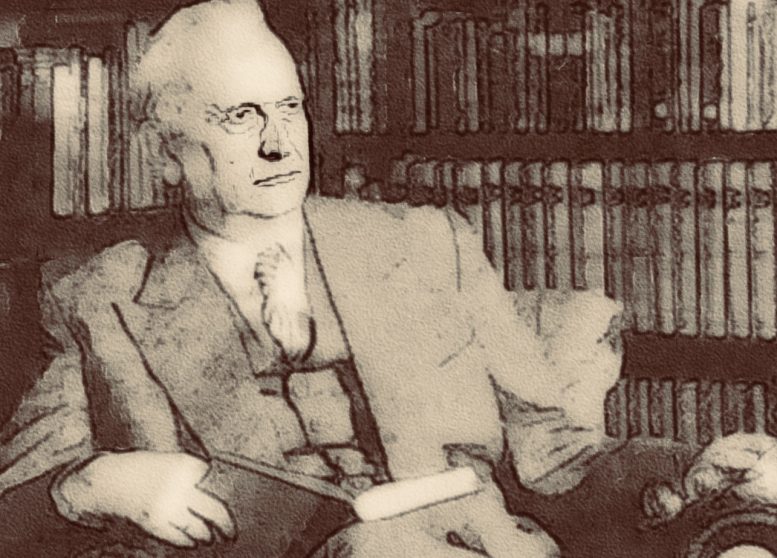
Karl Jaspers

One who would influence the masses must have recourse to the art of advertisement. The clamor of puffery is to-day requisite even for an intellectual movement.

Categories
Thought

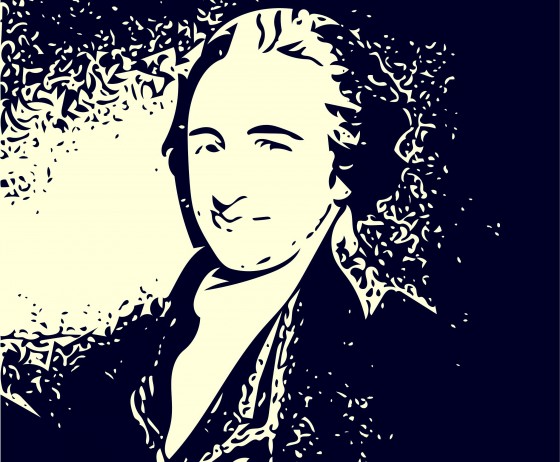
Tom Paine

Some writers have so confounded society with government, as to leave little or no distinction between them; whereas they are not only different, but have different origins. Society is produced by our wants, and government by our wickedness; the former promotes our happiness positively by uniting our affections, the latter negatively by restraining our vices. The one encourages intercourse, the other creates distinctions. The first is a patron, the last a punisher.

Tom Paine, Common Sense (1776).
Categories
Thought

Walter Bagehot

The great difficulty which history records is not that of the first step, but that of the second step. What is most evident is not the difficulty of getting a fixed law, but getting out of a fixed law; not of cementing (as upon a former occasion phrased it) a cake of custom, but of breaking the cake of custom; not of making the first preservative habit, but of breaking through it, and reaching something better.

Walter Bagehot, Physics and Politics (1872).


Categories
Thought

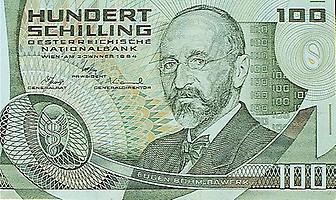
Eugen von Böhm-Bawerk

[T]hrift is never popular. . . . If parliaments have historically been the guardians of thrift, they now have turned much rather into its sworn enemies. Nowadays, the political and national parties — maybe not exclusively in our own country, but certainly also here — tend to develop a certain covetousness, almost considered to be dutiful, for all kinds of benefits for their own electorate at the expense of the general public.

Eugen von Böhm-Bawerk, as quoted by Ludwig von Mises, “The Economist Eugen von Böhm-Bawerk” (Neue Freie Presse, Vienna, August 27, 1924) — described by Mises as “the last words that Böhm-Bawerk addressed to Austria’s financial authorities.”
Categories
Thought

Simone Weil

It is the aim of public life to arrange that all forms of power are entrusted, so far as possible, to men who effectively consent to be bound by the obligation towards all human beings which lies upon everyone, and who understand the obligation.

Law is the quality of the permanent provisions for making this aim effective.

Simone Weil, draft for a Statement of Human Obligations (1943).
Categories
Thought

William Graham Sumner

We throw all our attention on the utterly idle question whether A has done as well as B, when the only question is whether A has done as well as he could.

William Graham Sumner, “The New Social Creed,” Earth-Hunger and Other Essays, p. 210 (1913)
Categories
Thought

Lao Tzu

Whoever undertakes to rule the kingdom and to shape it according to his whim — I foresee that he will fail to reach his goal. That is all.

The kingdom is a living being. It cannot be constructed, in truth! He who tries to manipulate it will spoil it, he who tries to put it under his power will lose it.

Therefore: Some creatures go out in front, others follow, some have warm breath, others cold, some are strong, some weak, some attain abundance, other succumb.

The wise man will accordingly forswear excess, he will avoid arrogance and not overreach.

Lao Tzu, as quoted in the second of the Six Pamphlets of the “White Rose” Students.

Categories
Thought

Chuang Tzu

A frog in a well cannot conceive of the ocean.

Categories
Thought

Karl Jaspers

One who would influence the masses must have recourse to the art of advertisement. The clamour of puffery is to-day requisite even for an intellectual movement.