Public influence is the real government of the world.
Categories
Josiah Warren
Public influence is the real government of the world.
Liberty, then, is the sovereignty of the individual, and never shall man know liberty until each and every individual is acknowledged to be the only legitimate sovereign of his or her person, time, and property, each living and acting at his own cost.
Wilhelm von Humboldt, Ideen zu einem Versuch die Grenzen der Wirksamkeit des Staats zu bestimmen (1792; 1852, posthumous), English edition The Sphere and Duties of Government, as translated by Joseph Coulthard (1854), Chapter One. The book also appears in English as The Limits of State Action.
Freedom is but the possibility of a various and indefinite activity; while government, or the exercise of dominion, is a single, but yet real activity. The ardent desire for freedom, therefore, is at first only too frequently suggested by the deep-felt consciousness of its absence.
It has now become a very common sentiment, that there is some deep and radical wrong somewhere, and that legislators have proved themselves incapable of discovering, or, of remedying it.
Wilhelm von Humboldt, Ideen zu einem Versuch die Grenzen der Wirksamkeit des Staats zu bestimmen (1792; 1852, posthumous), English edition The Sphere and Duties of Government, as translated by Joseph Coulthard (1854). The book also appears in English as The Limits of State Action.
The grand, leading principle . . . is the absolute and essential importance of human development in its richest diversity; but national education, since at least it presupposes the selection and appointment of some one instructor, must always promote a definite form of development, however careful to avoid such an error. And hence it is attended with all those disadvantages which we before observed to flow from such a positive policy; and it only remains to be added, that every restriction becomes more directly fatal, when it operates on the moral part of our nature,—that if there is one thing more than another which absolutely requires free activity on the part of the individual, it is precisely education, whose object it is to develop the individual.
If you treat an individual . . . as if he were what he ought to be and could be, he will become what he ought to be and could be.
“There are two ways to conquer and enslave a country. One is by the sword. The other is by debt.”
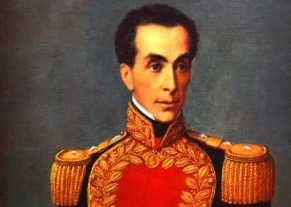
A state too expensive in itself, or by virtue of its dependencies, ultimately falls into decay; its free government is transformed into a tyranny; it disregards the principles which it should preserve, and finally degenerates into despotism. The distinguishing characteristic of small republics is stability: the character of large republics is mutability.
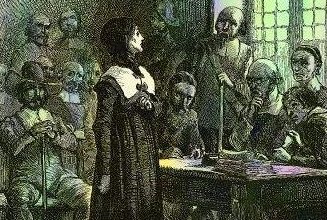
If any come to my house to be instructed in the ways of God what rule have I to put them away? Do you think it not lawful for me to teach women and why do you call me to teach the court?
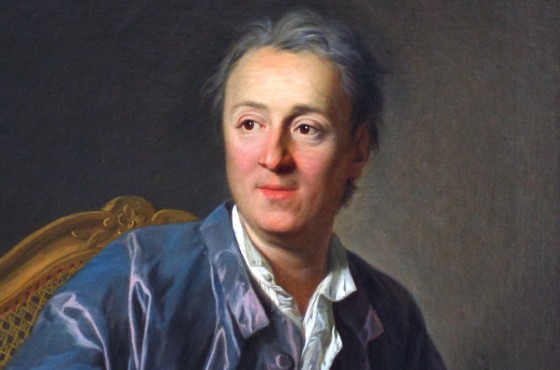
There are three principal means of acquiring knowledge… observation of nature, reflection, and experimentation. Observation collects facts; reflection combines them; experimentation verifies the result of that combination.