Government is naturally prodigal, for it spends other people’s money; and the more a department spends, the more important it is.
Yves Guyot
Government is naturally prodigal, for it spends other people’s money; and the more a department spends, the more important it is.
I have seen greatness and power, wealth, prosperity and incomparable development. I was never sad that we are a small and unfinished part of the world. To be small, unsettled and uncompleted is a good and courageous mission.
Karel Čapek, Letters from England (1925), referring to his country of Czechoslovakia.
Let us not attribute to malice and cruelty what may be referred to less criminal motives.
Jane West, The Loyalists (1812), clearly expressing the principle today referred to as Hanlon’s Razor.
Wittgenstein, Elizabeth Taylor, Bertrand Russell, Thomas Merton, Yogi Berra, Allen Ginsberg, Harry Wolfson, Thoreau, Casey Stengel, The Lubavitcher Rebbe, Picasso, Moses, Einstein, Hugh Hefner, Socrates, Henry Ford, Lenny Bruce, Baba Ram Dass, Gandhi, Sir Edmund Hillary, Raymond Lubitz, Buddha, Frank Sinatra, Columbus, Freud, Norman Mailer, Ayn Rand, Baron Rothschild, Ted Williams, Thomas Edison, H.L. Mencken, Thomas Jefferson, Ralph Ellison, Bobby Fischer, Emma Goldman, Peter Kropotkin, you, and your parents. Is there really one kind of life which is best for each of these people?
Anarchy, State, and Utopia (1974), Ch. 10 : A Framework for Utopia; The Framework, p. 310.
There are philosophers who have given their minds to the phenomenon of disregard of laws and have sought out its causes. Much more surprising, however, is the opposite phenomenon of respect for laws and deference to authority. . . . It is as true today as it was ten thousand years ago that a Power from which the magic virtue has gone out, falls.
Bertrand de Jouvenel des Ursins (1903 – 1987), On Power
Mens sana in corpore sano.
“You should pray for a sound mind in a sound body.” (From the tenth satire of Decimus Iunius Iuvenalis.)
To each as they choose, from each as they are chosen.
Anarchy, State, and Utopia (1974), Ch. 7: Distributive Justice, Section I, Patterning, p. 160.
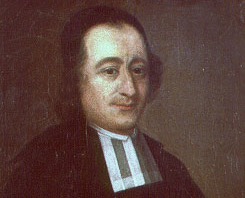
Benjamin Lay, All Slave-Keepers That keep the Innocent in Bondage, Apostates, page 56, published by its author in Philadelphia in 1737, printed by Benjamin Franklin. The depiction of Lay, above, is as painted by William Williams in 1750. Lay was short, standing at just over four feet.
The many Hundreds of Thousands, that are now in Slavery, were they at Liberty, as we are, had the same Education, Learning, Conversation, Books, sweet Communion in our Religious Assemblies; I believe many of them would exceed many of their Tyrant Masters in Piety, Virtue and Godliness; and their bright Genius, which I know they have, would be inlivened; for I have converst with many of them, for Liberty is Life, and Slavery is Death, nay the very thoughts of it to the right thinking Animal, as Man or Woman.
Most of the conflicts the world has seen in the past ten decades have not been called forth by princely ambition or ministerial conspiracy but through the passionate agitation of public opinion, which through the press and parliament has swept along the executive.
Bernhard von Bülow, as quoted in “Karl Kraus, the Press, and War” (International Policy Digest, March 27, 2014), by Franz-Stefan Gady. Von Bülow (1849 – 1929), created Fürst von Bülow in 1905, was a German statesman who served as Secretary of State for Foreign Affairs for three years and then as Chancellor of the German Empire from 1900 to 1909.
John Stuart Mill, Considerations on Representative Government (1862), Chapter IV
In every country, the executive is the branch of the government which wields the immediate power, and is in direct contact with the public; to it, principally, the hopes and fears of individuals are directed, and by it both the benefits, and the terrors, and prestige of government are mainly represented to the public eye. Unless, therefore, the authorities whose office it is to check the executive are backed by an effective opinion and feeling in the country, the executive has always the means of setting them aside or compelling them to subservience, and is sure to be well supported in doing so.