Categories
Thought

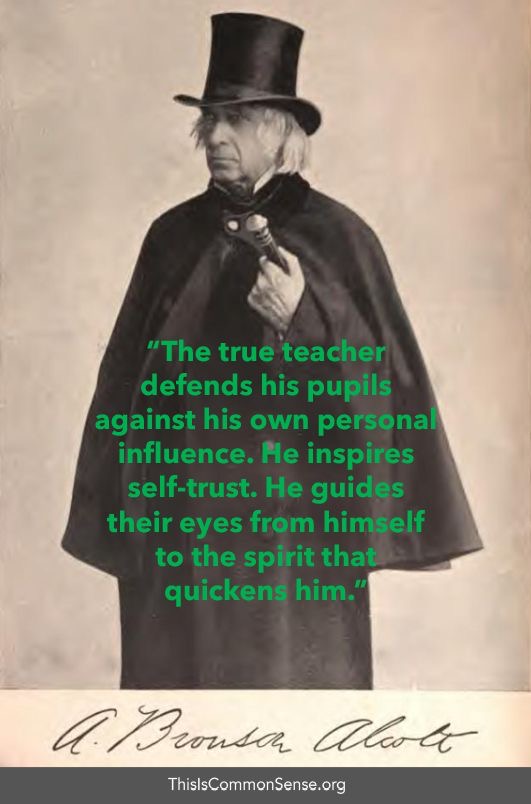
A. Bronson Alcott

The true teacher defends his pupils against his own personal influence. He inspires self-trust. He guides their eyes from himself to the spirit that quickens him. He will have no disciples. A noble artist, he has visions of excellence and revelations of beauty which he has neither impersonated in character nor embodied in words. His life and teachings are but studies for yet nobler ideals.

Amos Bronson Alcott, Orphic Sayings, quoted in A. Bronson Alcott: His Life and Philosophy (1893), by Franklin Benjamin Sanborn and William Torrey Harris, p. 592.

Categories
Thought

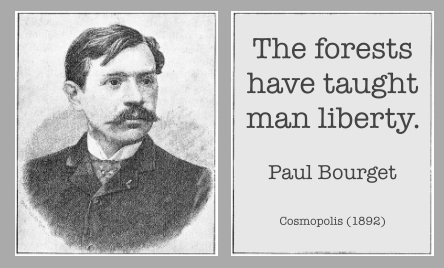
Paul Bourget

The forests have taught man liberty.

Paul Bourget, Cosmopolis 1892), Chapter 2 “The Beginning of a Drama.”

Categories
Thought

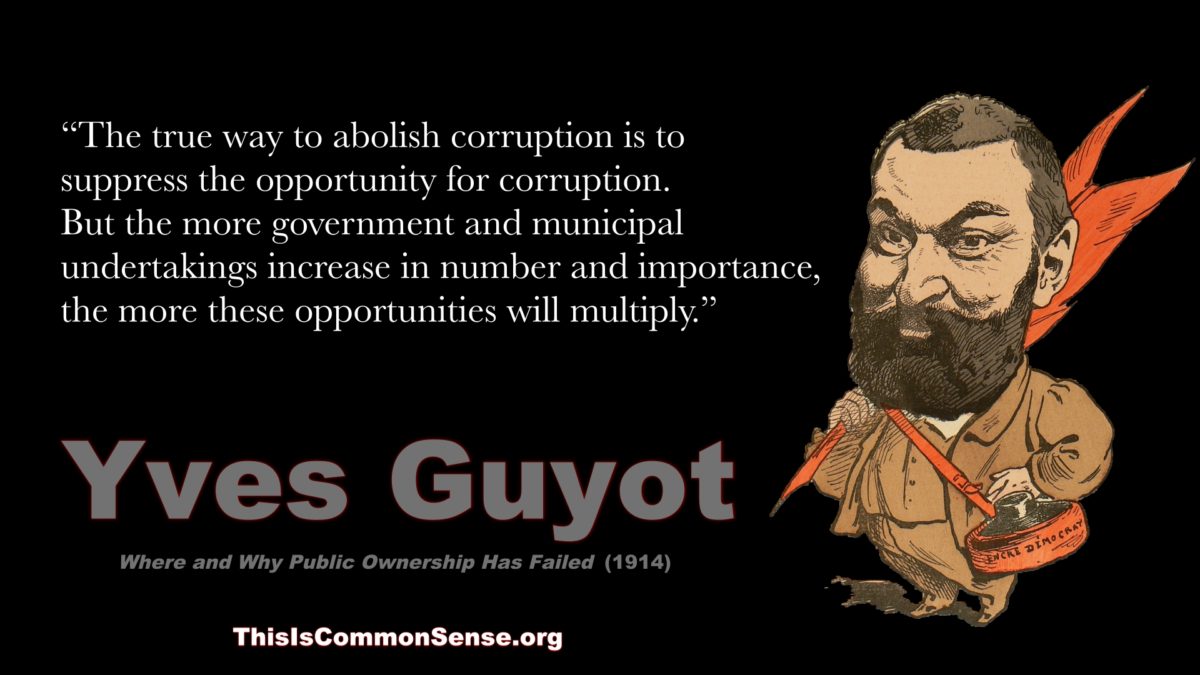
Yves Guyot

The true way to abolish corruption is to suppress the opportunity for corruption. But the more government and municipal undertakings increase in number and importance, the more these opportunities will multiply.

Yves Guyot, Where and Why Public Ownership Has Failed (1914).
Categories
Thought

Frédéric Bastiat

The economists observe man, the laws of his organization, and the social relations that result from those laws. The socialists conjure up an imaginary society, and then create a human heart to suit that society.

Frédéric Bastiat, Economic Harmonies, preface: “Letter to the Youth of France.”
Categories
Thought

William J. Casey

We’ll know our disinformation program is complete when everything the American public believes is false.

CIA Director William J. Casey (1981-1987) to Ronald Reagan, as related by Barbara Honegger and first publicly stated by Senior White House Correspondent Sarah McClendon, said in response to the president’s query as to what success for the Central Intelligence Agency would look like. The interchange took place in the Roosevelt Room of the White House in February 1981.
Categories
Thought

Herbert Spencer

Only a nature which will sacrifice everything to defend personal liberty of action, and is eager to defend the like liberties of action of others, can permanently maintain free institutions. While not tolerating aggression upon himself, he must have sympathies such as will not tolerate aggression upon his fellows — be they fellows of the same race or of other races. 

Herbert Spencer, The Principles of Sociology, Part VIII, Industrial Institutions, final chapter.
Categories
Thought

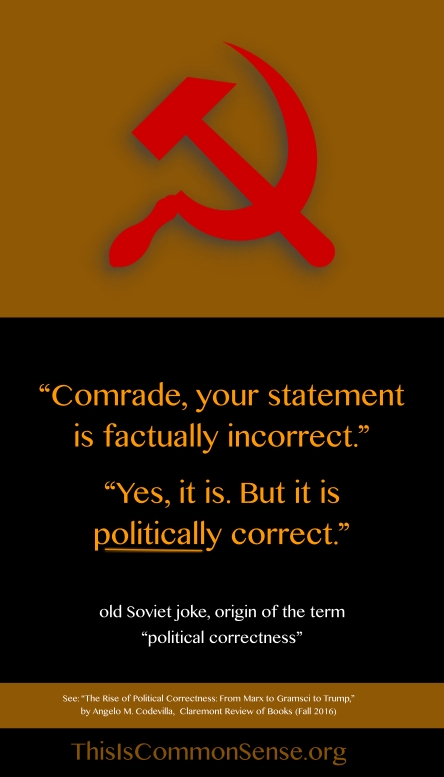
Old Soviet Joke

Comrade, your statement is factually incorrect.”
“Yes, it is. But it is politically correct.”

The likely origin for the term “political correctness”; old Soviet joke, as quoted in “The Rise of Political Correctness: From Marx to Gramsci to Trump,” by Angelo M. Codevilla, Claremont Review of Books (Fall 2016).

Categories
Thought

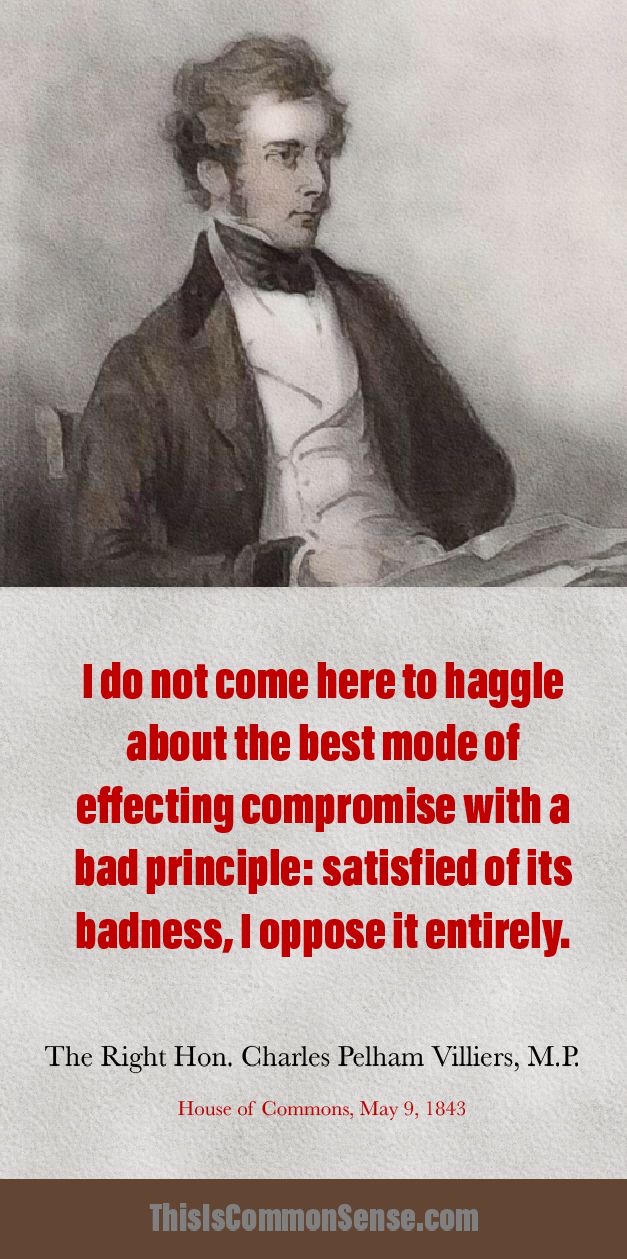
Charles Pelham Villiers

I do not come here to haggle about the best mode of effecting compromise with a bad principle: satisfied of its badness, I oppose it entirely.

Right Hon. Charles Pelham Villiers, M.P., speech in the House of Commons, May 9, 1843.

Villiers was arguing for the repeal of Britain’s Corn Laws.

Categories
Thought

Frédéric Bastiat

To maintain that human labor will ever come to want employment, would be to maintain that the human race will cease to encounter obstacles. In that case labor would not only be impossible; it would be superfluous.

Frédéric Bastiat, first essay, Economic Sophisms.

Categories
Thought

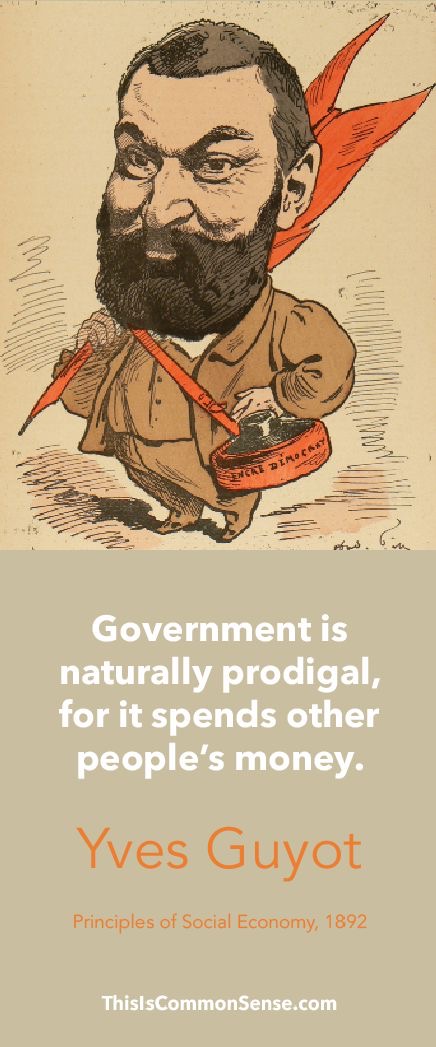
Yves Guyot

Government is naturally prodigal, for it spends other people’s money.

Yves Guyot, Principles of Social Economy (1892).