Satisfaction linked with dishonor or with harm to others is a prison for the seeker.
Zoroaster (Zarathustra) Vahishto-Ishti Gatha; Yasna 53, 6.
Satisfaction linked with dishonor or with harm to others is a prison for the seeker.
Zoroaster (Zarathustra) Vahishto-Ishti Gatha; Yasna 53, 6.
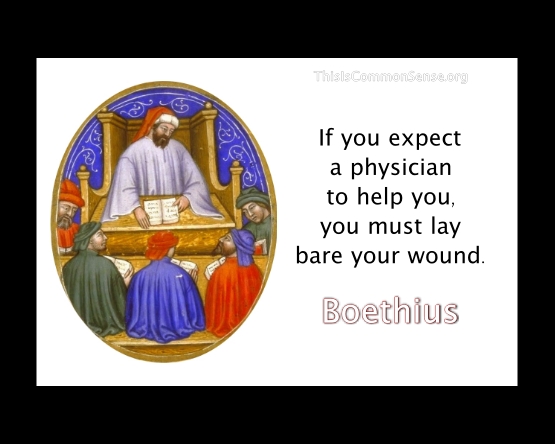
Si operam medicantis exspectas, oportet vulnus detegas.
If you expect a physician to help you, you must lay bare your wound.
Anicius Manlius Severinus Boethius, The Consolation of Philosophy (De consolatione philosophiae, c. 524 A.D.), Prose IV, line 1; translation by W.V. Cooper

A righteous government is of all the most to be wished for,
Zoroaster, also called Zarathustra and Zartosht, Vohu-Khshathra Gatha; Yasna 51, 1.
Bearing of blessing and good fortune in the highest.
Guided by the law of Truth, supported by dedication and zeal,
It blossoms into the Best of Order, a Kingdom of Heaven!
To effect this I shall work now and ever more.
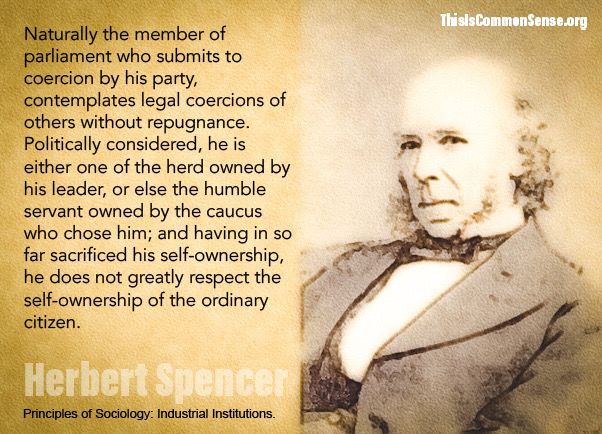
Naturally the member of parliament who submits to coercion by his party, contemplates legal coercions of others without repugnance. Politically considered, he is either one of the herd owned by his leader, or else the humble servant owned by the caucus who chose him; and having in so far sacrificed his self-ownership, he does not greatly respect the self-ownership of the ordinary citizen. If some influential body of his constituents urges a new interference, the fact that it will put upon the rest additional restraints, or appropriate further portions of their earnings, serves but little to deter him from giving the vote commanded. Indeed he feels that he has no alternative if he wishes to be returned at the next election. That he is adding another to the multitudinous strands of the network restraining men’s movements, is a matter of indifference. He considers only what he calls “the merits of the case,” and declines to ask what will result from always looking at the immediate and ignoring the remote. Every day he takes some new step towards the socialistic ideal, while refusing to think that he will ever arrive at it; and every day, to preserve his place, he seeks to outbid his political rival in taking such steps. . . . And thus, being the creature of his party and the creature of his constituents, he does not hesitate in making each citizen the creature of the community.
Herbert Spencer, Principles of Sociology (1898), Part VIII: Industrial Institutions; Chapter XXII, “Socialism.”
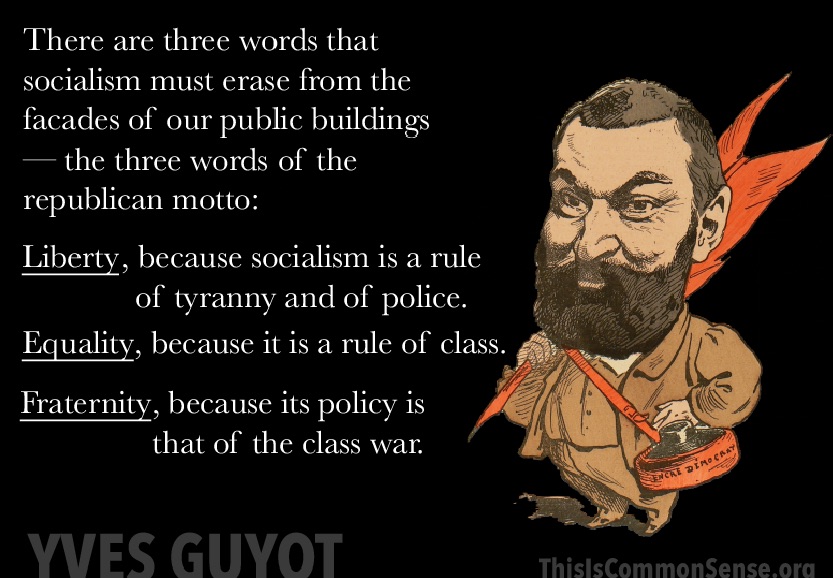
There are three words that socialism must erase from the facades of our public buildings — the three words of the republican motto:
Yves Guyot, Sophismes Socialistes (1908; English translation 1910), Book IX: “Socialism and Democracy,” Chapter X: “The Impotence of Socialism,” conclusion.
Liberty, because socialism is a rule of tyranny and of police.
Equality, because it is a rule of class.
Fraternity, because its policy is that of the class war.
Because our spontaneous initiative has been frustrated, too often inadvertently, in earliest childhood we do not tend, customarily, to dare to think competently regarding our potentials. We find it socially easier to go on with our narrow, shortsighted specializations and leave it to others — primarily to the politicians — to find some way of resolving our common dilemmas.
R. Buckminster Fuller, Operating Manual for Spaceship Earth (1969).
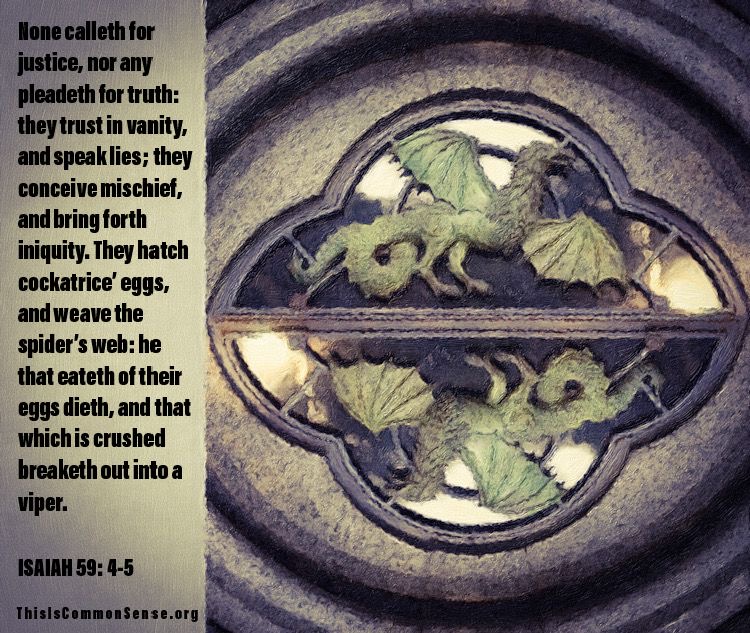
None calleth for justice, nor any pleadeth for truth: they trust in vanity, and speak lies; they conceive mischief, and bring forth iniquity. They hatch cockatrice’ eggs, and weave the spider’s web: he that eateth of their eggs dieth, and that which is crushed breaketh out into a viper.
Isaiah 59: 4-5. A cockatrice is a legendary winged dragon with a rooster’s head. Image features a decorative cockatrice figure over a door.
The Law of supply and demand was not promulgated in any code. Its power comes from elsewhere. It imposes itself upon mankind in as implacable a way as hunger and thirst. We furnish fresh demonstrations of its truth, whether willingly or not, even while we imagine ourselves to be violating it. If the Socialist excommunicates and abuses the economist, who formulates this law, he should also hold Newton responsible for all the tiles that fall on the heads of passers-by, and should declare that if some poor wretch, in throwing himself from a window, kills himself, it is the fault of those physicists who have discovered and taught the law of gravitation.
Yves Guyot, The Tyranny of Socialism (1894).
Qui grate beneficium accipit, primam eius pensionem solvit.
He who receives a benefit with gratitude, repays the first installment of it.
Seneca the Younger, De Beneficiis (On Benefits): Book 2, cap. 22, line 1.
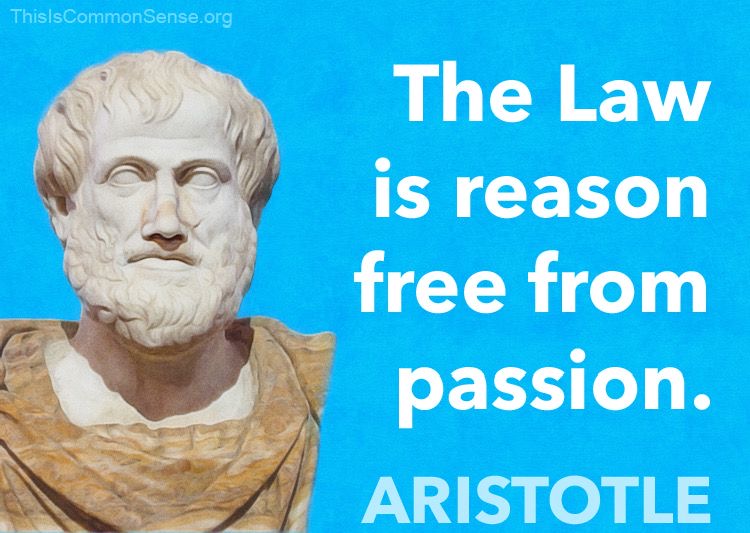
The Law is reason free from passion.
Aristotle, Politics, Book III, 1287a.32.