When it comes to big government secrets, we usually only learn the truth after it becomes irrelevant.
Richard M. Dolan, on his YouTube channel.
Categories
Richard Dolan
When it comes to big government secrets, we usually only learn the truth after it becomes irrelevant.
Richard M. Dolan, on his YouTube channel.

If, as I believe, the ends of men are many, and not all of them are in principle compatible with each other, then the possibility of conflict — and of tragedy — can never wholly be eliminated from human life, either personal or social. The necessity of choosing between absolute claims is then an inescapable characteristic of the human condition. This gives its value to freedom as Acton conceived of it — as an end in itself, and not as a temporary need, arising out of our confused notions and irrational and disordered lives, a predicament which a panacea could one day put right.
Deep Throat to FBI agent Fox Mulder The X-Files in the first season episode, “E.B.E.” (1993), written by Glen Morgan and James Wong.
A lie, Mr. Mulder, is most convincingly hidden between two truths.
Laws alone cannot secure freedom of expression; in order that every man may present his views without penalty, there must be a spirit of tolerance in the entire population.
Albert Einstein, Ideas and Opinions (1954).
Strange it is that men should admit the validity of the arguments for free speech but object to their being ‘pushed to an extreme,’ not seeing that unless the reasons are good for an extreme case, they are not good for any case.
John Stuart Mill, On Liberty (1859), Chapter 2, “Of the Liberty of Thought and Discussion.”

The fundamental sense of freedom is freedom from chains, from imprisonment, from enslavement by others. The rest is extension of this sense, or else metaphor.
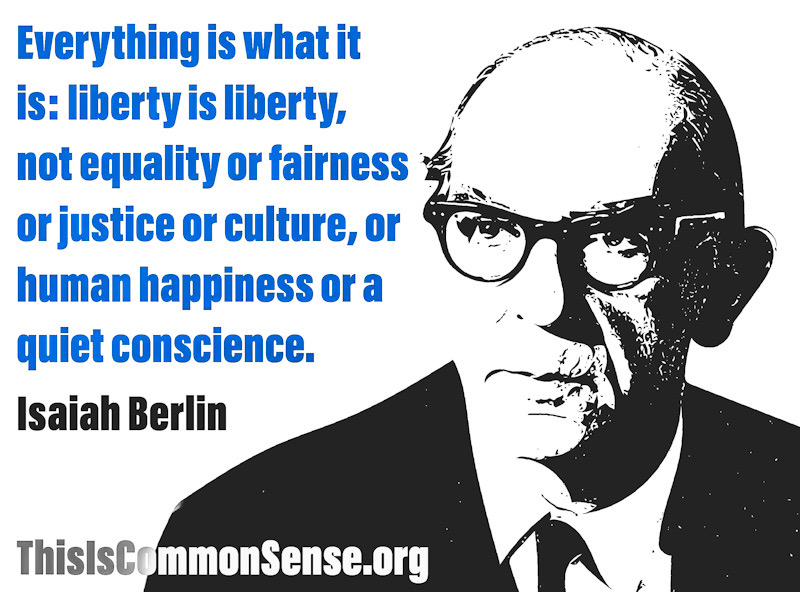
Everything is what it is: liberty is liberty, not equality or fairness or justice or culture, or human happiness or a quiet conscience.
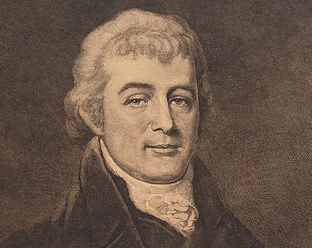
Those who would wish to excite and keep awake your jealousy and distrust are your truest friends; while they who speak peace to you when there is no peace — who would lull you into security, and wish you to repose blind confidence in your future governors — are your most dangerous enemies; jealousy and distrust are the guardian angels who watch over liberty — security and confidence are the forerunners of slavery.

It is our hope that the day may soon come when black people will reject federal funds because they have understood that these programs are geared to pacification rather than to genuine solutions. We hope that the rising level of consciousness may bring a rejection of such doles.
This will strike many readers as fantastic, but they might recall that once in India, Gandhi rejected relief food shipments from England precisely because he saw them as tools of pacification.
Stokely Carmichael and Charles V Hamilton, Black Power: the Politics of Liberation (New York: Random House, 1967).
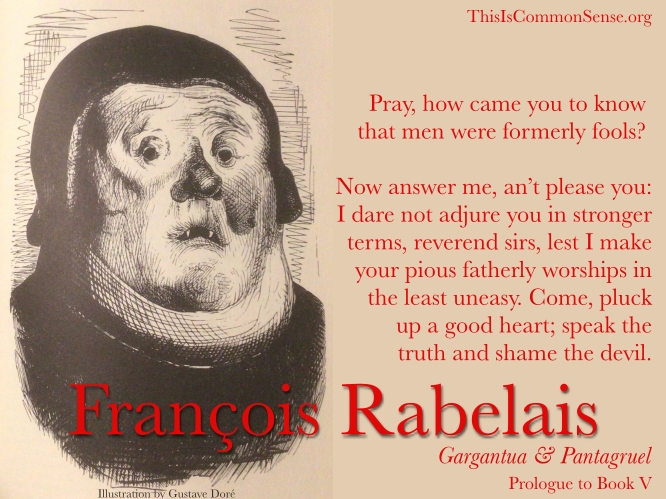
Pray, how came you to know that men were formerly fools? How did you find that they are now wise? . . .
Now answer me, an’t please you: I dare not adjure you in stronger terms, reverend sirs, lest I make your pious fatherly worships in the least uneasy. Come, pluck up a good heart; speak the truth and shame the devil, that enemy to paradise, that enemy to truth: be cheery, my lads; and if you are for me, take me off three or five bumpers of the best, while I make an halt at the first part of the sermon; then answer my question.
François Rabelais, Gargantua & Pantagruel (from the “Faithfully Translated” Gustave Doré edition), Book V, author’s prologue. The Doré illustration is of “Messire Oudart.”