Categories
free trade & free markets media and media people political economy

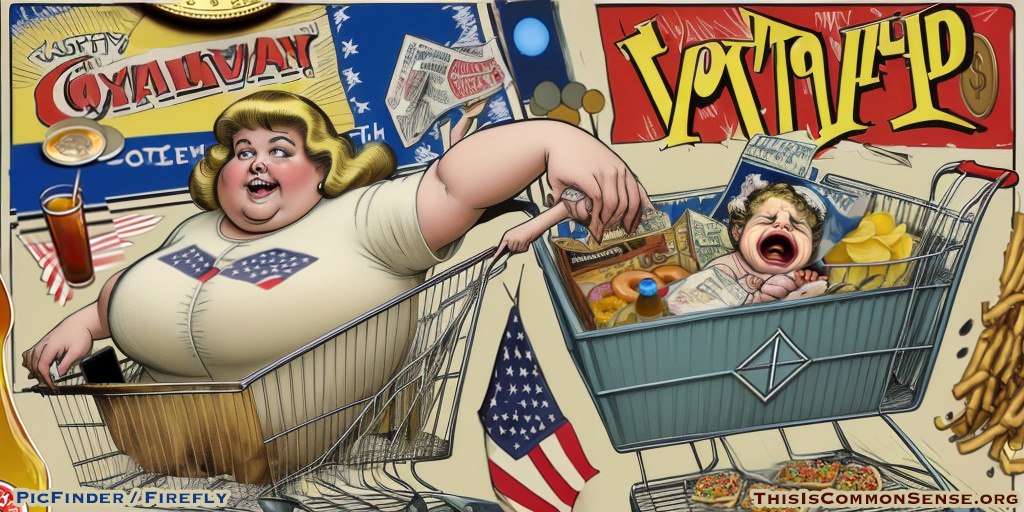
Dollar Store Plague

Tucker Carlson said harsh things about “Dollar Stores” and “libertarian economics” on Glenn Greenwald’s System Update for December 16, as summarized in the show’s tweet:

“Libertarian economics was a scam perpetrated by the beneficiaries of the economic system that they were defending . . .

I think you need to ask: ‘Does this economic system produce a lot of Dollar Stores?’

And if it does, it’s not a system that you want, because it degrades people — and it makes their lives worse and it increases exponentially the amount of ugliness in your society.

And anything that increases ugliness is evil.

So if it’s such a good system, why do we have all these Dollar Stores?”

At Reason, Liz Wolfe fell for the same trap that has apparently ensnared Mr. Carlson. She defended progress in the U.S. since the time he was born. What? 

Contra Liz Wolfe, and in defense of Tucker, I’d say we are indeed living in tough times. Inflation’s way up, the birth rate is down, life-expectancy’s dropping, and a whole lot of Americans struggle to pay bills and keep even, financially, much less “get ahead.” The proliferation of dollar stores shows that the upscale stores are too expensive for too many.

They are a refuge for the poor.

But are they evilly uglifying, though? 

Perhaps not as pretty as Safeway or Target, but they’re clean and you can buy a can of soup for four bits, a dollar less than at an upscale market.

Are the rise of discount consumer goods stores, like Dollar Tree and Dollar General, especially hideous and indicative of a blow to . . . the American spirit? 

Seems more revelatory of a weird elitist streak in Tucker.

And what does libertarian — free-market — economics have to do with it? Libertarian economists have opposed all the major drivers of the current system: central banking, deficit spending, sovereign debt accumulation, taxation for redistribution, subsidy. The policies that have truly “hollowed out” the last semblance of progress.

But Tucker blames libertarian economists’ defense of equity markets for not only social decline but Dollar Stores.

He’s fallen for the progressives’ perennial scam: see a problem in our mixed economy and blame the freer part . . . not the role of elitist schemers with political power.

This is Common Sense. I’m Paul Jacob.

dollar store, decadence

PDF for printing

Illustration created with PicFinder and Firefly

See all recent commentary
(simplified and organized)
See recent popular posts
Categories
free trade & free markets political economy too much government

The Not-Unintended Consequences

When bad outcomes are obvious, we can no longer call them “unintended consequences,” can we?

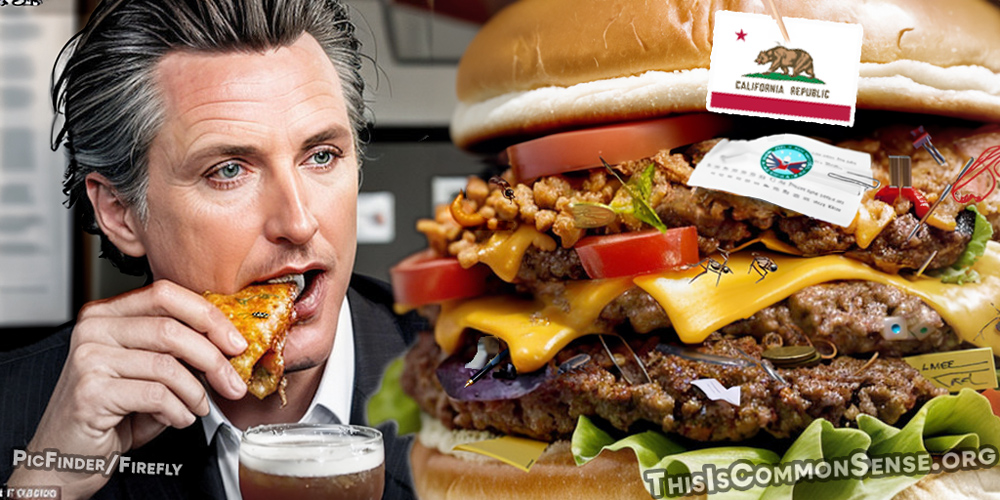
Take the case of California’s double-barreled attack upon “fast food”: last year’s push through the legislature of Assembly Bill 102 and Assembly Bill 1228. These regulatory schemes would have introduced collective bargaining into fast food franchises and enforced much higher minimum wage rates.

The two laws sparked an industry backlash, in the form of ballot referendums to halt the regulatory onslaught, which Steven Greenhut writes about at Reason. “In September, Gov. Gavin Newsom announced a ‘truce,’” Greenhut explains. “The industry pulled its ballot measure and agreed to a $20 minimum wage. In return, Newsom and unions limited the power of the Fast Food Council and removed joint-liability provisions.”

The concession on hiking the legal wage minimum was agreed to, notice, by the fast food lobbyists. Not the workers. 

As those familiar with elementary economics understand, when the costs of an input (like labor) are increased, alternatives to those inputs will be sought. So we can expect more replacements of workers with automation — as we’ve seen all around the country in fast food, especially at McDonald’s — as well as higher prices.

Which, in a state sporting huge homelessness and unemployment problems, will only hobble the one industry that helps the poorest members of society both in terms of consumer products (inexpensive food) and entry-level jobs (at fast food joints).

Perhaps California’s Democrats know full well what they are doing. They push crazy policies not because the negative outcomes are “unintended” or unforeseeable.

You see, it’s not disastrous for them.

This is Common Sense. I’m Paul Jacob.


PDF for printing

Illustration created with PicFinder and Firefly

See all recent commentary
(simplified and organized)
See recent popular posts
Categories
free trade & free markets media and media people political economy too much government

Incredulity Doesn’t Cut It

One of the objections people often make to the idea of private enterprise as a solution to government inefficiency is The Argument from Incredulity.

It’s not an argument at all, actually, just a harrumph and a guffaw: we cannot have free-market police, or fire suppression, or . . . garbage collection!

But of course all those things are successfully managed in the private sector.

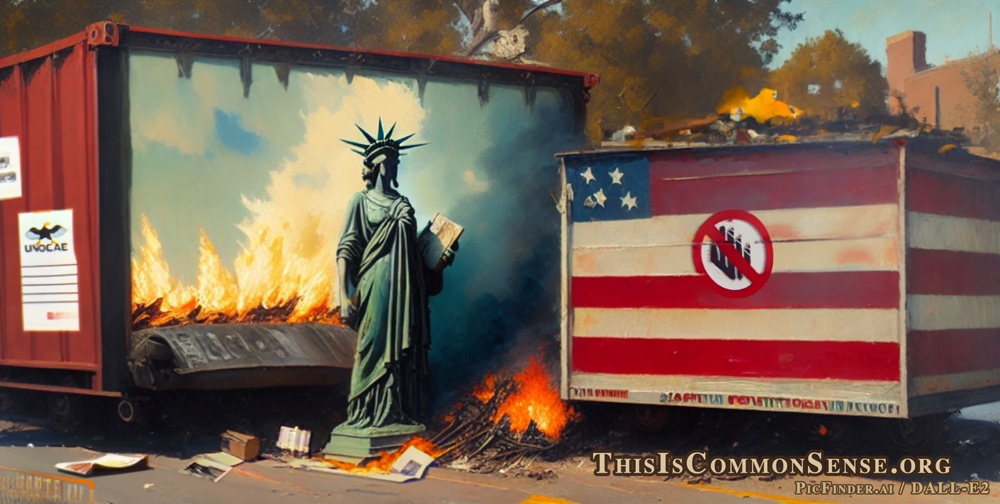
No media outfit has a longer history of pointing this out than Reason magazine. So when the editors of Reason brought us Joe Lancaster’s “Government Waste Monopoly Pits Private Dumpster Business Against Garbage Bureaucrats,” yesterday, I hope they took a moment to revel in a little nostalgia. For this is the kind of story that made Reason what it is today, one of the best sources for retail political economy.

The tale tells of Steven Hedrick, an Arkansas man who put together a business renting out dumpsters — like you often see on construction sites, but smaller — which he would haul away after customers filled them. He built the business without ever going into debt, and then . . . came the government. 

“[I]n April 2022, the City Council in Holiday Island passed Ordinance 2022-004, which required all residents and businesses within the city to contract with the county sanitation authority, Carroll County Solid Waste (CCSW), for trash pickup and disposal services,” Reason informs us. “Anyone using private companies would have to switch, and anyone who did not have contracted trash service would have to sign up.”

And Hedrick’s little business must be . . . dumped.

What this is, at base? Sheer bigotry: preferring monopoly government to competitive private services.

For those of us who’ve been reading Reason for decades, it sports a familiar smell.

Just not a good odor, for the drive to monopolize everything stinks.

This is Common Sense. I’m Paul Jacob.


PDF for printing

Illustration created with PicFinder.ai

See all recent commentary
(simplified and organized)
See recent popular posts
Categories
free trade & free markets national politics & policies political economy

Big Oil, Big Profits — Big Deal?

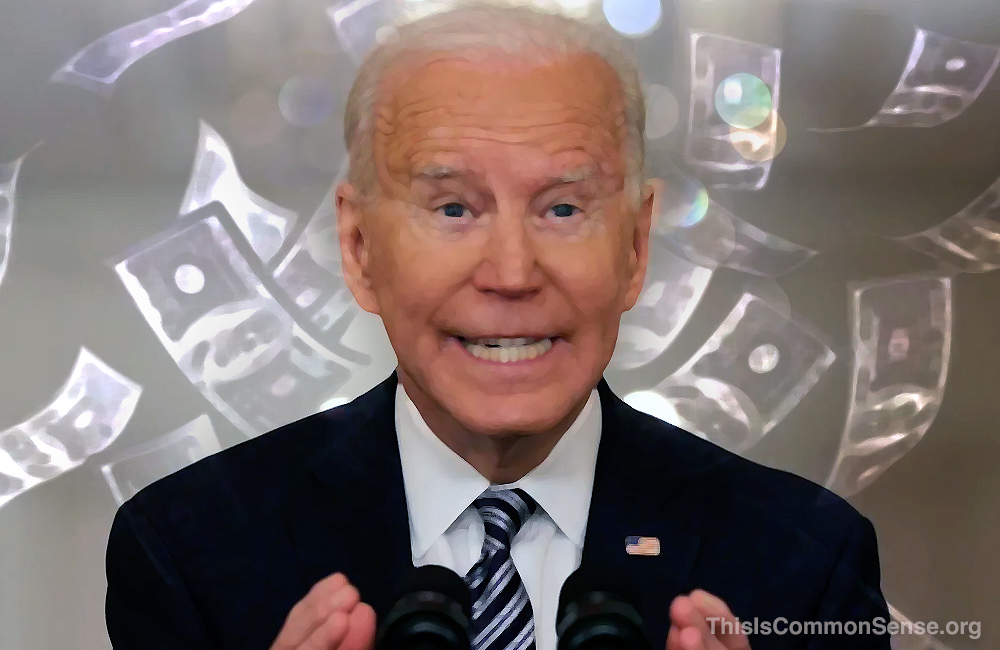
When President Joe Biden accused oil companies of excessive profiteering, and those profits as a cause of inflation, reactions were . . . mixed.

Democrats love that kind of talk. Ronald Reagan, back in his Democrat days, pitched precisely that sort of rhetoric when he campaigned for Truman’s re-election.

Republicans, along with most other Americans, are skeptical. Or just plain incredulous.

Meanwhile, what did Big Oil say?

Chevron’s CEO, Mike Wirth, took special care to complain of the president’s rhetoric, characterizing the administration as having “largely sought to criticize, and at times vilify, our industry.”

Perhaps Biden’s worst vilification was that Exxon had “made more money than God” — as if spending more money than God were his job and that he resented any money he couldn’t spend. 

EXXON responded by noting that the multinational had continued investing in infrastructure even during the pandemic lockdowns when the company “lost more than $20 billion and had to borrow more than $30 billion to maintain investment to increase capacity to be ready for post-pandemic demand.”

In a helpful mode, the company offered that “government can promote investment through clear and consistent policy that supports U.S. resource development, such as regular and predictable lease sales, as well as streamlined regulatory approval and support for infrastructure such as pipelines.”

Biden, who ran on decreasing oil production by regulatory crackdown, received a square hit.

Nonetheless, the Democrats double-down on their worn-out “windfall profits” alarmism. 

After a huge hit to consumption during the lockdowns, the profits are there not as recompense for Big Oil’s regrettable big losses, but as incentives to get out of the Great Suppression. 

We should want profits to entice more investment.

Could it be that Biden wants neither?

This is Common Sense. I’m Paul Jacob.


PDF for printing

See all recent commentary
(simplified and organized)
See recent popular posts
Categories
free trade & free markets political economy

Unconscionable Greed!

It’s easy to blame others for greed. And when prices rise, I suppose I can imagine being so upset that . . . well, if not my mind, Bernie Sanders’ mind . . . would become unhinged:

“Greed. Greed. Greed. While Americans are struggling at the pump,” the senator tweeted on Friday the 13th, “in the first three months of this year, oil and gas companies made over $41 billion in profits, more than double their profits from last year. The problem is not inflation. The problem is corporate greed.”

That’s Bernie Sanders for you. It’s not government profligacy or Federal Reserve monetary policy or the Biden Administration’s anti-fossil fuels agenda . . . or supply-line problems, persisting COVID-lockdown effects, or anything else.

Just greed.

But is greed somehow cyclical? Why were greedy corporations providing cheap gas a year ago and then able to raise it only under Democrats’ rule?

Alas, Bernie isn’t the only low-brow demagogue in the Senate. There’s Senator Elizabeth Warren pushing a new “price gouging” bill.

So, just as Bernie never answers “why is greed so successful at gouging now?,” how does Liz answer the burning question “how can we objectively define ‘price-gouging’?”

As journalist Catherine Rampell observes on Twitter, the senator’s definition in the bill is less than enlightening: “price-gouging” is “just pricing that is ‘unconscionably excessive.’”

Now that, Senator Warren, is unconscionably vague.

And incidentally, aren’t both senators on the record as demanding higher gas prices to usher in “green energy” to “save the planet”? This all seems unconscionably . . . deceptive.

This is Common Sense. I’m Paul Jacob.


PDF for printing

Photo credits: Warren/Bernie/money

See all recent commentary
(simplified and organized)
See recent popular posts
Categories
Accountability folly national politics & policies political economy

Whip Producers Now

The Biden administration is siccing agencies like the Federal Trade Commission, Department of Agriculture, and the Federal Maritime Commission onto the producers of stuff who have recently dared to raise prices.

Stuff like gas. Higher prices at the pump must be an oil-company conspiracy.

It has nothing to do with (and don’t even think it!) governmental actions that impede production, including shutting down the Keystone oil pipeline on Biden’s first day in office or calling a halt to new oil leases on public lands. Etcetera.

Nothing to do with mammoth expansion of the supply of money and credit to facilitate trillion-dollar government spending sprees.

In case you hadn’t noticed, meat costs more, too. So obviously that must be the fault of malicious meatpackers. Rest assured that beef price inflation is utterly unrelated to pandemic-policy-induced labor shortages and delays.

Or to any recent increase in efficiency-impairing trucking regulations.

Same with sundry supply-chain problems, like the ships and crates piling up at ports. Greater consumer demand, new pandemic-induced screening protocols, union rules that prevent ports from operating 24/7 or improving automation — all irrelevant.

Must be. That’s the script from 1600 Pennsylvania Avenue, anyway.

But if companies can hike prices at will, ignoring whether regulations ease or obstruct production, why doesn’t the meat industry, for example, charge a thousand dollars per pound of flesh?

Well, we know why. 

Demand for a pound of ground beef would slide to zero, or close to it.

If only the government people knew! 

Or would stop pretending they don’t know. 

A consistent recognition of the laws of economics would sure make a great gift — in any season. Instead of bullying and making things worse, government could get out of the way.

This is Common Sense. I’m Paul Jacob.


PDF for printing

See all recent commentary
(simplified and organized)
See recent popular posts
Categories
national politics & policies political economy too much government

The Slow Bullet

Modern government finance is like Russian Roulette . . . but with incredibly slow bullets.

We spend money. We create money out of thin air. We borrow it. We promise the Moon. We deliver rocks. With each action, we spin the chamber and pull the trigger. That slowround doesn’t immediately hit, so we do it again.

Calling the perennial deficits and ballooning debt a “predictable crisis,” Nick Gillespie at Reason writes that our federal government’s debt “is already choking down economic growth, but in the future, it could lead to ‘sudden inflation,’ and ‘a loss of confidence in the federal government’s ability or commitment to repay its debts in full.’” And worse: “‘Such a crisis could spread globally’ causing some ‘financial institutions to fail.’ That’s all according to the nonpartisan Congressional Budget Office (CBO), which has been warning Americans about the long-term consequence of the ballooning debt for years.”

This is an old warning. I have been talking about it for years, too. So have you. But once politicians start playing the game, it’s hard for them to stop. They see and we see the benefits, but that slow motion slug has yet to strike the target. 

Gillespie makes a better analogy than “slow bullets” (which don’t exist): “Like the coronavirus, the debt problem has the potential to seemingly appear out of the blue and turn our world upside down in a matter of weeks.”

Nassim Nicholas Taleb gained fame talking about “black swans,” major events we cannot predict. But he insists that the financial crisis resulting from government overspending is not a black swan. It’s predictable. We just do not know when.

Here’s a fourth analogy:

In free fall, you don’t feel a thing . . . until you hit the pavement.

This is Common Sense. I’m Paul Jacob.


PDF for printing

See all recent commentary
(simplified and organized)
See recent popular posts
Categories
ideological culture political economy

Cash Machine Cachet

Shutting down capitalism almost worldwide may prove to be the grandest disaster of all time. Folks on the margin of poverty in poor countries are already starving. Though scads of people seem to think we could ride out a lockdown indefinitely just by cashing government checks, the problem is that if we don’t produce, we cannot buy and consume products. 

It’s not about money, or profits as such: “It’s the productivity, stupid!” 

Elon Musk put it this way: “If you don’t make stuff, there’s no stuff.” 

A “universal basic income” won’t help if the re-distributed money chases few-to-no goods.

So how did we come to believe that we can just shut down most business activity and still survive?

Maybe the idea seems plausible because many people already do not work to survive. As their numbers have increased, our civilization has forgotten that they survive upon the work of others. 

We guffaw at young children who, when their parents say something they want is too expensive, they innocently respond, ‘well, just go to the cash machine!’ But the more people rely upon checks and bank deposits from the government — for any reason — the harder it is to remember that the power to buy stuff doesn’t ultimately come from government. With taxation, redistribution and inflation thrown into the mix, even adults think of government as Cash Machine. 

And the Cash Machine as a model for the economy.

To fight a virus, the world has shut down production — as if we do not survive by producing goods in order to consume them.

Government has reduced capitalism — and us — to absurdity.

This is Common Sense. I’m Paul Jacob.


PDF for printing

cash machine, ATM, money,

Photo by Tax Credits

See all recent commentary
(simplified and organized)
See recent popular posts
Categories
ideological culture political economy

The “Failure” of Capitalism?

“As the lock-downs come to an end,” writes economist Daniel Kian Mc Kiernan, “it will be expected by many — including many not on the political left — that the economy will pick-up at about where it was before the lock-downs.”

Mc Kiernan thinks a popular misconception will get in the way. 

Those who see the economy as “a kernel of processes that take inputs and produce outputs based upon purely technologic considerations” will let this techocratic model cloud their thinking. Viewing this “kernel” as producing not only “everything necessary to maintain itself” but also, and more importantly, a surplus that they treat as a zero sum affair — requiring the State to redistribute — they will regard the re-start as if a mere flipping on of a switch.

But the economy is not something to be un-plugged and plugged back in, and the lock-down super-quarantine was not a mere interruption of service. It was a huge blow that will demand uncountable adjustments. Those quite necessary adjustments may seem random, even wild, and because of this those on the “political left” will, Mc Kiernan predicts, do what they always do: “diagnose the failure to restore the economy quickly as ‘a failure of capitalism.’”

In other words, the bully knocks the victim down, stomps on him, and then taunts him for not getting up right away. 

Still worse: those taunts will become excuses for more kicking and stomping. And the flailing economy will be seen as all the more justification for more of the bully-boy Big Government policies that caused the “failure.”

This is Common Sense. I’m Paul Jacob.


PDF for printing

bully, economy, Covid, corona virus, Wuhan, epidemic, pandemic,

See all recent commentary
(simplified and organized)
See recent popular posts

Categories
free trade & free markets national politics & policies political economy

Cure and Consequences

From the beginning of the panic-induced shutdown of much of what we call “the economy,” many of us were wondering if the cure might not become worse than the coronavirus disease.

The ramifications of the near-total curtailment of the production, processing and movement of goods and services? Potentially disastrous.

The notion that politicians and bureaucrats inhabit that sweet spot which allows them to distinguish “essential” from “non-essential” work activities? Dubious at best. 

It smacks of what F.A. Hayek called “the fatal conceit” and “the pretense of knowledge.” The consequences of the shutdown have from the first suggested a tragedy in the making.

On Tuesday, The Washington Examiner’s Emma Colton reported on a tweet: “Kentucky Rep. Thomas Massie warned that the United States could face food shortages due to the ‘brittle’ supply chain, bankrupting farmers and forcing them to euthanize livestock.”

Massie does not mince words: “We are weeks, not months, away from farmers euthanizing animals that would have been sold for meat/food. Also, fruits and vegetables are going to rot in the fields.”

The late psychiatrist Thomas Szasz liked to use a word applicable here: iatrogenic. Doctor-caused.

The insistence that President Trump follow every jot and tittle of advice from Dr. Anthony Fauci and the federal medical establishment may provide an object lesson on why we must not trust “doctors” and “scientists” to make policy alone.

They specialize.

And our commercial society (as Adam Smith called “the economy”) is the very opposite: a veritable cosmos of human interaction.

Which makes the politicization of medical doctoring potentially quite fatal, as Rep. Massie warns.

Just ask anyone who’s lived through Communism’s command economy.

This is Common Sense. I’m Paul Jacob.


See all recent commentary
(simplified and organized)
See recent popular posts