Categories
Common Sense general freedom

The Price of Liberty

Happy Independence Day!

Though I understand if you are not feeling all that exultant, today.

Last week’s Supreme Court decision allowing the unconstitutional 2,700-page monstrosity known as Obamacare to stand was, well, bracing. We can soberly see how far our great country has fallen from the Republic our Founders envisioned. And how long and hard the battle will be to restore our country.
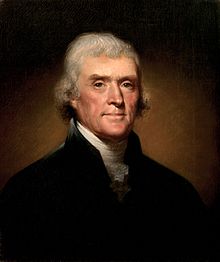
Let’s face it: We’re headed in the wrong direction. Unless we change course, our children and grandchildren will never know the freedom and opportunity and security that we have known. Can we accept such a fate? Can we live with it? Can we even bear to go to our graves with it?

On this day 236 years ago, not only did the United States of America break away from the monarchical and mercantilist British Empire, but we did so with a Declaration of Independence that spoke to “a candid world,” firing up the hearts and minds of people everywhere.

The Declaration served, in its day, as the most eloquent expression of the equality and dignity of each individual human being . . . of our inviolate right to freedom. It continues to do so today.

Freedom fighters worldwide have long been inspired by the simple words of our Founders . . . speaking truth to power:

We hold these Truths to be self-evident, that all Men are created equal, that they are endowed by their Creator with certain unalienable Rights, that among these are Life, Liberty, and the pursuit of Happiness — That to secure these Rights, Governments are instituted among Men, deriving their just Powers from the Consent of the Governed, that whenever any Form of Government becomes destructive of these Ends, it is the Right of the People to alter or abolish it, and to institute a new Government, laying its Foundation on such Principles, and organizing its Powers in such Form, as to them shall seem most likely to effect their Safety and Happiness.

It falls to us, today, to restore some semblance of this precious freedom.

The enemies of freedom are powerful and entrenched — but remember, they were at the founding, too.

Of course, today’s situation has a somewhat different complexion. The public employee unions (basically, the government itself) are now the biggest spending and most powerful special interests in our politics. Crony phony-capitalists (Solyndra and many more) join them to feed at the federal trough, gorging on our tax dollars, wallowing in the borrowed money that threatens collapse and catastrophe. They push ever more power into the hands of politicians and their special-interest clients.

Though whopping majorities of citizens favor balanced budgets, limited government, and common-sense checks on power — term limits and the right to initiative, referendum and recall — our so-called representatives ignore the will of the people. Their spending and debt and nanny-statism know no bounds. They sue to overturn our votes and fashion a maze of unconstitutional rules to block our political participation.
Today’s warning isn’t “the redcoats are coming!” it’s “the turncoats are in charge!”

We can’t count on politicians or judges to save us. We can only count on each other.

Benjamin Franklin said, “We must hang together or we shall surely all hang separately.”

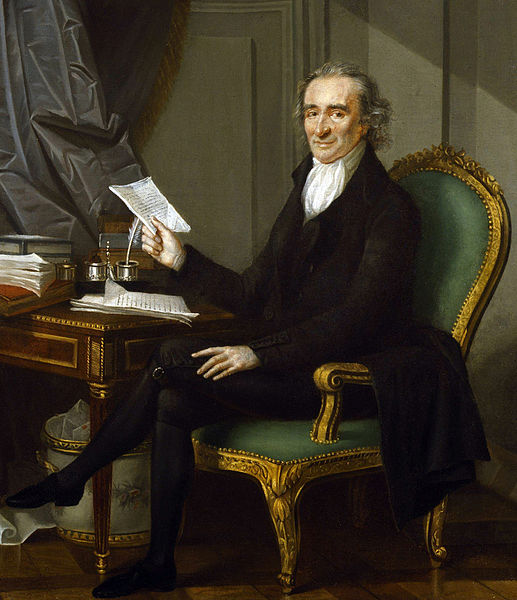
This Common Sense program, in the spirit of Tom Paine’s famous pamphlet that inspired our revolution, is my effort to educate, to excite citizens to action, to entertain at times, and to unite us in our common cause.

From highlighting today’s grassroots freedom-fighters to lambasting the mindless nanny-state busybodies in high places, Common Sense is a daily shot heard ’round the world.

We don’t often ask for your financial support, but we can only continue with your support. Make a monthly pledge of $17.76 to Citizens in Charge. Or make a one-time gift today for $25 — or $100! — or whatever you can afford to give.

“Those who expect to reap the blessings of freedom must, like men, undergo the fatigue of supporting it,” Paine wrote to “the inhabitants of America.”

My goal in these commentaries is to add punch and verve to the movement, vanquishing fatigue so we can fight on.

Freedom is worth it. The only way to beat the odds is to fight.

This is Common Sense. I’m Paul Jacob.
 

P.S. Just as in Paine’s day, and in his words, “These are the times that try men’s souls. The summer soldier and the sunshine patriot will, in this crisis, shrink from the service of their country; but he that stands by it now, deserves the love and thanks of man and woman.”

P.P.S. Thank YOU for stepping up today and helping keep this program alive and kicking. Your monthly pledge of $17.76 or a one-time gift of $100, $50, $25 or $15 keeps us passing the ammunition. Please contribute. Why not do it now?

Categories
free trade & free markets general freedom ideological culture individual achievement

Two Legacies

Two great economists died this month.

Anna Schwartz, co-author with Milton Friedman of the classic A Monetary History of the United States, 1867-1960, passed away last Thursday, at age 96. For reasons known only to a few Swedes, she did not receive the Nobel along with her more famous research partner.Anna Schwartz and Elinor Ostrom

Elinor Ostrom, on the other hand, who died about two weeks earlier, at age 78, did manage to nab a Nobel.

While Mrs. Schwartz may not have received the Sveriges Riksbank Prize in Economic Sciences in Memory of Alfred Nobel, she had received the more popular honor of being dubbed “the high priestess of monetarism.” She knew more about the history of banking and finance than just about anyone. Tellingly, her intellectual odyssey didn’t stop when she reached retirement age.

In recent years, she attacked the politically popular notion that bailouts are a good idea during economic downturns. She also came out against the reappointment of Ben Bernanke as Fed chairman, and argued that government was the main instigator of the 2008 financial bust.

She knew how to make waves.

Elinor Ostrom focused her work not on finance but on the problems associated with managing common-use resources. She found that government regulations tended to mismanage resources, while individuals and communities better negotiated creative and effective solutions to problems that previous economists deemed insoluble without government.

Like Anna Schwartz, she was much more than an armchair theorist. She didn’t merely draw equations on a blackboard and pontificate on how necessary it is for “government” to “fix it.” The evidence — which they collected — is in, government most often is the problem that must itself be fixed.

This is Common Sense. I’m Paul Jacob.

Categories
crime and punishment general freedom too much government

Robots in Amber

In 2010, Newark, New Jersey, collected more than $3 million in fines based on the watchful (and programmed) work of red-light/amber-light intersection cameras. The next year there were even more violations.

Politicians love these Orwellian devices, while citizens remain extremely suspicious.

New Jersey recently suspended ticketing based on the results from 63 of the state’s 85 intersection cameras. It seems that these specific cameras (including all those in Newark) had not been properly configured according to the specifications set by the enabling legislation.Big Brother Is Watching You

A Star-Ledger report neatly explains the calibration method, which requires intersection speed studies to set the proper duration of the amber lights. Figuring caution-light duration based on actual intersection speeds, not on posted speed limits — that is, the average actual speed of 85 percent of drivers — would seem to have something to do with safety. The 85 percent rule is an old highway safety engineering standard, and safety is allegedly why governments are involved in this at all.

A problem, though: This compliance procedure is great for setting speed limits, but in this case, wouldn’t it punish slower, legal drivers on streets where people tend to drive faster than the limit? Were the overwhelming majority of folks to speed through intersections, that would correspondingly lower the duration of the amber lights. Consequence? The folks most likely to receive tickets would be those who drove slowly through the intersections.

Hardly a good idea. As one driver commented, “Virtually from green it turns into red.”

More telling against the cameras is the increase in infractions, suggesting that the robotic cameras do not have a net instructional effect.

That is, they don’t make intersections safer.

This is Common Sense. I’m Paul Jacob.

Categories
general freedom ideological culture

Harappan Puzzles

Civilization first emerged around rivers: In Egypt, the Nile; in the Near East, the Tigris and Euphrates; in China, the Yellow River; and in the India-Pakistan-Afghanistan region, the Indus River Valley. We know the least about the Indus, or Harappan civilization. Its written language is the only one of these major civilizations’ forms of writing that remains uncracked, there being no “Rosetta Stone” for the curious ancient script.Examples of Indus Valley artifacts

Harappan culture sported elaborate plumbing, but no great monuments. This leads experts to suspect that the culture was “more democratic” than in the other cradles of civilization.

Truth is, we know next to nothing about Harappan governance or politics. By “democratic,” they probably mean “decentralized.” Or at least not heavily militaristic.

And, if that is borne out in further research, that’s huge. The hand of political governance lay quite heavily upon early city folks, and is generally associated with conquest. Could it be that Harappan civilization was freer, more voluntaristic and individualistic than Egyptian, Mesopotamian, and Xia and Shang Dynasty societies?

We can only guess. But on a different Harappan puzzle, there’s a new theory out, purporting to explain what happened to this largest of ancient “empires”: climate change.

The weather got warmer, their riverways dried up, and the people scattered, mainly heading east.

Too bad for the civilization. But note two things:

  1. The climate change was natural, and
  2. People reacted naturally, by moving.

If we are experiencing, today, the beginnings of a global climate change, it may very well be natural, and (natural or not) people freely moving about may be the best response to the worst of it.

This is Common Sense. I’m Paul Jacob.

Categories
general freedom ideological culture

Tea & Tyranny

We were not invited. Instead, the presence of 27 of the world’s “Sovereign Monarchs” was properly and politely requested for a lunch last week with one Liz Windsor, in celebration of her 50th year on England’s throne.

Apparently, the Queen didn’t want to spend her Diamond Jubilee hanging out with the 99 percent. Or even the 99 percent of the 1 percent. After all, it’s her party (albeit financed by the common man), and she’ll twist and shout with her fellow blue-blood royals if she wants to. But, while nice ol’ Liz was serving a sophisticated supper to kings, queens, sheiks, emirs, sultans, emperors and empresses, there were detractors.Menu for the big bash

“Inviting these blood-soaked dictators brings shame to the monarchy and tarnishes the Diamond Jubilee celebrations,” declared human rights campaigner Peter Tatchell, pointing to tyrants attending from Abu Dhabi, Bahrain, Brunei, Kuwait, Qatar, Saudi Arabia and Swaziland.

He missed a few. Why not add King Mohammed VI of Morocco, who still has the power to veto most government decisions, or Sultan Qaboos of Oman, who personally makes all the key decisions in his country?

What level of despotism is just too much? Thailand’s King Bhumibol Adulyadej’s role may be largely symbolic, but citizens remain subject to arrest for any insult to the king.

Granted, most of the remaining monarchs hold their positions of privilege and pomp with little circumstance. They are not the dictators of old, brutalizing the people at whim.

Progress, I guess.

But why continue even the trappings of monarchy? And why dine with the real thing?

This is Common Sense. I’m Paul Jacob.

Categories
First Amendment rights general freedom too much government

A Caricature Worth 25 Lashes?

One hallmark of a free society is the legal right to make fun of our leaders. Several times per week I engage in ridicule as well as argument against the folks who think they know what they are doing when they attempt to rule us.

We should wear this freedom to ridicule like a badge.

Iranians, alas, can’t say the same.

Mahmoud Shokraye was tried and found guilty for insulting Nameye Amir, a member of parliament. Shokraye drew a mildly funny caricature of Amir, in a colorful post-Nastian style (the kind most major papers now fall back on), and for his trouble got 25 lashes.

Heroically, a number of cartoonists have upped the ante and created even less flattering caricatures, as you can see at the Cartoon Blog. (I sample some of them, here.) Amir got more than he bargained for. I hope it stings — more than 25 lashes’ worth.

There are several lessons to draw from this.

First, “taking offense” is not the basis of any legal action. Or any violent action. In the west, we’re centuries away from duels and other deadly fights of “honor.” The Islamic east is, alas, still embedded in old honor cultures. The faster they can shuffle off that obsession and move to a rule of law, instead, the better.

Second, as Thomas Jefferson put it, governments should fear the people, not the other way around. That’s part of what it means to live in a free society.

Politicians who don’t like it are free to seek a less public job. Really.

This is Common Sense. I’m Paul Jacob.

Categories
general freedom national politics & policies

Man Attacks Success

“Over the past decade, this all-volunteer force has been put to the test and has succeeded,” wrote Thomas E. Ricks, a fellow at the Center for a New American Security, in Sunday’s Washington Post.

But Ricks argues that this success is “precisely the reason” that now is the “time to get rid of the all-volunteer force. It has been too successful.”

Scrap success! Instead, Ricks raves we should “[resume] conscription . . . to reconnect the people with the armed forces” even though, admittedly, a draft “would cause problems for the military.”

Though on this latter point I catch a whiff of understatement, Ricks has a legitimate concern. “Our relatively small and highly adept military” makes “it all too easy for our nation to go to war,” he wrote, “and to ignore the consequences.” America now takes to war far too easily. Only one man (the president) decides, really, where and when the U.S. goes to war, and he puts it all on the national credit card.

So the answer is giving the Commander-in-Chief more resources? What Ricks risks is giving the president and his back-room boys a blank check on the manpower of our children.

The only effective check (as in check-and-balance) would be, I guess, a vote every four years. Oh, and the presidential term limit.

You are probably thinking: What about Congress? Unfortunately, it’s congressional dereliction of duty that’s got us here in the first place.

Which brings us back to first principles. And here the case is clear: Ricks’s prescription is wrong because conscription is wrong. Dictators conscript “their” subjects; a free society finds voluntary defenders.

This is Common Sense. I’m Paul Jacob.

Categories
general freedom ideological culture too much government

Down With the Capital

My wife and daughter have devoured Suzanne Collins’s trilogy of dystopian novels, The Hunger Games, Catching Fire and Mockingjay, and they let me accompany them to this weekend’s blockbuster movie of the first in the series.

In the depicted dystopia, a dozen outlying districts have been conquered by the capital. Once a year, for the diversion of sport and, moreover, to assert their life-and-death control over the districts, folks in the capital choose one male and one female teenager from each district — as “tribute” — to go to the capital to fight to the death. The last of the 24 left alive is the “winner.”

The story’s protagonist is Katniss Everdeen, a 16-year old girl whose prowess with bow and arrow helps (illegally) feed her family. When her 12-year old sister gets selected to meet a certain death in the games, Katniss “volunteers” to take her place.

Expressing an independent spirit, Peeta, her district’s male contestant, tells Katniss: “I just keep wishing I could find a way to show them they don’t own me. If I’m going to die, I want to still be me.”

In The Hunger Games, the capital thrives, while folks out in the districts struggle to find enough to eat. In our own country, today, seven of the 25 wealthiest counties are in the Washington, D.C. area. While much of the nation suffers a depressed housing market and high unemployment, that’s not the case in our nation’s capital region.

I liked the movie so much, I’m now reading the book.

This is Common Sense. I’m Paul Jacob.

Categories
general freedom national politics & policies too much government

Central Planning, Clarified

Last Friday, the President of the United States signed an Executive Order on “National Defense Resources Preparedness,” and it’s gotten no small amount of attention. It seems to commandeer the entire economy — pretty much anything the government needs — in cases of a presidentially (not congressionally) declared “emergency.”

The powers are vast.

The checks and balances, vague.

The whole thing is matter-of-fact, sporting that business-as-usual style we’ve come to know and . . . view suspiciously. A few clauses at the end of the document build up to a sort of finale of weirdness with this clarification: “This order is not intended to, and does not, create any right or benefit, substantive or procedural, enforceable at law or in equity by any party against the United States, its departments, agencies, or entities, its officers, employees, or agents, or any other person.” It may be about “national security,” but the government has certainly protected itself. Against us.

Reasons for angst? Yes.

But the angst should not be conceived as new.

Economic historian Robert Higgs, writing for The Independent Institute, notes our long history of what he calls “fascist central planning.” Citing his own milestone work Crisis and Leviathan, he fingers warfare as the major rationale behind the centralization of power and industry. Under the Defense Production Act of the Truman Era, “the president has lawful authority to control virtually the whole of the U.S. economy whenever he chooses to do so and states that the national defense requires such a government takeover.”

It’s breathtaking. It’s sweeping. It’s almost ancient.

And it shows how important actual peace is to our freedoms, our property rights, our very lives.

This is Common Sense. I’m Paul Jacob.

Categories
general freedom U.S. Constitution

A Serious Mistake

“I have signed this bill,” President Barack Obama said months ago about the National Defense Authorization Act, “despite having serious reservations with certain provisions that regulate the detention, interrogation and prosecution of suspected terrorists.”

Those provisions include the indefinite detention of U.S. citizens without trial.The Fifth Amendment

Former President George W. Bush had tried that with Jose Padilla; now, courtesy of President Obama’s signature, the policy is codified into law.

“Let me be clear,” U.S. Attorney General Eric Holder told a university audience yesterday, “an operation using lethal force in a foreign country, targeted against a U.S. citizen who is a senior operational leader of al Qaeda or associated forces, and who is actively engaged in planning to kill Americans, would be lawful . . .”

Holder goes on to say that “a thorough and careful review” by the government would be required, and that capture must not be “feasible,” and that the hit be “conducted in a manner consistent with applicable law of war principles.”

But something is missing. There’s absolutely no check on this awesome power. No due process. No day in court to contest the government’s “thorough and careful review” and avoid an unjustified death by bullet or drone strike.

Moreover, these extraordinary powers, which obliterate all basic legal protections going back to 1215 AD, are for the execution of an undeclared war against a concept, “terrorism,” vague enough to provide a state of permanent war.

Asked about Holder’s position, presidential candidate Ron Paul warned, “If the American people accept that, it’d be a serious mistake.”

This is Common Sense. I’m Paul Jacob.