Categories
Today

Statue of Liberty

The Statue of Liberty arrived in New York Harbor on June 17, 1885. On the same day in 1930, progressive Republican President Herbert Hoover — eager to please agricultural states, and confident that protectionism would yield greater wealth — signed the Smoot-Hawley Tariff. The Great Depression deepened, especially as provisions of the bill took effect.

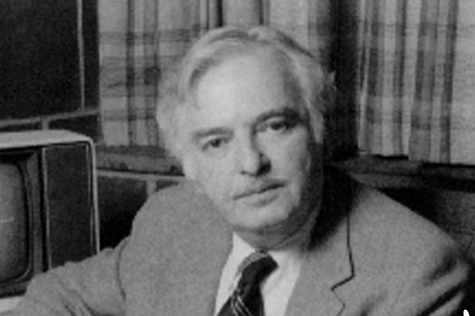
Three years later, investment author and two-time Libertarian Party presidential candidate Harry Browne was born.

On June 17, 1944, Iceland declared independence from Denmark.

On this day in 1971, President Richard Nixon declared a “War on Drugs,” which steadily decreased civil liberty and the rule of law in America.

Exactly one year later, five men were arrested for attempted burglary on the offices of the Democratic National Committee in the Watergate complex in Washington, D.C., igniting the Watergate scandal that ultimately led to the resignation of U.S. President Richard Nixon more than two years later.

Categories
Thought

Magna Carta

“For a trivial offence, a free man shall be fined only in proportion to the degree of his offence, and for a serious offence correspondingly, but not so heavily as to deprive him of his livelihood.”


Magna Carta Libertatum, Clause 20.

Categories
Today

Nureyev & Adam Smith

On June 16, 1961, dancer Rudolf Nureyev defected from the Soviet Union.

The great Scottish moral philosopher, political economy pioneer, and Enlightenment intelectual Adam Smith (1723-1790), best known for authoring the 1776 masterwork The Wealth of Nations, was born on June 16.

Categories
Today

Pig War!

The Oregon Treaty, signed June 15, 1846, established the boundary between Great Britain’s Canadian territory and the United States of America, from the Rocky Mountains to the Strait of Juan de Fuca, using the 49th Parallel as the handy marker. However, the treaty was not exactly clear on the territorial status of the San Juan Islands, so exactly 13 years later, to the day, a war erupted, over a shot pig.

Basically, an American farmer shot a pig rooting through his garden. The pig belonged to an Irishman. The two did not agree upon compensation, and “the authorities” were called in, with infantry mustering from the south and the Governor of Vancouver Island instructing marines to land on San Juan Island — though the rear admiral in charge refused to comply with the order, on the reasonable grounds that war over a pig was not worth it. Local troops from both sides lined up against each other, but under command to defend themselves only and not shoot first. All that was exchanged in this war were insults. It turned out to be a bloodless war, discounting the pig, so it might qualify as the best war in American history.

On June 15, 1992, Vice President Dan Quayle incorrectly added an “e” to the end of a Trenton, N.J., sixth grader’s correctly spelled “potato.”

Categories
Thought

Aristotle

“The basis of a democratic state is liberty.”


AristotlePolitics, Book Six.

Categories
links

Townhall: The Incredible Lightness of Freedom

The continuing saga of the Meitiv kids, at Townhall this weekend. Click on over, then back here!

Categories
Today

Stars and Stripes

On June 14, 1777, U.S. Congress adopted the Stars and Stripes as the United States Flag.

Categories
Thought

Aristotle

“When people are friends, they have no need of justice, but when they are just, they need friendship in addition.”


Aristotle, Politics, Book Eight.

Categories
video

Video: Hayek Essentials

You’ve heard of F. A. Hayek. Here is a helpful, brief overview of his life and work, in easy-to-digest and safe-to-share form.

Categories
Today

Against slavery

On June 13, 1774, Rhode Island became the first British colony in the Americas to prohibit the importation of slaves.