Categories
Thought

C. S. Lewis

“Of all tyrannies, a tyranny sincerely exercised for the good of its victims may be the most oppressive. It would be better to live under robber barons than under omnipotent moral busybodies. The robber baron’s cruelty may sometimes sleep, his cupidity may at some point be satiated; but those who torment us for our own good will torment us without end for they do so with the approval of their own conscience. They may be more likely to go to Heaven yet at the same time likelier to make a Hell of earth. This very kindness stings with intolerable insult. To be ‘cured’ against one’s will and cured of states which we may not regard as disease is to be put on a level of those who have not yet reached the age of reason or those who never will; to be classed with infants, imbeciles, and domestic animals.”


C. S. Lewis, “The Humanitarian Theory of Punishment,” reprinted in God in the Dock (1970).

Categories
Today

Chase and Clemens

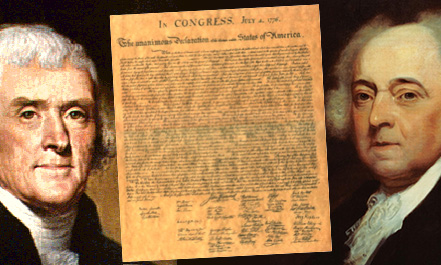
On November 30, 1804, the United States House of Representatives began impeachment hearings against Supreme Court Justice Samuel Chase. The House thought he was too partisan, too “Federalist.”

The Senate later acquitted Chase.

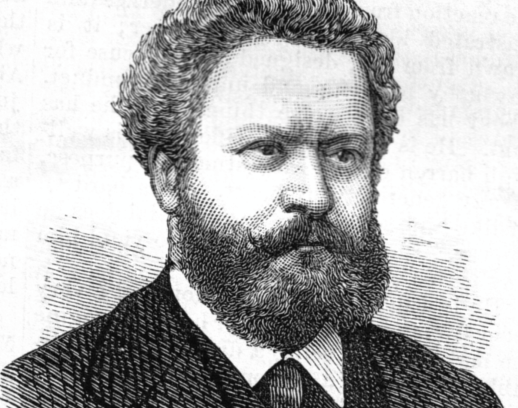
On 1835 on this date, Samuel Clemens was born, later to achieve world fame as author and humorist Mark Twain (pictured above). His most beloved books include The Adventures of Tom Sawyer (1876) and his masterpiece, Adventures of Huckleberry Finn (1885). He died in 1910.

Categories
links

Townhall: The Oddest Yoga Position of All

This week, Common Sense looks at the insanity of “cultural appropriation.” Which has reached a new low point of crazed nincompoopery in Ontario. See Sunday’s column on Townhall.com, by Yours Truly, Paul Jacob. Then come back here for further forays into the realm of modern progressive ideology gone completely off its rocker:

Categories
Today

C. S. Lewis

Irish-English medievalist, theologian, and novelist Clive Staples Lewis was born on November 29, 1898. Among his best known works are Out of the Silent Planet, The Problem of Pain, Miracles, and the “Narnia” fantasies for children. His retelling of the Psyche myth, Till We Have Faces, and political essays such as “The Humanitarian Theory of Punishment” and The Abolition of Man, will almost certainly stand the test of time.

Categories
Thought

Friedrich Nietzsche

“I regard it as necessary to progress that we withdraw from philosophy all governmental and academic recognition and support. . . . Let philosophers spring up naturally, deny them every prospect of appointment, tickle them no longer with salaries — yea, persecute them! Then you will see marvels! They will then flee afar and seek a roof anywhere. Here a parsonage will open its doors; there a schoolhouse. One will appear upon the staff of a newspaper, another will write manuals for young ladies’ schools. The most rational of them will put his hand to the plough and the vainest will seek favor at court. Thus we shall get rid of bad philosophers.”


Friedrich Nietzsche, “Schopenhauer als Erzieher,” as translated by H. L. Mencken, The Philosophy of Friedrich Nietzsche (Third Edition, 1913), Chapter XII, Education.

Categories
video

Video: Broaching Mrs. Trudeau’s Brooch

The Rebel Media takes on Canada’s latest entry into the “Cool Ruler” sweepstakes, with an acquisitive dynamic duo that somehow has received the imprimatur of the “progressive.”

Categories
Common Sense

Henry Hazlitt

On November 28, 1893, women voted in a national election for the first time . . . in New Zealand. On the same date in 1917, the Estonian Provincial Assembly declared itself the sovereign power of Estonia. November 28 also marks the independence of Mauritania from France (1960), and East Timor from Portugal.

In 1894, on November 28, economics journalist Henry Hazlitt was born. Hazlitt went on to write Economics in One Lesson, Time Will Run Back, and many other books, including several criticizing Keynesianism. He was the main proponent of the work of Ludwig von Mises and F. A. Hayek in America during the 1940s and 1950s.

Categories
Thought

H. L. Mencken

“On the statute books of the great majority of American states there are laws so plainly opposed to all common-sense that they bear an air of almost pathetic humor.”


H. L. Mencken, The Philosophy of Friedrich Nietzsche (Third Edition, 1913), Chapter X, Government.

Categories
Today

Nobel Prizes

November 27, 1295, the first elected representatives from Lancashire were called to Westminster by King Edward I to attend what later became known as “The Model Parliament.”

On the same date in 1895, Alfred Nobel (pictured) signed his last will and testament, thereby establishing the Nobel Prizes.

Categories
Thought

Benedictus de Spinoza

“Of all the things that are beyond my power, I value nothing more highly than to be allowed the honor of entering into bonds of friendship with people who sincerely love truth. For, of things beyond our power, I believe there is nothing in the world which we can love with tranquility except such men.”


Baruch Spinoza, Correspondence, 146, Letter xix.