Categories
Today

Non-Violence … and Violent Reaction

On Jan. 30, 1948, Indian leader Mohandas K. Gandhi, known for his non-violent, non-cooperation struggle for freedom and national independence, was assassinated by a Hindu extremist.

On Jan. 30, 1956, Martin Luther King, Jr.’s home was bombed in retaliation for his work on the Montgomery Bus Boycott.

On Jan. 30, 1972, British soldiers killed fourteen unarmed civil rights marchers in Northern Ireland in what came to be known as “Bloody Sunday.” Soldiers shot 26 unarmed protesters and bystanders – 13 males, seven of whom were teenagers, died immediately, while another man died of his injuries nearly five months later. In the immediate aftermath, an investigation by the British Government largely cleared the soldiers and British authorities of blame. A second investigation begun in 1998, released a report in 2010 declaring that all of those shot were unarmed, and that the killings were both “unjustified and unjustifiable.”


Not quite fitting today’s “non-violence elicits violence” theme, on January 30, 1835, Richard Lawrence attempted to shoot former military leader and then-President Andrew Jackson, but failed. He was subdued by a crowd, including several congressmen. That marked the first attempt on the life of a sitting U.S. president.

Categories
Thought

Arthur Latham Perry

Common sense is outraged by a law which requires a man to part with his property at less than the actual value . . .

Arthur Latham Perry, Principles of Political Economy (1891).
Categories
Today

Gallatin

On January 29, 1761, Albert Gallatin was born. Gallatin served as the fourth United States Secretary of the Treasury — a post in which he served longer than any other in American history — advanced the anthropological and linguistic study of native Americans, and became the subject of a biography by Henry Adams. Called the “father of American ethnology,” he has been honored with a 1967 U.S. stamp as well as many placenames, including the Gallatin National Forest in Montana.

Categories
Today

Oil Deregulated

On Jan. 28, 1981, President Ronald Reagan lifted the federal government’s remaining domestic petroleum price and allocation controls in the United States, helping to end the 1970s energy crisis and begin the 1980s oil glut.

The deregulatory move had been begun by Democrats in Congress, particularly Sen. Ted Kennedy, but had been placed on a gradual schedule, and the whole effort clouded with talk of “windfall profits” and a tax on those allegedly unfair returns on investment.

Categories
Thought

Stendhal

“An English traveller relates how he lived upon intimate terms with a tiger; he had reared it and used to play with it, but always kept a loaded pistol on the table.”


Stendhal, The Red and the Black (1830).

Categories
Today

Molinari

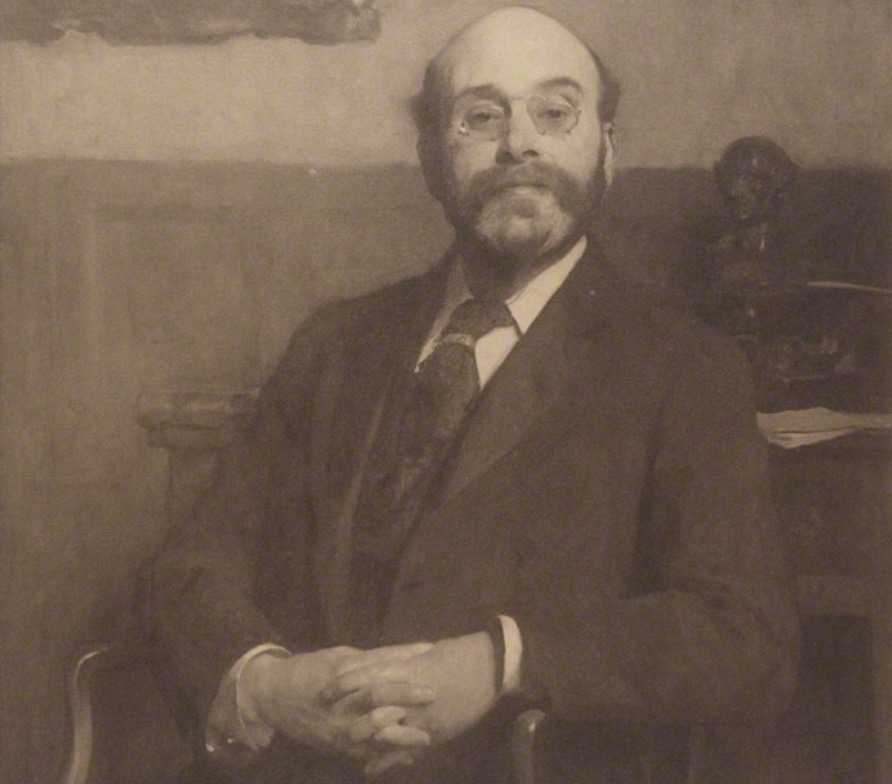
On January 28, 1912, Belgian economist Gustave de Molinari died. One of the last major economists of the French Liberal School, heir to Frederic Bastiat, and a prominent advocate of laissez faire, Molinari’s last book, The Society of To-morrow (the only one of his many books to be translated into English in his day) envisioned a future of extremely limited government, and argued against the growing tide of socialism and war that was becoming all too apparent as the future of Europe.

Indeed, the old liberal order of Europe ended with the beginning of the Great War, exactly two and on half years after Molinari’s demise.

Categories
Today

American Conscription Ends

On Jan. 27, 1973, President Richard Nixon’s Secretary of Defense, Melvin R. Laird, announced an end to the military draft in favor of a system of voluntary enlistment. Since 1973, the United States armed forces have been known as the All-Volunteer Force.

The Selective Service System, the federal agency that would administer a military draft, continues to be funded. Furthermore, American males continue to be forced to register for the draft.

Categories
Thought

Beaumarchais

“Calumniate, calumniate; there will always be something which sticks.”


Pierre-Augustin Caron de Beaumarchais, Le Barbier de Séville (1773).

Categories
Today

Boris!

On January 26, 1992, Boris Yeltsin announced that Russia would stop targeting United States cities with nuclear weapons.

Categories
Thought

Irving Kristol

“The inner spiritual chaos of the times, so powerfully created by the dynamics of capitalism itself, is such as to make nihilism an easy temptation. A ‘free society’ in Hayek’s sense gives birth in massive numbers to ‘free spirits’ — emptied of moral substance but still driven by primordial moral aspirations. Such people are capable of the most irrational actions. Indeed, it is my impression that, under the strain of modern life, whole classes of our population — and the educated classes most of all — are entering what can only be called, in the strictly clinical sense, a phase of infantile regression. With every passing year, public discourse becomes sillier and more petulant, emotions become, apparently, more ungovernable. Some of our most intelligent university professors are now loudly saying things that, had they been uttered by one of their students twenty years ago, would have called forth gentle and urbane reproof.”


Irving Kristol, “‘When virtue loses all her loveliness’ — some reflections on Capitalism and ‘the free society,’National Affairs, No. 21, Fall 1970.