Categories
Today

Spain and Bagehot

On February 3, 1783, Spain recognized United States independence.

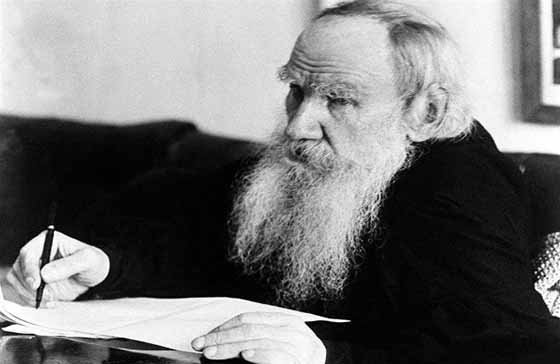
Walter Bagehot (pronounced “badge-it”; pictured), famed editor of The Economist and author of Lombard Street, was born on this date in 1826.

Categories
Thought

George H. Lewes

“Ideas are forces: the existence of one determines our reception of others.”


G. H. Lewes, Problems of Life and Mind (Third Series) Problem the First — The Study of Psychology: Its Object, Scope, and Method, 1879.

Categories
Thought

Benjamin Constant

“Commerce has brought nations closer, it has given them customs and habits that are almost identical; the heads of states may be enemies: the peoples are compatriots.”


Benjamin Comstant, The Liberty of the Ancients Compared with That of the Moderns (1819).

Categories
Today

Groundhogs’ Day

On February 2, 1887, Punxsutawney, Pennsylvania, celebrated the first Groundhog Day. On the same day in 1976, the Groundhog Day gale hit the north-eastern United States and south-eastern Canada.

In 2009, the Reserve Bank of Zimbabwe officially devalued the Zimbabwean dollar for the third and final time, making Z$1 trillion now only Z$1 of the new currency, equivalent to Z$10 septillion before the first devaluation. Politicians in Zimbabwe looked up, saw their shadow, and realized that they had only a couple months more of their inflation binge. Indeed, the legalization of trading currencies, the previous month, had sealed the fate of Zimbabwe’s independent dollar. The Zimbabwean dollar was abandoned officially on the 9th of April, 2009.

Categories
Thought

Arthur Latham Perry

“What is the Source out of which Taxes are actually paid? The answer is, out of the gains of Exchanges of some sort. Gifts aside, and thefts which are out of the question, no man ever did, no man ever can, pay his taxes, except out of the gains of some sales which he has already made.”


Arthur Latham Perry, Principles of Political Economy (1891).

Categories
Today

Slavery Abolished

On February 1, 1835, slavery was abolished in Mauritius. Six years later, in the American Civil War, Texas seceded from the United States. On this date in 1865, President Abraham Lincoln signed the Thirteenth Amendment to the United States Constitution, abolishing chattel slavery in the U. S.

Categories
links

Townhall: Facing Error

Can a politician acknowledge an error of judgment without giving up a claim to our attention? Must politicians pretend always to be right — even when we know no one can attain such perfection?

Click on over to Townhall and check out this weekend’s longer excursion into a subject broached on Friday. And come back here for a little more reading.

Categories
Thought

Benjamin Constant

“The danger of ancient liberty was that men, exclusively concerned with securing their share of social power, might attach too little value to individual rights and enjoyments.

“The danger of modern liberty is that, absorbed in the enjoyment of our private independence, and in the pursuit of our particular interests, we should surrender our right to share in political power too easily.”


Benjamin Comstant, The Liberty of the Ancients Compared with That of the Moderns (1819).

Categories
Today

Corn Law

On January 31, 1849, the Corn Laws were abolished in the United Kingdom, one of the most impressive and far-reaching anti-protectionist moves of all time. “Corn” stood for all grains, including wheat, oats, barley, etc.; the free-trade agitation by John Bright and Richard Cobden (pictured) was one of the main impetuses for the reform.

On Jan. 31, 1865, the United States Congress proposed the Thirteenth Amendment to the U.S. Constitution, submitting it to the states for ratification. The Amendment’s main section reads: “Neither slavery nor involuntary servitude, except as a punishment for crime whereof the party shall have been duly convicted, shall exist within the United States, or any place subject to their jurisdiction.”

On Jan. 31, 1990, the first McDonald’s fast food restaurant opens in the Soviet Union. Having once traveled to Moscow, I’m exceedingly thankful for this.

Categories
video

Video: Calm Protestors in Camp

A reporter goes out to the Oregon outpost with the sit-in/protest asking pointed questions about history, religion, and (of course) “white privilege”:

The sit-in protestors do not seem like hysterical “militia terrorists” to me. Do they to you?

One of them, LaVoy Finicum, is the man later shot and killed by the federales . . . and he also seems collected, not crazed or over-angered. His message: all people, of whatever race, should defend their rights.