No one knows more about how the major parties prevent competition than Richard Winger, the editor of Ballot Access News. Early on, in this interview, he relays an interesting fact: America did not have government-printed ballots until 1889.
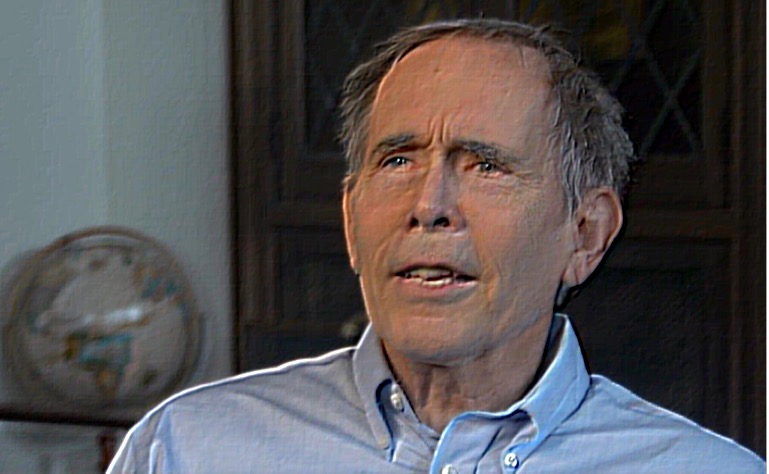
No one knows more about how the major parties prevent competition than Richard Winger, the editor of Ballot Access News. Early on, in this interview, he relays an interesting fact: America did not have government-printed ballots until 1889.
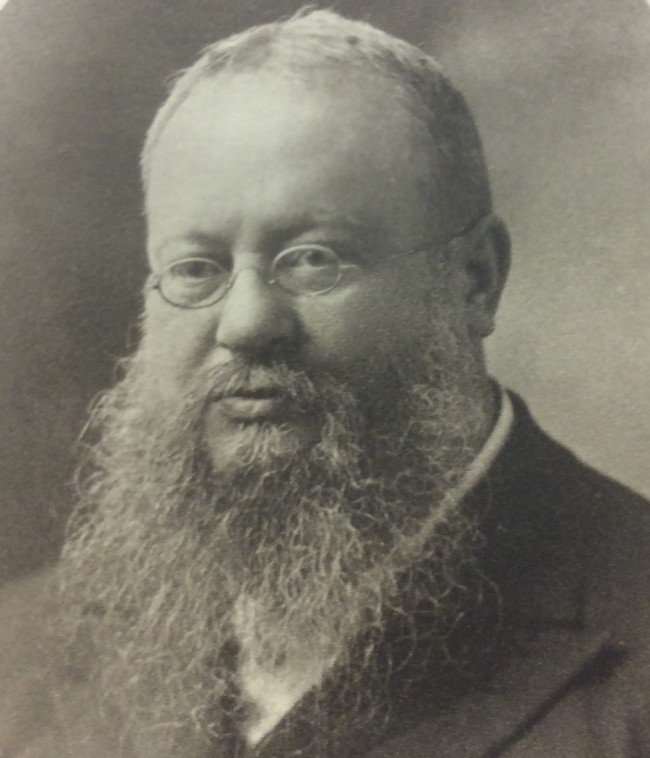
It is not true that “moral truths” have received no additions. It is not true, as Mr. Buckle says, that “the sole essentials of morals have been known for thousands of years, and not one jot or tittle has been added to them by all the sermons, homilies, and text-books which moralists have been able to produce.” It is not true, as Sir James Mackintosh says, that “morality admits of no discoveries.” It is not true, as Condorcet says, that “la morale du toutes les nations a été la même.” It is not true, as Kant says, that “in der Moralphilosophie sind wir nicht weiter gekommon als die Alten.” For what is Moral Philosophy but the science which is to determine the laws to which our conduct should conform? And if this is the case, we need only to look into Mr. Buckle’s work itself, to find a system of morality containing truths which only two centuries ago were not even dreamed of. Take, for example, the moral law that governments shall not interfere with trade. This is as much a moral law as that which forbids stealing; but we find Mr. Buckle reckoning it among the merits of Voltaire, that he was one of the first to perceive the justice of a free system of trade. Its justice is even now denied by opponents of reforms. This, then, is a case of “moral truth” which has not been known for thousands of years.
John Fiske, “Mr. Buckle’s Fallacies,” Darwinism and Other Essays (1879; 1902), p. 162.
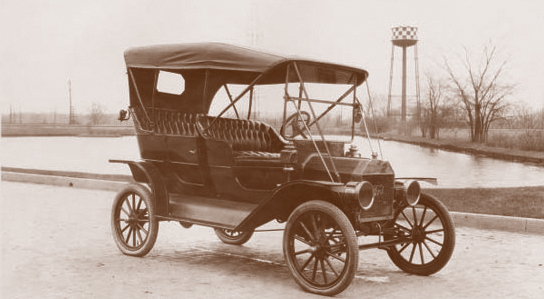
On October 1, 1908, Ford produced the first Model T at a plant in Detroit. The auto could travel 40 miles per hour and ran on gasoline or hemp-based fuel. (As oil prices fell, Ford phased out the hemp option.) The Model T was the first car designed for a mass market, rather than as a luxury item. By 1927, Ford had built 15 million Model T cars – the longest production run of any car model until the Volkswagen Beetle surpassed it in 1972.
On October 1, 1918, Lawrence of Arabia (T.E. Lawrence) helped lead a combined Arab and British force that captured Damascus from the Turks during World War I.

September 30 has served as Blasphemy Rights Day since 2009, when it was initiated by the Center for Inquiry.
Botswanans celebrate their independence from Great Britain with an official day on September 30.
Man is not a rational animal; he is a rationalizing animal.
Robert A. Heinlein, Assignment in Eternity (1953)
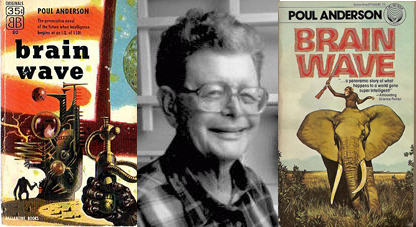
Poul Anderson, Brain Wave (1954), Chapter 3 (p. 25).
Keep on thinking. Keep your thinking close to the ground, where it belongs. Don’t ever trade your liberty for another man’s offer to do your thinking and make your mistakes for you.
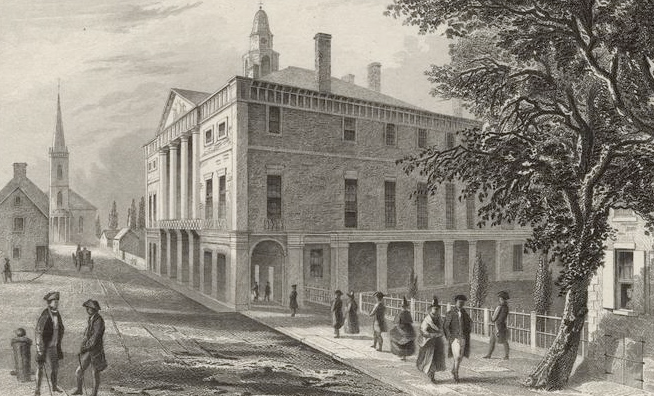
On September 29, 1789, the first Congress of the United States under the new Constitution adjourned.
 On the same date in 1881, economist Ludwig von Mises (pictured, at right) was born in Lemberg, Galicia, of the Austria-Hungary Empire (now Lviv, Ukraine).
How anybody expects a man to stay in business with every two-bit wowser in the country claiming a veto over what we can say and can’t say and what we can show and what we can’t show — it’s enough to make you throw up. The whole principle is wrong; it’s like demanding that grown men live on skim milk because the baby can’t eat steak.
Robert A. Heinlein, The Man Who Sold the Moon, (1950), p. 188

On September 28, 2008, SpaceX launched the Falcon 1, the first private spacecraft to go into orbit around planet Earth.

Lancaster, Pennsylvania, home to Lancaster James Buchanan, the nation’s 15th president, and to congressman and abolitionist Thaddeus Stevens, served, during the American Revolution, as the capital of the United States for one day, on September 27, 1777.
This occurred after the Continental Congress fled Philadelphia, which had been captured by the British. The revolutionary government then moved still farther away to York.