Categories
Today

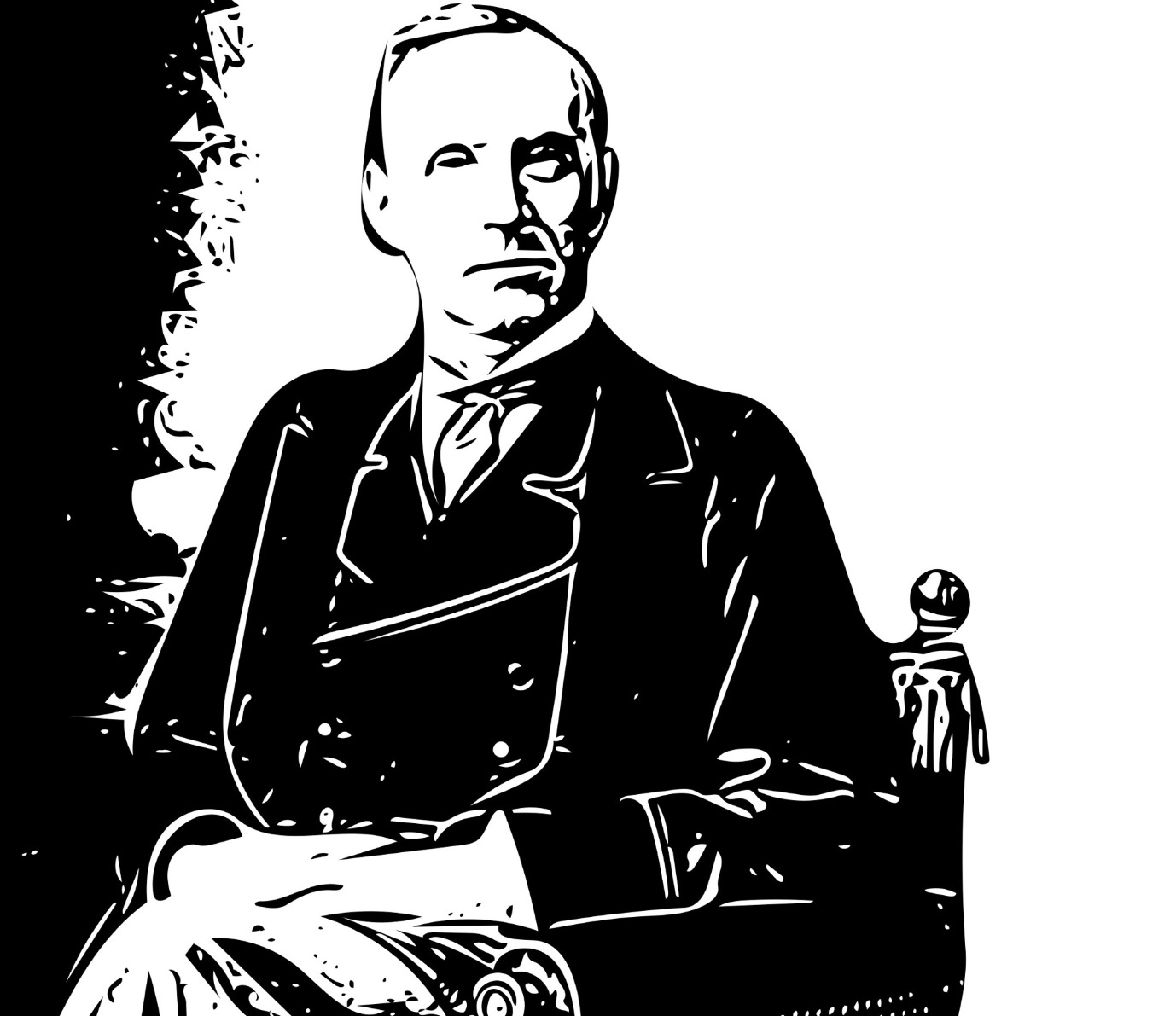
Arthur Latham Perry

On February 27, 1830, American economist and free trade advocate Arthur Latham Perry was born.


The Twenty-second Amendment (Amendment XXII) of the United States Constitution, which sets a term limit for election and overall time of service to the office of President of the United States, was ratified by the requisite 36 of the then-48 states on February 27, 1951.

Congress had passed the amendment on March 21, 1947.

Categories
Thought

Thomas Jefferson

[T]his commonwealth is determined, as it doubts not its co-States are, to submit to undelegated, and consequently unlimited powers in no man, or body of men on earth: that in cases of an abuse of the delegated powers, the members of the general government, being chosen by the people, a change by the people would be the constitutional remedy; but, where powers are assumed which have not been delegated, a nullification of the act is the rightful remedy: that every State has a natural right in cases not within the compact, (casus non fœderis) to nullify of their own authority all assumptions of power by others within their limits: that without this right, they would be under the dominion, absolute and unlimited, of whosoever might exercise this right of judgment for them. . . .


Thomas Jefferson, Kentucky Resolutions (November 1798).

Categories
Thought

Arthur Latham Perry

A theory that does not work well in practice is a bad theory. The way to tell whether a theory is good or bad is to test it by practice. Everything that is done at all, unless by mere chance, is done on some theory; and it is certainly better that things should be done on a good theory than on a bad one. What makes a theory good? Simply because it corresponds with and explains the facts.


Arthur Latham Perry, Elements of Political Economy (1869).

Categories
Today

Dominican Independence

February 26 marks the Dominican Republic’s Independence Day.

Categories
Thought

Thomas Jefferson

Resolved, That alien friends are under the jurisdiction and protection of the laws of the State wherein they are: that no power over them has been delegated to the United States, nor prohibited to the individual States, distinct from their power over citizens.


Thomas Jefferson, Kentucky Resolutions (November 1798).

Categories
Today

Grimke and Revels

February 25, 1805, saw the birth of Angelina Emily Grimké Weld, American abolitionist and feminist. She was the younger sister of the equally famed Sarah Moore Grimké.

On February 25, 1870, the first African-American entered Congress to serve in the U. S. Senate. Hiram Rhodes Revels (Sep 27, 1827 – Jan 16, 1901) was a minister in the African Methodist Episcopal Church, a Republican politician, and college administrator. Born free in North Carolina, he later lived and worked in Ohio, where he voted before the Civil War. He was elected as the first African American to serve in the United States Senate, and was the first African American to serve in the U.S. Congress. He represented Mississippi in the Senate in 1870 and 1871 during the Reconstruction era.


In Law #46 of February 25, 1947, the Allied Control Council formally proclaimed the dissolution of Prussia.

Categories
Today

Marbury v. Madison

On February 24 1803, the Supreme Court, in Marbury v. Madison, established the principle of judicial review.

Categories
Thought

The Federal Farmer

“Even good men in office, in time, imperceptibly lose sight of the people, and gradually fall into measures prejudicial to them.”


The Federal Farmer, 1788

Categories
Today

Zola and Menger

On February 23, 1898, Émile Zola was imprisoned in France after writing J’accuse, a letter accusing the French government of anti-Semitism and wrongfully imprisoning Captain Alfred Dreyfus. Zola was a leading force in extending realism to the novel.

Fifty-eight years earlier, Austrian economist Carl Menger was born.

Menger would go on to contribute to the development of the theory of marginal utility, which supplanted cost-of-production theories of value in economics, in his first book, translated into English as Principles of Economics. Though expert in mathematics (he served as tutor in economics and statistics to Archduke Rudolf von Habsburg, the Crown Prince of Austria not long after the publication of the Principles), his approach to marginal theory was the least mathematical of his famous “co-discovers” of the principle, William Stanley Jevons and Leon Walras. Rooted in a subjective theory of value, it was the most realistic and least model-based of the marginalist revolutionaries, and he was most interested in price formation, not “price determination,” which focused almost exclusively on equilibrium conditions. He developed an evolutionary theory of money, as well. His second book expanded upon invisible hand processes in society.

Zola died in 1902; Menger died in 1921.

Categories
Thought

Vera Smith

“A central bank is not a natural product of banking development. It is imposed from outside or comes into being as the result of Government favours. This factor is responsible for marked effects on the whole currency and credit structure which brings it into sharp contrast with what would happen under a system of free banking from which Government protection was absent.”


Vera C. Smith, The Rationale of Central Banking (1936)