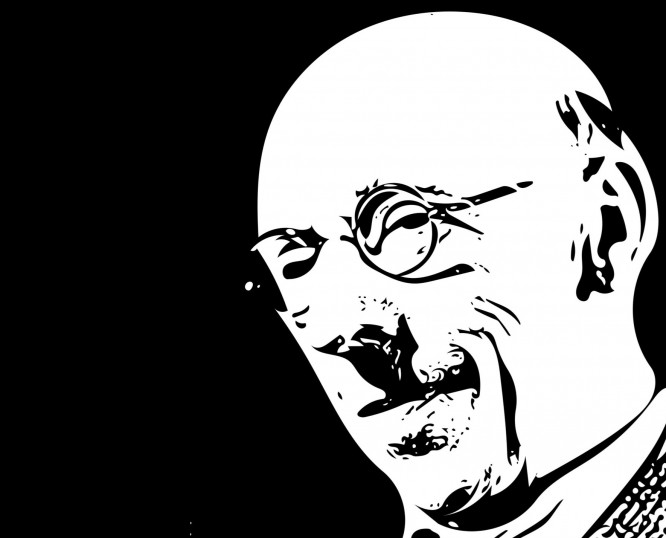
On November 6, 1913, Mohandes K. Gandhi was arrested for participating in a march of Indian miners in South Africa.
Categories
On November 6, 1913, Mohandes K. Gandhi was arrested for participating in a march of Indian miners in South Africa.
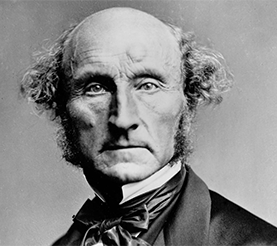
Utility is often summarily stigmatized as an immoral doctrine by giving it the name of Expediency, and taking advantage of the popular use of that term to contrast it with Principle. But the Expedient, in the sense in which it is opposed to the Right, generally means that which is expedient for the particular interest of the agent himself: as when a minister sacrifices the interest of his country to keep himself in place. When it means anything better than this, it means that which is expedient for some immediate object, some temporary purpose, but which violates a rule whose observance is expedient in a much higher degree. The Expedient, in this sense, instead of being the same thing with the useful, is a branch of the hurtful.
John Stuart Mill, Utilitarianism (London: Longmans, Green, and Co., 1879), Chapter II, “What Utilitarianism Is.”
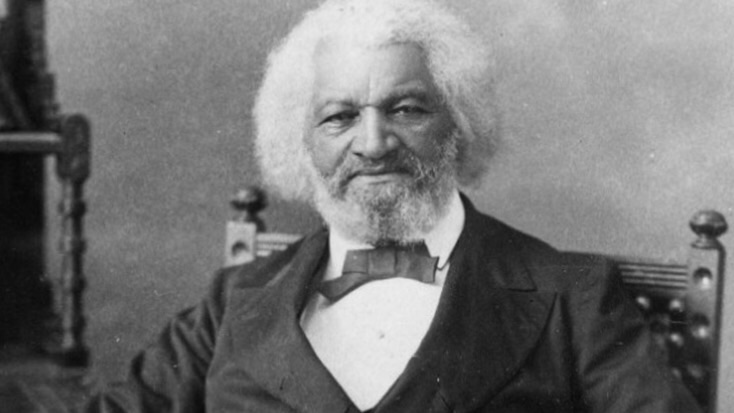
“We were all ranked together at the valuation. Men and women, old and young, married and single, were ranked with horses, sheep, and swine. There were horses and men, cattle and women, pigs and children, all holding the same rank in the scale of being, and were all subjected to the same narrow examination. Silvery-headed age and sprightly youth, maids and matrons, had to undergo the same indelicate inspection. At this moment, I saw more clearly than ever the brutalizing effects of slavery upon both slave and slaveholder.”
Frederick Douglass, Narrative of the Life of Frederick Douglass, An American Slave, 1845
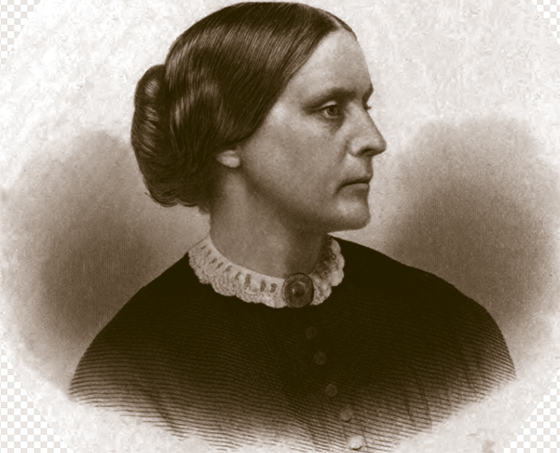
On November 5, 1872, Susan B. Anthony defied the law to vote, and was later fined $100.
Forty-one years earlier, to the day, Nat Turner, American slave and revolt leader, was tried, convicted, and sentenced to death in Virginia. His revolt has been celebrated in William Styron’s Pulitzer Prize-winning novel, The Confessions of Nat Turner (1967), and in a recent movie, The Birth of a Nation (2016).
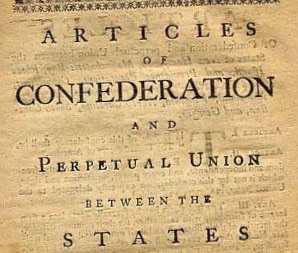
On November 5, 1781, the second session of the United States in Congress Assembled began, in Philadelphia, Pennsylvania. This “Second Confederation Congress,” as it is popularly known, ended on November 2, 1782.
And on that Fifth of November, 1781, John Hanson of Maryland was elected to serve as president of the United States in Congress Assembled. He would become the first president of Congress to serve a full one-year term as specified under the Articles of Confederation, for the second session of the Confederation Congress.
On November 5, 1872, Susan B. Anthony defied the law to vote, and was later fined $100.
Better a dish of husks to the accompaniment of a muted lute than to be satiated with stewed shark’s fin and rich spiced wine of which the cost is frequently mentioned by the provider.
Ernest Bramah, Kai Lung Beneath the Mulberry Tree, “The Story of the Poet Lao Ping, Chun Shin’s Daughter Fa, and the Fighting Crickets” (1940)

On November 4, 1879, American humorist Will Rogers was born. Aside from his cowboy act, and his work as an actor in Hollywood, he gained much fame for being a topical comedian “just reporting what’s in the papers.” Among his most famous quips? “Be thankful we’re not getting all the government we’re paying for.”
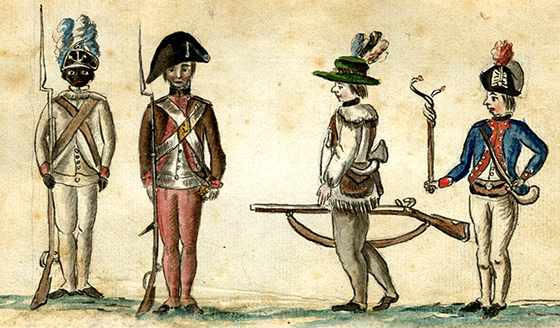
On November 3, 1783, the American Continental Army — its mission fulfilled — was disbanded.
On November 3, 1969, U.S. President Richard M. Nixon made a television and radio appearance, asking the “silent majority” to join him in solidarity on the Vietnam War effort.
We do not call anything wrong, unless we mean to imply that a person ought to be punished in some way or other for doing it; if not by law, by the opinion of his fellow creatures; if not by opinion, by the reproaches of his own conscience. This seems the real turning point of the distinction between morality and simple expediency. It is a part of the notion of Duty in every one of its forms, that a person may rightfully be compelled to fulfil it. Duty is a thing which may be exacted from a person, as one exacts a debt. Unless we think that it might be exacted from him, we do not call it his duty.
John Stuart Mill, Utilitarianism (London: Longmans, Green, and Co., 1879), Chapter V, “On the Connexion Between Justice and Utility.”
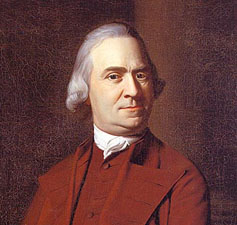
On November 2, 1772, Samuel Adams (pictured) and Joseph Warren formed the first Committee of Correspondence.