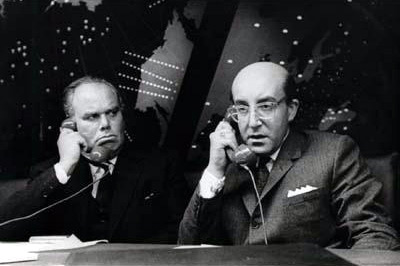
Hello? . . . Uh . . . Hello, D- uh, hello, Dmitri? Listen, uh, uh, I can’t hear too well. Do you suppose you could turn the music down just a little? . . . Oh-ho, that’s much better . . . yeah . . . huh . . . yes . . . Fine, I can hear you now, Dmitri . . . Clear and plain and coming through fine . . . I’m coming through fine, too, eh? . . . Good, then . . . well, then, as you say, we’re both coming through fine . . . Good . . . Well, it’s good that you’re fine and . . . and I’m fine . . . I agree with you, it’s great to be fine . . . a-ha-ha-ha-ha . . . Now then, Dmitri, you know how we’ve always talked about the possibility of something going wrong with the Bomb . . . The Bomb, Dmitri . . . The hydrogen bomb! . . . Well now, what happened is . . . ahm . . . one of our base commanders, he had a sort of . . . well, he went a little funny in the head . . . you know . . . just a little . . . funny. And, ah . . . he went and did a silly thing . . . Well, I’ll tell you what he did. He ordered his planes . . . to attack your country . . . Ah . . . Well, let me finish, Dmitri . . . Let me finish, Dmitri . . . Well listen, how do you think I feel about it? . . . Can you imagine how I feel about it, Dmitri? . . . Why do you think I’m calling you? Just to say hello? . . . Of course I like to speak to you! . . . Of course I like to say hello! . . . Not now, but anytime, Dmitri. I’m just calling up to tell you something terrible has happened . . . It’s a friendly call. Of course it’s a friendly call . . . Listen, if it wasn’t friendly . . . you probably wouldn’t have even got it . . . They will not reach their targets for at least another hour . . . I am . . . I am positive, Dmitri . . . Listen, I’ve been all over this with your ambassador. It is not a trick . . . Well, I’ll tell you. We’d like to give your air staff a complete run-down on the targets, the flight plans, and the defensive systems of the planes . . . Yes! I mean i-i-i-if we’re unable to recall the planes, then . . . I’d say that, ah . . . well, ah . . . we’re just gonna have to help you destroy them, Dmitri . . . I know they’re our boys . . . All right, well listen now. Who should we call? . . . Who should we call, Dmitri? The . . . wha-whe, the People . . . you, sorry, you faded away there . . . The People’s Central Air Defense Headquarters . . . Where is that, Dmitri? . . . In Omsk . . . Right . . . Yes . . . Oh, you’ll call them first, will you? . . . Uh-huh . . . Listen, do you happen to have the phone number on you, Dmitri? . . . Whe-ah, what? I see, just ask for Omsk information . . . Ah-ah-eh-uhm-hm . . . I’m sorry, too, Dmitri . . . I’m very sorry . . . All right, you’re sorrier than I am, but I am as sorry as well . . . I am as sorry as you are, Dmitri! Don’t say that you’re more sorry than I am, because I’m capable of being just as sorry as you are . . . So we’re both sorry, all right? . . . All right.
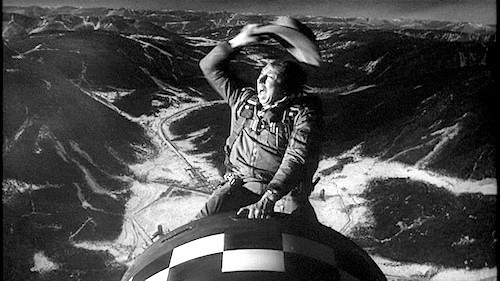
U.S. President Merkin Muffley on the phone to Soviet Premiere Dmitri Kissoff, a monologue performed by actor Peter Sellers in the (fictional) black comedy Dr. Strangelove, or: How I Stopped Worrying and Learned to Love the Bomb (1964), a film directed by Stanley Kubrick and written by Kubrick, Terry Southern, and Peter George, based on the book Red Alert by Peter George, first published in the UK in 1958 as Two Hours to Doom under the pseudonym Peter Bryant.