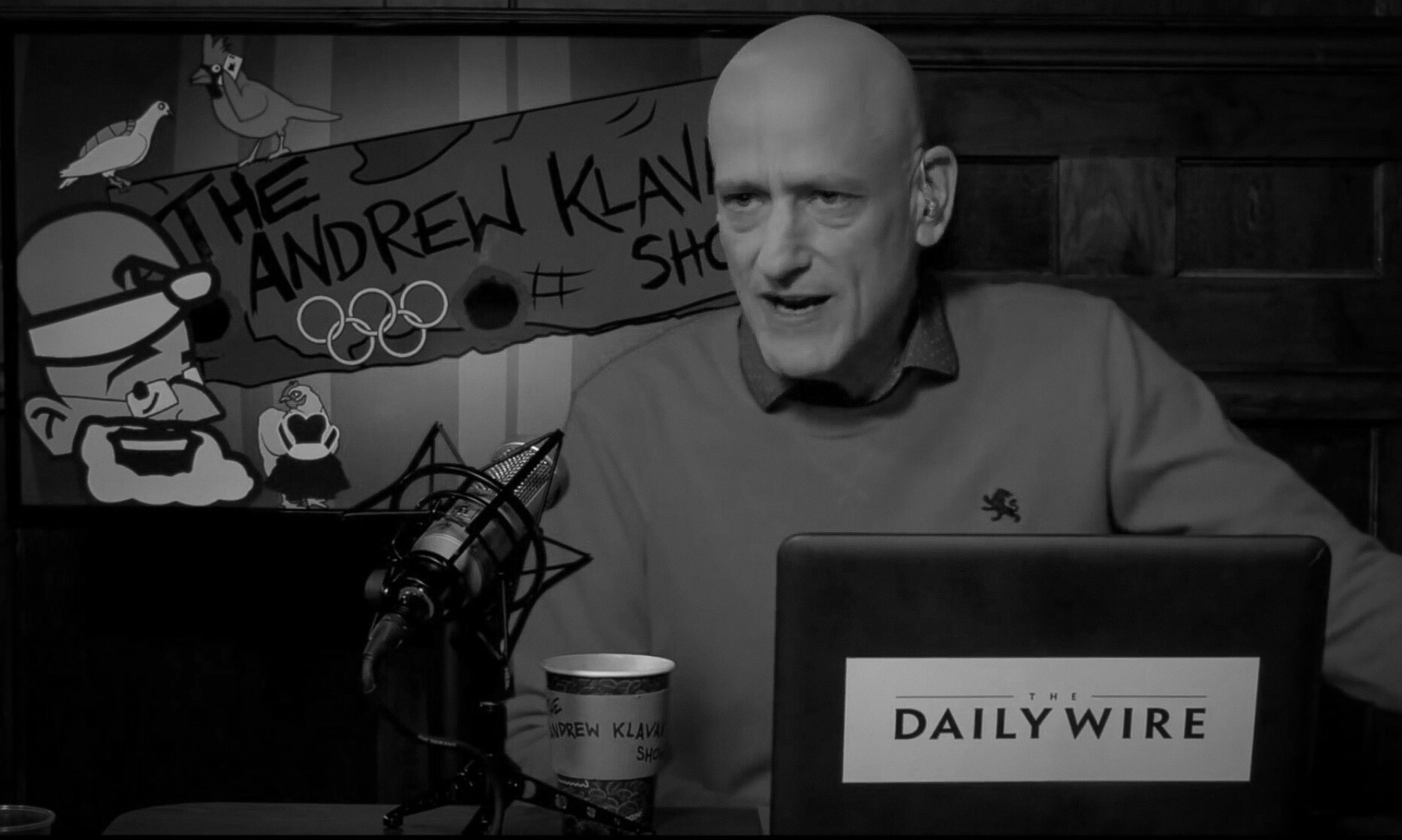
Violence. Animosity. Lawlessness. And Paul Jacob is not just talking about these things on the streets, amongst protestors.
Click on over to Townhall. Come back here. Figure out the age; testify.
Violence. Animosity. Lawlessness. And Paul Jacob is not just talking about these things on the streets, amongst protestors.
Click on over to Townhall. Come back here. Figure out the age; testify.
On July 10, 1832, U.S. President Andrew Jackson vetoed a bill to re-charter the Second Bank of the United States, in effect ending formal central banking in the United States until the establishment of the Federal Reserve in 1913.
The featured image incorporates a bank note from the Second National Bank signed by Daniel Webster.
This week the police in Dallas, Texas, used a robot to kill a sniper. It is said to be a first, a historical moment of great significance. But wait: a bigger, more dangerous and more destabilizing form of warfare began a few years ago. This video explains it:
The best kind of charity is to help those who are willing to help themselves.
P. T. Barnum, Art of Money Getting (1880).
On July 9, 1896, William Jennings Bryan delivered his “Cross of Gold” speech advocating bi-metallist inflationism at the 1896 Democratic National Convention in Chicago, Illinois, a triumph of rhetoric over reason that solidified the takeover of the Democratic Party by reformers utterly ignorant of basic economics.
The utility clearest to all eyes is that residing in material things. Man understands without any effort that a bird in the hand is worth two in the bush, and that it is still more useful when leaving the spit. It is needless to tell you that first the sportsman and then the cook have added a surplus value to the bird. If I put before you a ton of pig-iron worth fifty francs, and then a ton of fine needles, worth ninety thousand, you will instantly see the enormous supplement of utility which the work of men has added to the metal.
But there are other benefits of which the utility is not as directly visible to our eyes, though it be at least as great. An impalpable, invisible, imponderable idea is often more useful than a mountain of benefits clear to the naked eye. Man is a thinking body; his hands have done much to render the earth inhabitable, but his brain has done a hundred times more.
Edmond About, Handbook of Social Economy; or, The Worker’s A B C (New York: D. Appleton and Company, 1873), pp. 27-28.
On July 8, 1839, American industrialist John D. Rockefeller was born. On this same date in 1907, businessman and politician George W. Romney was born. Died on this date, American founding politician, Luther Martin [pictured], in 1826. Martin is famed among founding fathers for refusing to sign the U.S. Constitution, seeing the new compact as unduly centralizing and nationalistic.
July 7 is Independence Day in the Solomon Islands, commemorating the island nation’s political separation in 1978.
The “separation” may be over-stated, however: though self-government was achieved in 1976, and political independence for the islands obtained two years later, Solomon Islands remains a constitutional monarchy with the Queen of Solomon Islands, currently Great Britain’s Queen Elizabeth II, as its head of state. Manasseh Sogavare is the current (and third-time) Prime Minister of Solomon Islands.
Strangely, it is always America that is described as degenerate and ‘fascist,’ while it is solely in Europe that actual dictatorships and totalitarian regimes spring up.
Jean-François Revel, “Europe’s Anti-American Obsession,” The American Enterprise (December 2003).