Categories
Today

Ethiopia

On July 16, 1931, Ethiopia’s Emperor Haille Selassie I signed a new Constitution. Not exactly a model of limited government, the new document proved that the emperor was in keeping with the time, which was a period of weakening constitutional limits in America, Europe, and Britain. A flavor of the document can be gained by its most “rights-oriented” measures:

Art. 22. Within the limits laid down by the law, Ethiopian subjects have the right to pass freely from one place to the other.
Art. 23. No Ethiopian subject may be arrested, sentenced, or imprisoned except in pursuance of the law.
Art. 24. No Ethiopian subject may, against his will, be deprived of his right to be tried by a legally established court.
Art. 25. Except in cases provided for by law, no domiciliary searches may be made.
Art. 26. Except in cases provided by the law, no one shall have the right to violate the secrecy of the correspondence of Ethiopian subjects.
Art. 27. Except in cases of public necessity determined by the law, no one shall have the right to deprive an Ethiopian subject of any movable or landed property which he owns.Art. 28. All Ethiopian subjects have the right to present to the Government petitions in legal form.
Art. 29. The provisions of the present chapter shall in no way limit the measures which the Emperor, by virtue of his supreme power, may take in the event of war or public misfortunes menacing the interests of the nation.

Categories
Thought

John Fiske

As great and strong societies have arisen, as the sphere of warfare has diminished while the sphere of industry has enlarged, the need for absolute conformity has ceased to be felt, while the advantages of freedom and variety come to be ever more clearly apparent. At a late stage of civilization, the flexible or plastic society acquires even a military advantage over the society that is more rigid, as in the struggle between French and English civilization for primacy in the world. In our own country, the political birth of which dates from the triumph of England in that mighty struggle, the element of plasticity in man’s nature is more thoroughly heeded, more fully taken account of, than in any other community known to history; and herein lies the chief potency of our promise for the future.


John Fiske, The Meaning of Infancy, 1883.

Categories
Today

“Malaise”

On July 15, 1976, Jimmy Carter accepted the nomination of the Democratic Party to run for the presidency.

Three years later, as president, he gave his infamous “malaise” speech, in which he focused on energy but did not mention the one thing that actually helped turn the ’70s’ energy crisis around: the phased deregulation of oil prices that had started three months earlier, under his own directive. Instead of touting this deregulatory effort, Carter did the usual politic thing and promised a number of new government programs, extensively ground home a “crisis of confidence” message, and vaguely talked of a spiritual challenge.

The deregulation was startlingly effective, in the long run — though the immediate effect was a rocketing of prices. These high prices presented profit opportunities, and (lo and behold!) domestic production greatly increased, allowing for many, many years of lower prices. Those high prices would have worked better as market signals had not Carter and Congress also established “windfall profits” taxes, to take away those temporary gains to existing business.

Had Carter deregulated prices earlier, he would probably have been re-elected president. Had he emphasized deregulation, he probably would have beat back Ronald Reagan’s free market rhetoric — with actual action.

The price controls had been put in place earlier in the decade by the Republican president at the time, Richard M. Nixon, with the great help of his aides Dick Cheney and Donald Rumsfeld.

Categories
Thought

Edmond About

Liberty can alone teach nations the industry for which they are fitted, and determine national vocations.


Edmond About, Handbook of Social Economy; or, The Worker’s A B C, (New York: D. Appleton & Co., translated from the final French edition, 1873), p. 155.

Categories
Today

The Bastille

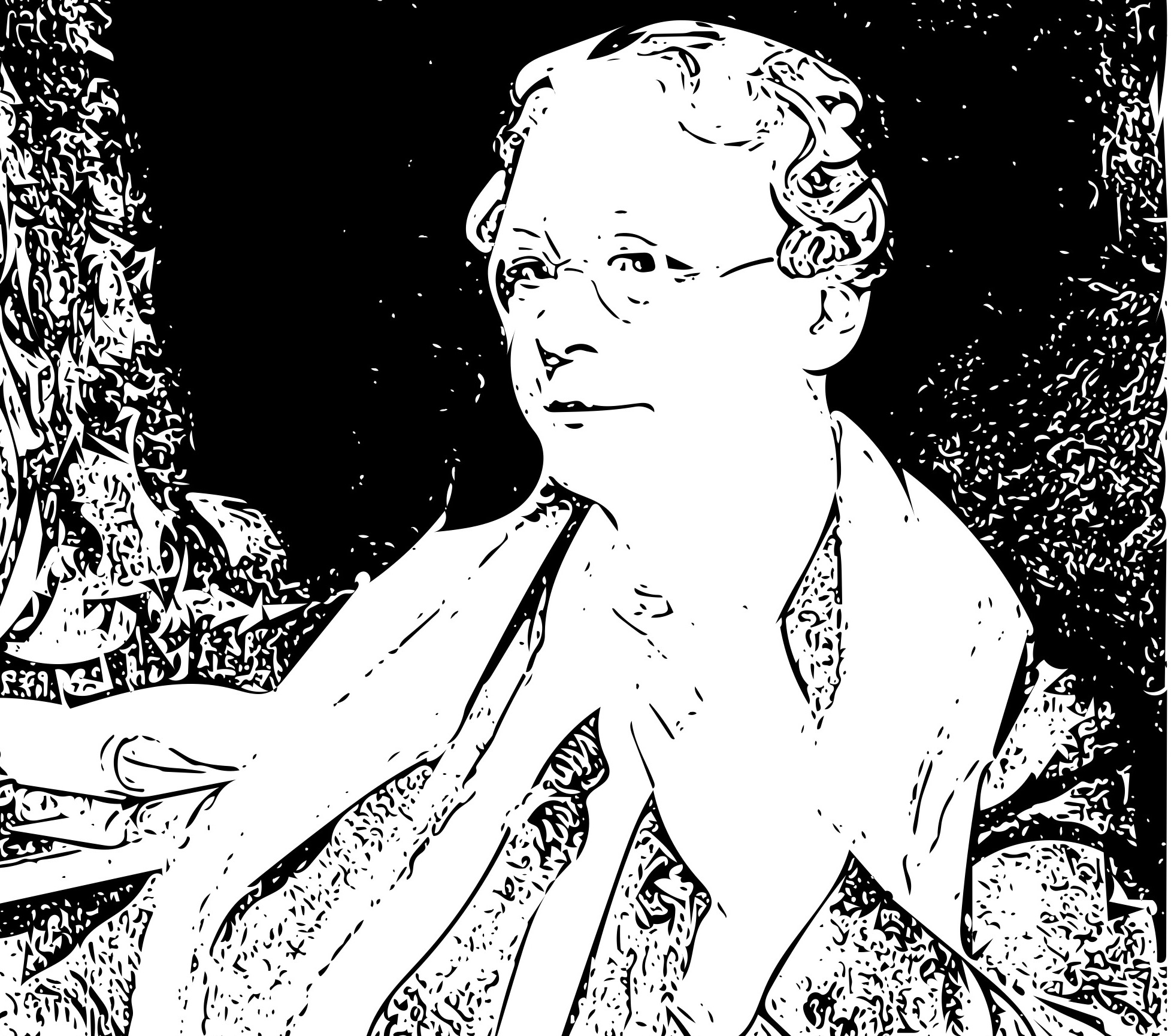
On July 14, 1789, Paris citizens stormed the Bastille. On the same date nine years later, in America, the Sedition Act prohibited the writing, publishing, or speaking false or malicious statements about the United States government. The passage of this repressive law spurred the formation of the first opposition party in the United States, with Thomas Jefferson [above] as its leader and figurehead.

Categories
Thought

John Fiske

There is time enough for a great many things to happen in a thousand centuries.


John Fiske, The Discovery of America, Vol. 1, p. 15.

Categories
Today

The Nixon Tapes

On July 13, 1973, the minority (Republican) counsel on the Senate Watergate investigative committee, Donald Sanders, asked Nixon aide Alexander Butterfield [pictured] if he knew of any recordings made in the Nixon White House, and Butterfield responded, “everything was taped” at least while Nixon was in attendance, and that “there was not so much as a hint that something should not be taped.” This revelation of the Nixon Tapes transformed the Watergate scandal into a major legal as well as political event, and proved to be one of the most astounding examples of “government transparency” in modern times — indeed, it helped demystify and desanctify the Office of the Presidency, a very republican (if not pro-Republican Party) development.

Categories
Today

Thoreau

On July 12, 1817, American poet, abolitionist, businessman, and Transcendentalist philosopher Henry David Thoreau was born. He is perhaps best known, today, for his book of meditations on the simple life, Walden, and his influential essay on civil disobedience.

Categories
Thought

Emerson

Solvency is maintained by means of a national debt, on the principle, ‘If you will not lend me the money, how can I pay you?’

Ralph Waldo Emerson, “English Traits” (1856).

Categories
Thought

P. T. Barnum

In fact, as a general thing, money-getters are the benefactors of our race.


P. T. Barnum, Art of Money Getting (1880).