Categories
Thought

Asra Nomani

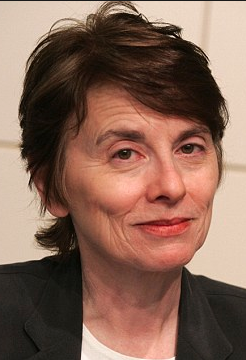
I don’t fear Donald Trump, and I don’t fear the policies he is talking about. What I fear is the extremist interpretation of Islam that is spilling blood on the streets of our world, from Orlando to Dhaka to Brussels.


Asra Nomani, CNN, November 11, 2016.

Categories
video

The Hillary Loss, Are Libertarians to Blame/Thank?

O, the Trump win was a thing to behold! Maybe you are like us here at Common Sense, and did not vote for the man. But you did not vote for Hillary Clinton, either.

So, are you to blame? Er, thank?

There were plenty of Jill Stein voters. And many more Gary Johnson voters — over four million, the largest return of any Libertarian Party candidate in the challenger party’s history.

At least one writer on the ostensible Left has argued that, had ALL of Stein voters “done their duty” and voted for Mrs. Clinton, and HALF of the Libertarian’s vote wised up and voted for the Anti-Trump possibility, Mrs. Clinton would have won. So, these folks blame minor party voters for a Clinton Loss . . . and its allegedly horrible flip side record, the surprising Trump Win.

Well, what do the Libertarians think of it?

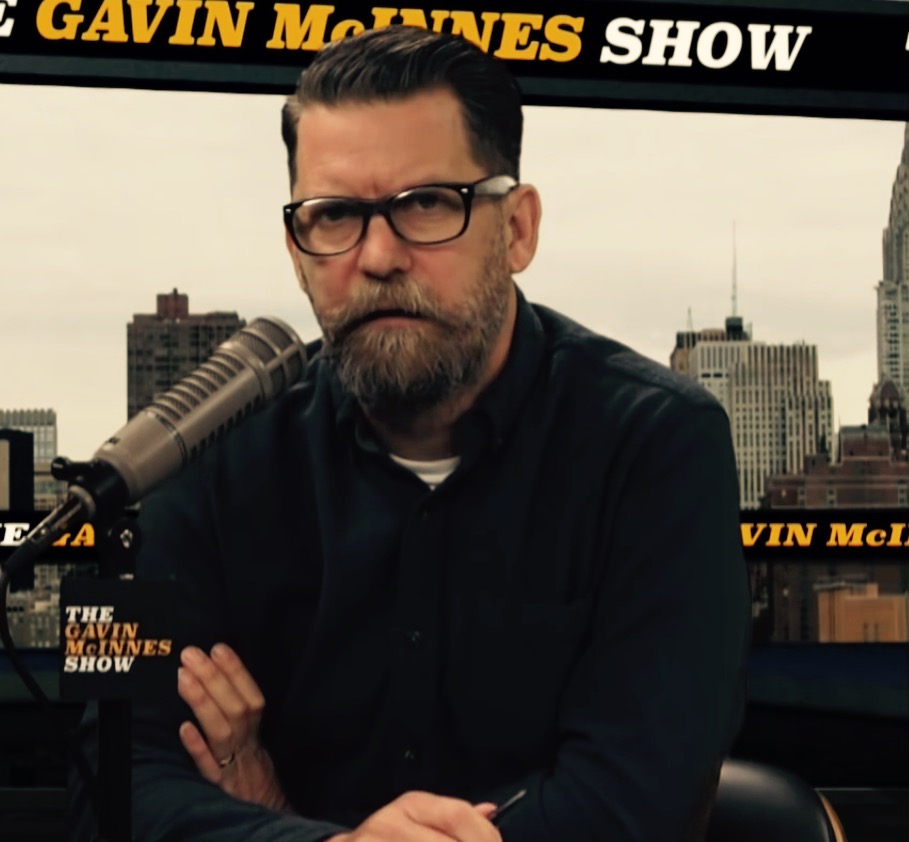
As you can see: Not much. That is what. Here is Nicholas Sarwark, Libertarian Party chairperson, doubling down on what Gary Johnson said:

And they are right. How, exactly? Well, it is not just that Hillary/Tim voters took votes away from the Libertarians’ Gary/Bill ticket. It is also the case that, well, the responsible parties for Hillary Clinton losing are . . . Democratic Party voters!

Read the graph and weep, folks:

SO, WHY THE PRECIPITOUS DROP?

Could it be that Hillary Clinton was an awful candidate . . . even by leftist standards? And that is why so many Democrats could not even be bothered to go to the polls and vote for “their” sorry candidate?

The obvious answer is: Yes.


Categories
Today

Monarchy or Republic

On November 12, 1905, Norwegians established, by referendum, a monarchy — not a republic. Exactly 14 years later, to the day, Austria became a republic.

Categories
Thought

Eugen von Böhm-Bawerk

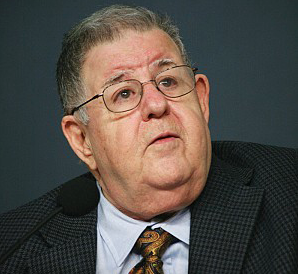
The monopolist . . . never has unlimited control; he merely has the choice within the laws of price of different “economically possible” price levels. He can select that price at which the combination of profit for each article, and the number of articles to be sold at that price, are likely to promise the greatest total profit, but he cannot exert his “power” in any other way than in conformity with the laws of price, for it is his behavior that establishes the “price law,” namely the conditions of the amount offered at a given price level, but never can he counteract the laws of price.


Eugen von Böhm-Bawerk, “Control or Economic Law,” Zeitschrift für Volkswirtshaft, Sozialpolitik und Verwaltung, Volume XXIII (1914): 205–71; John Richard Mez, Ph.D., translator.

Categories
Today

Kindness?

November 13 is World Kindness Day, which has been celebrated in various countries since 1998. It is not an official celebratory day of the U.S.A., or of the United Nations. But individuals are free to be kind this day . . . or any day, for that matter.

Categories
Today

Eleven/Eleven/Eleven

On November 11, 1889, the State of Washington was admitted as the 42nd State of the United States.

In 1918, German officials signed an armistice agreement with the Allies in a railroad car in the forest of Compiègne, France. The fighting officially ended at 11:00 a.m. — the eleventh hour of the eleventh day of the eleventh month. The war officially ended with the signing of the Treaty of Versailles on June 28, 1919.

In 1921 on this date, U.S. President Warren G. Harding dedicated the Tomb of the Unknowns at Arlington National Cemetery.

Categories
Thought

President Merkin Muffley

Gentlemen, you can’t fight in here! This is the War Room.


U.S. President Merkin Muffley, as performed by actor Peter Sellers in the (fictional) black comedy Dr. Strangelove, or: How I Stopped Worrying and Learned to Love the Bomb (1964), a film directed by Stanley Kubrick and written by Kubrick, Terry Southern, and Peter George, based on the book Red Alert by Peter George, first published in the UK in 1958 as Two Hours to Doom under the pseudonym Peter Bryant.

Categories
Thought

Eugen von Böhm-Bawerk

[T]here is one . . . thing that not even the most imposing dictate of power will accomplish: It can never effect anything in contradiction to the economic laws of value, price, and distribution; it must always be in conformity with these; it cannot invalidate them; it can merely confirm and fulfill them.


Eugen von Böhm-Bawerk, “Control or Economic Law,” Zeitschrift für Volkswirtshaft, Sozialpolitik und Verwaltung, Volume XXIII (1914): 205–71; John Richard Mez, Ph.D., translator.

Categories
Today

Cry of Independence

On November 10, 1821, the First Cry of Independence in the small, interior town of Villa de los Santos, occurred in Panama. The November 10 date has since become Panama’s “Cry of Independence Day” in the country. November is a month of independence celebrations in Panama, but the November 10 celebration marks the first signs of the struggle for separation from Spain.

Categories
Thought

President Merkin Muffley

Hello? . . . Uh . . . Hello, D- uh, hello, Dmitri? Listen, uh, uh, I can’t hear too well. Do you suppose you could turn the music down just a little? . . . Oh-ho, that’s much better . . . yeah . . . huh . . . yes . . . Fine, I can hear you now, Dmitri . . . Clear and plain and coming through fine . . . I’m coming through fine, too, eh? . . . Good, then . . . well, then, as you say, we’re both coming through fine . . . Good . . . Well, it’s good that you’re fine and . . . and I’m fine . . . I agree with you, it’s great to be fine . . . a-ha-ha-ha-ha . . . Now then, Dmitri, you know how we’ve always talked about the possibility of something going wrong with the Bomb . . . The Bomb, Dmitri . . . The hydrogen bomb! . . . Well now, what happened is . . . ahm . . . one of our base commanders, he had a sort of . . . well, he went a little funny in the head . . . you know . . . just a little . . . funny. And, ah . . . he went and did a silly thing . . . Well, I’ll tell you what he did. He ordered his planes . . . to attack your country . . . Ah . . . Well, let me finish, Dmitri . . . Let me finish, Dmitri . . . Well listen, how do you think I feel about it? . . . Can you imagine how I feel about it, Dmitri? . . . Why do you think I’m calling you? Just to say hello? . . . Of course I like to speak to you! . . . Of course I like to say hello! . . . Not now, but anytime, Dmitri. I’m just calling up to tell you something terrible has happened . . . It’s a friendly call. Of course it’s a friendly call . . . Listen, if it wasn’t friendly . . . you probably wouldn’t have even got it . . . They will not reach their targets for at least another hour . . . I am . . . I am positive, Dmitri . . . Listen, I’ve been all over this with your ambassador. It is not a trick . . . Well, I’ll tell you. We’d like to give your air staff a complete run-down on the targets, the flight plans, and the defensive systems of the planes . . . Yes! I mean i-i-i-if we’re unable to recall the planes, then . . . I’d say that, ah . . . well, ah . . . we’re just gonna have to help you destroy them, Dmitri . . . I know they’re our boys . . . All right, well listen now. Who should we call? . . . Who should we call, Dmitri? The . . . wha-whe, the People . . . you, sorry, you faded away there . . . The People’s Central Air Defense Headquarters . . . Where is that, Dmitri? . . . In Omsk . . . Right . . . Yes . . . Oh, you’ll call them first, will you? . . . Uh-huh . . . Listen, do you happen to have the phone number on you, Dmitri? . . . Whe-ah, what? I see, just ask for Omsk information . . . Ah-ah-eh-uhm-hm . . . I’m sorry, too, Dmitri . . . I’m very sorry . . . All right, you’re sorrier than I am, but I am as sorry as well . . . I am as sorry as you are, Dmitri! Don’t say that you’re more sorry than I am, because I’m capable of being just as sorry as you are . . . So we’re both sorry, all right? . . . All right.


U.S. President Merkin Muffley on the phone to Soviet Premiere Dmitri Kissoff, a monologue performed by actor Peter Sellers in the (fictional) black comedy Dr. Strangelove, or: How I Stopped Worrying and Learned to Love the Bomb (1964), a film directed by Stanley Kubrick and written by Kubrick, Terry Southern, and Peter George, based on the book Red Alert by Peter George, first published in the UK in 1958 as Two Hours to Doom under the pseudonym Peter Bryant.