Categories
Today

Wollstonecraft & Spencer

On April 27, 1759, English philosopher and author Mary Wollstonecraft was born. Wollstonecraft married anarchist philosopher William Godwin and the couple had one daughter, Mary Shelley, author of Frankenstein: or, The Modern Prometheus. Wollstonecraft herself wrote one infamous and valiant effort in the emancipation of women, A Vindication of the Rights of Women, in 1792.

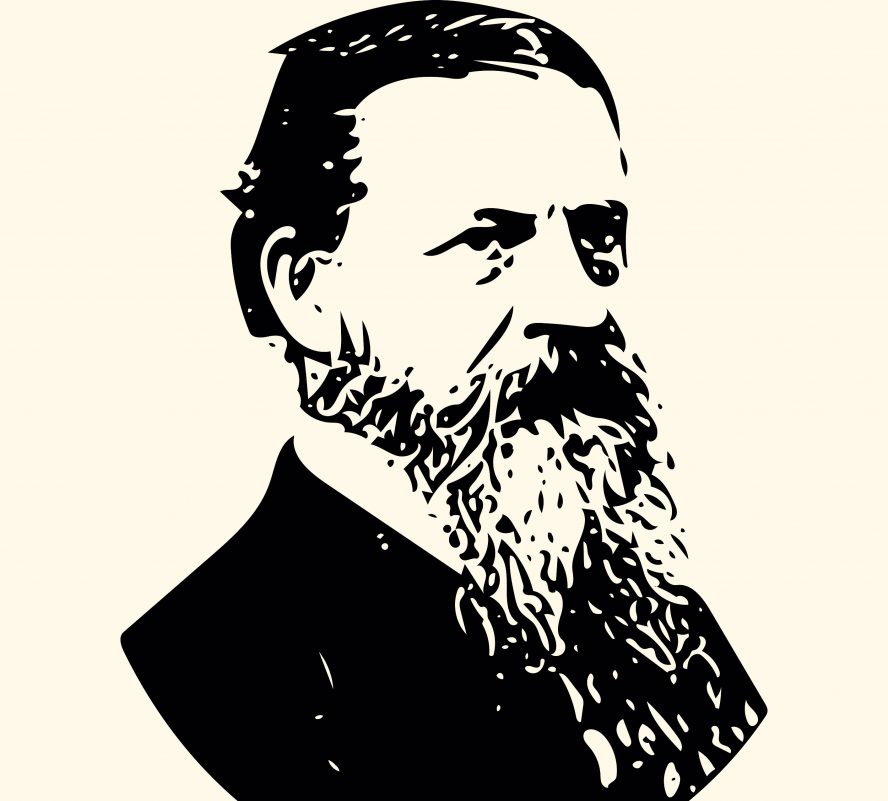
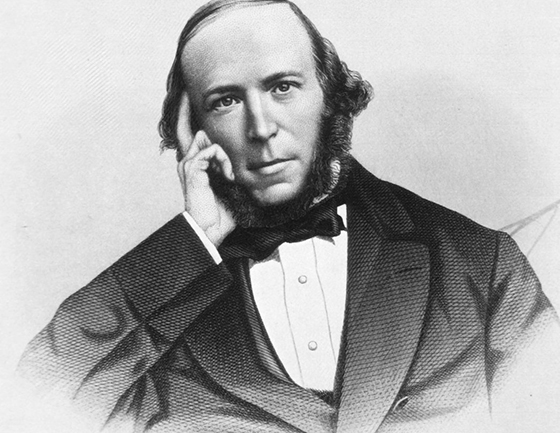
English philosopher, psychologist, sociologist, and political theorist Herbert Spencer was born in Derby, England, on April 27, 1820. Among Spencer’s most famous books are First Principles, Principles of Ethics (chiefly its first part, The Data of Ethics), The Study of Sociology, The Man versus the State, and two editions of Social Statics. Spencer was an evolutionary theorist as well as a religious and political philosopher, and coiner of the phrase “survival of the fittest.” He called the basic principle of a free political order “The Law of Equal Freedom.”
Categories
Thought

J. H. Levy

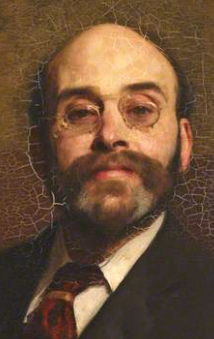
Looked at from an economic point of view, I hold socialism to be the active or direct distribution of products by the state. Regarded from its more general or political aspect, I designate as socialistic any extension of state interference or activity beyond the point up to which that interference is necessary in order that freedom may be at the maximum. Individualism postulates that some government — that is, some compulsory cooperation for political purposes — is needed in order to keep freedom at this point, that so much government is justifiable and good, and that all government beyond this is unjustifiable and mischievous. This quantum of government desiderated by the individualist constitutes a norm from which anarchism diverges on one side and socialism on the other. If we are suffering from a poison we find it advantageous to take a second poison, which acts as an antidote to the first. But, if we are wise, we limit our dose of the second poison so that the toxic effects of both combined are at the minimum. If we take more of it, it produces toxic effects of its own beyond those necessary to counteract, so far as possible, the first poison. If we take less of it, the first poison, to some extent, will do its bad work unchecked.


Joseph Hiam Levy, The Outcome of Individualism (1892), Chapter Two.

Categories
Thought

Samuel Butler

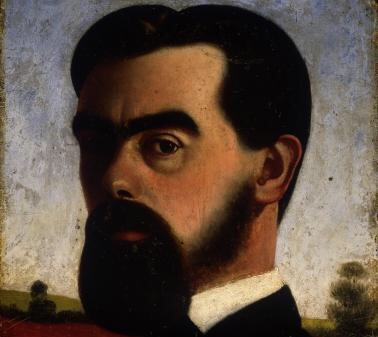
Life is like playing a violin solo in public and learning the instrument as one goes on.

Samuel Butler, Speech at the Somerville Club, February 27, 1895.
Categories
Today

Sibyl’s Ride

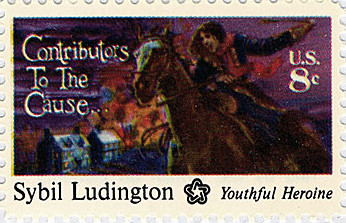
On April 26, 1777, Sibyl Ludington, aged 16, rode 40 miles to alert American colonial forces to the approach of the British. Her ride was over twice as long as the more famous Paul Revere’s.

On the same day in 1805, United States Marines captured Derne under the command of First Lieutenant Presley O’Bannon, an important event in the First Barbary War. In April 26, 1865, Union cavalry troopers cornered John Wilkes Booth, assassin of President Lincoln, in Virginia, shooting him to death. There was no interrogation.

Categories
Thought

C. S. Peirce

In all the works on pedagogy that ever I read — and they have been many, big, and heavy — I don’t remember that any one has advocated a system of teaching by practical jokes, mostly cruel. That, however, describes the method of our great teacher, Experience.

C.S. Peirce, “Pragmatism and Pragmaticism” (1903).
Categories
Thought

Samuel Butler

The most important service rendered by the press and the magazines is that of educating people to approach printed matter with distrust.


Samuel Butler, Notebooks (1951).

Categories
Today

Congress’s Library

On April 24, 1792, the French national anthem, “La Marseillaise,” was composed by Capt. Claude Joseph Rouget de Lisle.

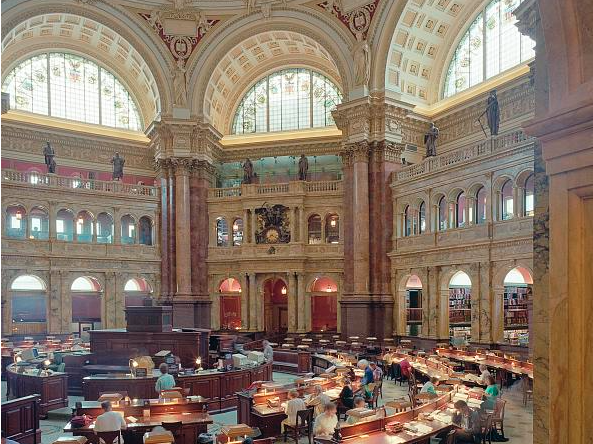
Eight years later to the day, the United States Congress approved a bill establishing the Library of Congress.

Categories
links

Townhall: Winning at the Polls, But Not in Governing

Republicans control both houses of Congress and the White House, with a majority of Supreme Court justices having been appointed by GOP presidents.

Why so little progress?

Well, during six of the eight years of George W. Bush’s presidency, Republicans controlled both the White House and Congress. And what did they do? Added a new entitlement, Medicare Part D, and kept the federal money-go-round swirling at breakneck speed. Additionally, the Roberts Court, a majority appointed by Republican presidents, managed to contort its way to upholding Obamacare.

And at the state level? The politics, more solidly Republican; the results, more decidedly ambiguous. Click on over to Townhall. Then come back here. For more perspective.

Categories
Today

A Student Protest

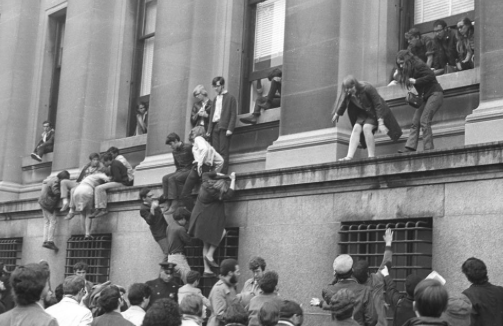
On April 23, 1968, students at New York City’s Columbia University held a demonstration to protest military research and the condemnation of part of the neighboring Morningside Heights section of Harlem to make way for a new student gymnasium. The protest escalated into a week-long occupation of five campus buildings before police moved in. Some 712 students were arrested, and over 100 injured during the forcible eviction. After the university-ordered police response, a student strike shut down the campus for the rest of the semester.

Categories
video

The Great Pretenders … to Objectivity

Lauren Southern, late of Rebel Media, makes her point with some concision:

Caution: some sarcasm may be involved.