Categories
Today

Freedom of Religion

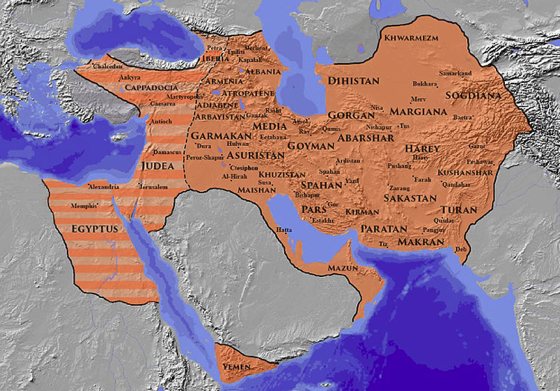
On May 26, 451, the Sassanid Empire defeated the Armenians at the battle of Battle of Avarayr, but guaranteed them freedom to openly practice Christianity.

On May 26, 1328, scholastic philosopher and Franciscan friar William of Ockham and other Franciscan leaders secretly exited Avignon, fearing a death sentence from Pope John XXII. On the same day in 1538, the city of Geneva expelled John Calvin and his followers, who headed to exile in Strasbourg.

Categories
Thought

Herbert Spencer

If we adopt pessimism as a creed, and with it accept the implication that life in general being an evil should be put an end to, then there is no ethical warrant for these actions by which life is maintained: the whole question drops. But if we adopt either the optimist view or the meliorist view — if we say that life on the whole yields more pleasure than pain; or that it is on the way to become such that it will yield more pleasure than pain; then these actions by which life is maintained are justified, and there results a warrant for the freedom to perform them. Those who hold that life is valuable, hold, by implication, that men ought not to be prevented from carrying on life-sustaining activities. In other words, if it is said to be ‘right’ that they should carry them on, then, by permutation, we get the assertion that they ‘have a right’ to carry them on. Clearly the conception of ‘natural rights’ originates in recognition of the truth that if life is justifiable, there must be a justification for the performance of acts essential to its preservation; and, therefore, a justification for those liberties and claims which make such acts possible.

Herbert Spencer, “The Great Political Superstition,” The Man versus The State (1884).

Categories
Today

Jacob Burckhardt

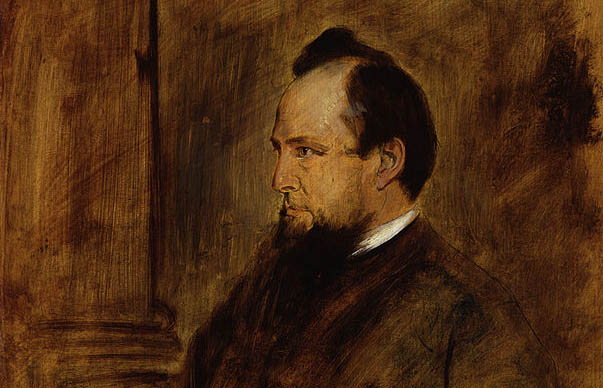
May 25, 1818, the Swiss historian and academic Jacob Burckhardt was born. Burckhardt’s best known work is The Civilization of the Renaissance in Italy (1860), but is remembered here as the author of Reflections on History (1905).

Categories
Thought

Lord Acton

Power tends to corrupt and absolute power corrupts absolutely. Great men are almost always bad men, even when they exercise influence and not authority: still more when you superadd the tendency or the certainty of corruption by authority. There is no worse heresy than that the office sanctifies the holder of it.

John Dalberg-Acton, 1st Baron Acton, Letter to Mandell Creighton (April 5, 1887), published in Essays on Freedom and Power (1972)
Categories
Today

John Hancock

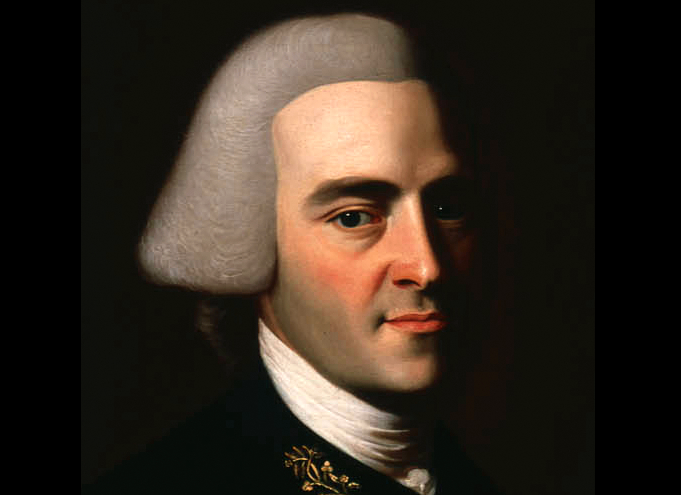
On May 24, 1775, John Hancock was elected president of the Second Continental Congress.

Hancock’s involvement with Samuel Adams and his radical group, the Sons of Liberty, won the wealthy merchant the dubious distinction of being one of only two Patriots (the other being Sam Adams) that the Redcoats marching to Lexington in April 1775 to confiscate Patriot arms were ordered to arrest. When British General Thomas Gage offered amnesty to the colonists holding Boston under siege, he excluded those same two men from his offer.

Categories
Thought

Jorge Luis Borges

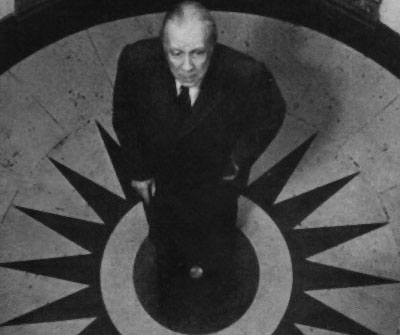
Dictatorships foster oppression, dictatorships foster servitude, dictatorships foster cruelty; more abominable is the fact that they foster idiocy.


Jorge Luis Borges statement to the Argentine Society of Letters (c.1946)

Categories
Today

Eighth State and Drew Carey

On May 23, 1788, South Carolina became the 8th state to ratify the U.S. Constitution.

Other May 23 events include:

* 1813: South American independence leader Simón Bolívar entered Mérida, where he was proclaimed El Libertador (“The Liberator”), leading the invasion of Venezuela.

* 1900: Sergeant William Harvey Carney became the first African American to be awarded the Medal of Honor, for his heroism in a Civil War battle fought 37 years prior, in 1863.

* 1958: Birthday of American comedian and game show host Drew Carey.

Categories
Thought

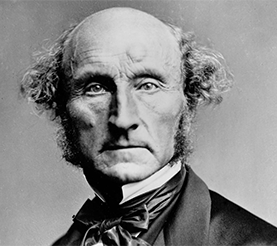
J. S. Mill

Both in England and on the Continent a graduated property tax (l’impôt progressif) has been advocated, on the avowed ground that the state should use the instrument of taxation as a means of mitigating the inequalities of wealth. I am as desirous as any one that means should be taken to diminish those inequalities, but not so as to relieve the prodigal at the expense of the prudent. To tax the larger incomes at a higher percentage than the smaller is to lay a tax on industry and economy; to impose a penalty on people for having worked harder and saved more than their neighbours.

John Stuart Mill, Principles of Political Economy (1848), Book V, Chapter II.
Categories
Thought

Yves Guyot

For all except the very few of extraordinary gifts, the spur of gain is not only powerful, it is indispensable.


Yves Guyot, stating what he called “the third incentive of human action,” in Where and why Public Ownership Has Failed (H. F. Baker, trans., 1914).

Categories
Today

Term limits

On May 22, 1995, in the case U.S. Term Limits v. Thornton, the U.S. Supreme Court struck down Arkansas’s congressional term limits law, 5-4, overturning the congressional term limits then the law in 23 states: Arizona, Arkansas, California, Colorado, Florida, Idaho, Louisiana, Maine, Massachusetts, Michigan, Missouri, Montana, Nebraska, Nevada, New Hampshire, North Dakota, Oklahoma, Ohio, Oregon, South Dakota, Utah, Washington and Wyoming.

Other May 22 events include

* 1856: South Carolina Congressman Preston Brooks savagely beat Massachusetts Senator Charles Sumner in the halls of Congress as tensions rise over the expansion of slavery. Sumner did not return to the Senate for three years while he recovered.

* 1848: Slavery was abolished in Martinique.

* 1807: A grand jury indicted former Vice President of the United States Aaron Burr on a charge of treason. Burr (in portrait, above) was later acquitted.


On the hundredth day of 1998, the Northern Ireland peace talks ended with an historic agreement, dubbed the Belfast, or Good Friday Agreement. The accord was reached after nearly two years of talks and 30 years of conflict. A little more than a month later, on May 22, 1998, this Agreement was approved by voters across the island of Ireland in two referendums.

In Northern Ireland, voters were asked whether they supported the multi-party agreement.

In the Republic of Ireland, voters were asked whether they would allow the state to sign the agreement and allow necessary constitutional changes to facilitate it. The people of both jurisdictions needed to approve the Agreement in order to give effect to it.

The British-Irish Agreement came into force on December 2, 1999.